E-Paper



Warmest day of season at 34.8°C, heat set to rise
The air quality in Delhi, meanwhile, deteriorated back into the “poor” category on Sunday thanks to dry westerly dust-raising winds and clear skies


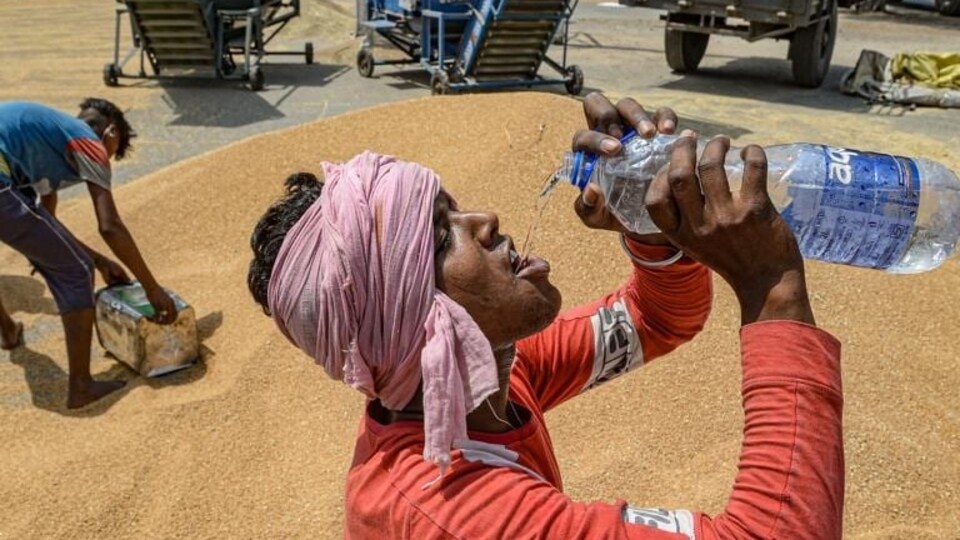
After weeks of relief, summer heat appears to have finally taken hold in Delhi with the maximum temperature in the city on Sunday touching 34.8 degrees Celsius – the highest so far this year – with the India Meteorological Department (IMD) forecasting a gradual rise in mercury thanks to no rain in the coming week.
The air quality in Delhi, meanwhile, deteriorated back into the “poor” category on Sunday thanks to dry westerly dust-raising winds and clear skies.
While IMD had earlier forecast chances of rain on Sunday and Tuesday, its revised forecast now states that rain is unlikely over the next week.
Also read: Hot summer, above normal temperature in most parts of India from April-June: IMD
With the maximum temperature at 34.8°C (within the range of what is considered normal for this time of the year) and clear skies likely over the coming week, forecasts say the mercury in Delhi is now expected to see a steady rise. This should see the maximum temperature touching 36 degrees by Thursday and 37 degrees by Saturday, according to the revised forecasts.
Prior to Sunday, the highest maximum temperature in Delhi had been 34.3°C, which was recorded on March 15. On Saturday, Delhi’s maximum was 34.1 degrees Celsius.
In terms of the minimum temperature, Delhi recorded a low of 15.4°C Celsius, which is four degrees below normal. It was 14.1 degrees Celsius on Saturday.
The onset of hot days predicted in coming days follows a period of cooler-than-usual weather through the second half of March and early April, which has meant that so far, Delhi residents were yet to experience the full blast of summer this year.
Temperatures generally cross the 35-degree mark in March in Delhi, as opposed to April, with it touching a high of 39.6°C in March itself last year (March 31). In March 2021, the highest maximum recorded was 40.1°C (March 30). In April, the maximum generally tends to cross the 40-degree mark, particularly towards the end of the month. Last year, the highest maximum temperature recorded in April was 43.5°C (on April 29 and 30), while in April 2021, the highest maximum was 42.2°C on April 29.
By this time last year, the maximum in Delhi had already touched 42.4°C on April 9. In 2021, the highest maximum till April 9 had been 40.1°C – highlighting how different this year’s start to summer has been.
Earlier, IMD had forecast chances of very light rain in isolated places of Delhi on Sunday, along with a little rain expected on Tuesday as well. However, the forecast has now been changed, with IMD stating that the cyclonic circulation formation which was expected to over south Haryana and northeast Rajasthan over the weekend, is no longer likely.
“We were expecting a cyclonic circulation to form, which would have then brought in some moisture to Delhi-NCR, leading to some rain. However, that cyclonic circulation is now not forming and we are seeing dry westerly to north-westerly winds take over. With no active western disturbance likely either in the next seven days, most parts of the country will see clear skies in the coming week, with the maximum to gradually rise,” said IMD scientist Kuldeep Srivastava.
Meanwhile, Delhi’s 24-hour average air quality index (AQI) was recorded at 217 (poor) on Sunday, based on Central Pollution Control Board’s national bulletin, while it was 172 (moderate) at the same time on Saturday.
The last time Delhi’s AQI was in poor was on March 24, when the average AQI was 207. The last time it was higher was on March 16, when it was 259. Experts said while back-to-back western disturbances in March had brought moisture and rain, which improved the AQI considerably, dry weather has once again returned, with the wind direction currently westerly to north-westerly.
“The moisture content has reduced considerably, leading to clear skies. The wind direction is also westerly now, which is bringing in dust from Rajasthan,” a second met official said.
The CPCB classifies an AQI between 0-50 as good, between 51 and 100 as satisfactory, between 101 and 200 as moderate, between 201 and 300 as poor, between 301 and 400 as very poor and over 400 as severe.
The Early Warning System for Delhi (EWS), a forecasting model under the ministry of earth sciences, says Delhi’s AQI will remain in the poor category till April 12, due to an increase in the dust concentration.