E-Paper



Directions to remove news reports may go against democracy: SC
The Supreme Court on Friday cautioned that judicial directions requiring the removal of news reports and articles could have troubling implications for democracy

 Prefer HTon Google


New Delhi: The Supreme Court on Friday cautioned that judicial directions requiring the removal of news reports and articles could have troubling implications for democracy, as it stayed a Delhi high court order that permitted invocation of the “right to be forgotten” to demand takedown of online content relating to criminal proceedings.
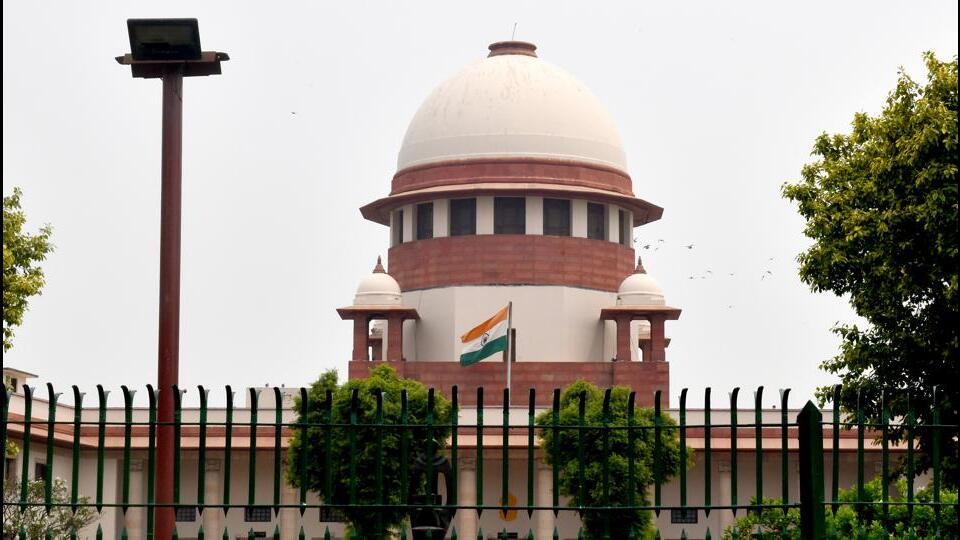
A bench of justices BV Nagarathna and Ujjal Bhuyan remarked that it may not be the role of courts to dictate what the media should publish or remove, even as it acknowledged that the competing claims of privacy, dignity and press freedom raise “interesting” and complex questions requiring careful balancing.
“Nowadays, people want a strong wall of privacy built around them… and courts passing orders, that might not be good for democracy,” observed the bench, agreeing to examine whether courts can order removal of online content merely because an individual has been exonerated following a judicial process.
The court was hearing a petition filed by IE Online Media Services Private Limited challenging a December 18, 2025 order of the Delhi high court, which upheld an interim injunction restraining the continued online circulation of news reports linking banker Nitin Bhatnagar to criminal allegations, despite his discharge and subsequent exoneration.
Admitting the petition, the Supreme Court issued notices to Bhatnagar and several media organisations, including ANI, HT Media, Times Internet and NDTV, which had been impleaded as parties before the high court. The matter will be heard next on March 16.
During the hearing, senior advocate Arvind Datar, appearing for IE Online Media, argued that the right to be forgotten cannot extend to erasing news reports. “Right to privacy does not include the right to erase history,” he submitted, relying on the nine-judge bench ruling in the KS Puttaswamy case (2017).Datar warned that if such orders were allowed to stand, reports on cases like the 2G spectrum scam would have to be taken down merely because the accused were eventually acquitted.
The bench responded that while the issue was nuanced, courts could not become arbiters of historical record. Citing its earlier ruling in Wikimedia Foundation Vs ANI, the court noted that “it is not the duty of the court to take down articles or news items,” cautioning that an overly expansive approach would leave “no information available”.
In its brief order, the court recorded that IE Online Media had complied with the high court’s direction under protest by removing the content. However, it stayed the operation of the Delhi high court order as a precedent, observing that the direction should not be followed in similar cases while the Supreme Court examines the issue on merits.
The Delhi high court, in its December ruling, had held that the continued digital availability of reports linking Bhatnagar to alleged financial irregularities violated his right to privacy, dignity and the right to be forgotten under Article 21, even though the reports were accurate at the time of publication. It reasoned that once criminal proceedings concluded in the individual’s favour, the public interest in continued dissemination diminished, while reputational harm persisted due to the permanence and amplification of online content.
The high court had also held that claims founded on privacy and dignity were distinct from defamation and not subject to the one-year limitation period applicable to libel, and that updates or clarifications appended to articles were insufficient to neutralise reputational damage.
Friday’s Supreme Court order echoes its recent jurisprudence reaffirming media freedom and open justice. In May 2025, the top court set aside a Delhi high court direction requiring Wikipedia to remove content relating to defamation proceedings initiated by ANI, holding that courts must not assume the role of editors. That ruling underscored that freedom of the press is a facet of Article 19(1)(a) and that restrictions on reporting judicial proceedings must meet strict tests of necessity and proportionality.