
 E-Paper



Economic survey calls for a focus on textile exports
India has set a target of raising its textile exports to $150 billion by 2030. This number was $ 34 billion in 2023, the survey said

 Prefer HTon Google


The 2024-25 Economic Survey has recommended throwing the kitchen sink at the textile export challenge to exploit the economic potential of this sector. Its recommendations include nudging creation of localised complex value chains, cutting regulatory cholesterol, focusing on man-made rather than cotton fabrics and striking trade deals to boost competitiveness. The Survey’s discussion on untapped potential of the textile sector builds on an analysis of India’s underperformance in labour intensive sectors including textiles in the same document four years ago.
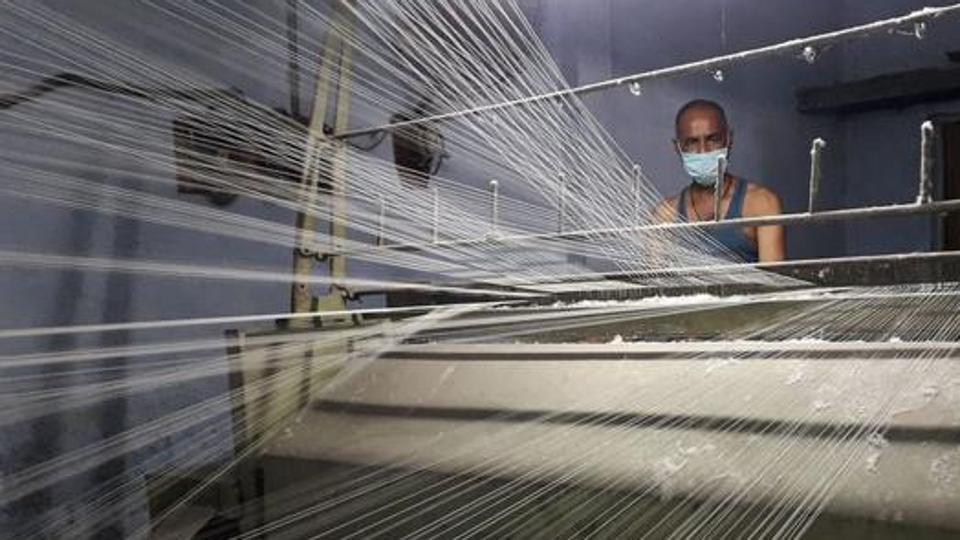
India has set a target of raising its textile exports to $150 billion by 2030. This number was $ 34 billion in 2023, the survey says. What ails India’s textile exports? A multitude of factors are to blame, the Survey adds, drawing useful comparisons with other countries.
First is “a lack of localisation and the complexity of the value chain” in Indian textile ecosystem, which “in turn, results in higher costs relative to global competitors”. While countries such as China and Vietnam -- they have a share of 30% and 7% in the global apparel market against India’s 2% -- have built vertically integrated ‘fibre-to-fashion’ firms, India is doing the exact opposite. “The fresh produce of cotton (grown in Gujarat, Madhya Pradesh and Andhra Pradesh) travels down to Tamil Nadu, where cotton yarns are produced. The yarns then travel to parts of Maharashtra and Gujarat before being weaved into cotton fabric” leading to higher costs relative to global competitors. The loss of competitiveness is only made worse by regulation such as pre-shipment inspection certificates slowing down logistics and exporters being required to “meticulously account for every square centimetre of fabric, buttons and zippers used”, the Survey explains.
“Simplification, consolidation, and elimination of processes that consume the financial and managerial bandwidth of our exporters is a low-hanging fruit. Addressing these challenges can significantly reduce costs and ease the burden on exporters, helping them become more efficient and competitive”, the Survey says.
To be sure, not all of India’s competitiveness challenges are on account of domestic factors. Trade barriers are another major obstacle here, the Survey notes. “Even though India has a significant comparative advantage in exporting silk shawls and scarves, the country faces a high tariff rate of 11.3 % in the US. In comparison, competitors like Korea face zero tariffs on their silk scarf exports due to trade agreements such as the US-Korea FTA”.
While the Survey acknowledges the historical and present importance of natural fabrics such as cotton in the Indian economy, it argues that the future of textile exports might be shifting to man-made fibres (MMF) and calls for investing in the sector. “While our comparative advantage lies in cotton and cotton-based products, global demand has shifted to products made from man-made fibre (MMF). MMF-based products range from yoga pants and athleisure wear to technical textiles in aviation, aerospace, and automobiles. As per International Cotton Association, MMF comprised 77% of global fibre consumption in 2024, whereas it was just 22% for cotton. By tapping into the MMF value chain, India will benefit from the steady rise in global MMF demand. India’s share of global MMF production is currently 9.2%, and the potential to catch up with the production levels of global leaders like Vietnam, China, and Taiwan is high”, it says.
“While there are tailwinds which will support the growth of India’s textile exports, these cannot be fully exploited without lowering the costs of the textile basket and deepening our market share in the MMF sector. These objectives would require the industry to step up its research efforts and vertically integrate and tailor products to international quality and sustainability requirements”, the Survey adds while noting that the government has been taking steps, including through the Production Linked Incentive (PLI) scheme and nudging research and development in the sector to harvest some of the opportunities.


