E-Paper



‘Equality and representation go hand in hand’: CJI Bhushan R Gavai
Gavai emphasised that equality and representation are not competing ideals but complementary forces that drive India’s constitutional vision forward.

 Prefer HTon Google


Chief Justice of India Bhushan R Gavai on Tuesday said the true strength of Indian democracy lies in its ability to continuously evolve while revisiting and redefining the idea of representation, even 75 years after the Constitution came into force.
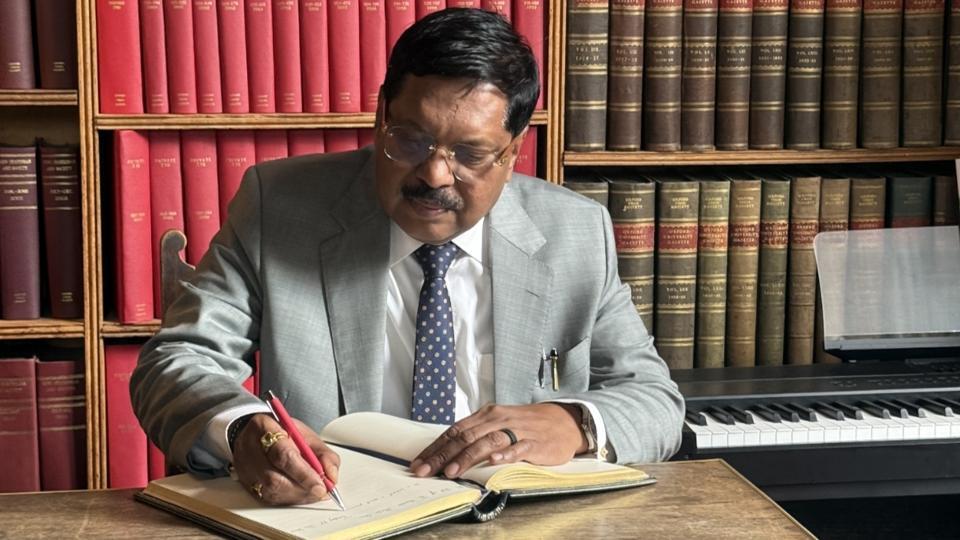
During his address at the Oxford Union in the United Kingdom, he emphasised that equality and representation are not competing ideals but complementary forces that drive India’s constitutional vision forward.
CJI Gavai asserted that representation and equality are not opposing ideals. “Rather, they reinforce each other,” said the judge, as he drew on landmark Indian Supreme Court judgments and the legacy of Dr BR Ambedkar to underscore how the Constitution remains a living document aimed at dismantling entrenched hierarchies.
Justice Gavai, the 52nd CJI and only the second dalit to hold the highest judicial office in India, made a compelling case for substantive equality — a model that goes beyond formal equality to correct historical disadvantages.
Citing the previous apex court’s decisions, he maintained that affirmative action is integral to equality under the Constitution and added that over the decades, the idea of representation has evolved through mechanisms such as reservations in promotions, age and eligibility relaxations, and targeted scholarships.
The CJI noted how this idea was extended in rulings such as NALSA Vs Union of India (2014), which recognised the rights of transgender persons and mandated their inclusion through reservations, and the 2020 judgment granting permanent commission to women in the Indian armed forces.
“In several other decisions, the Supreme Court has also emphasised the need for reasonable accommodation for persons with disabilities, ensuring their meaningful participation in society and their integration into governance and institutional frameworks,” he said.
Speaking just months after Parliament passed a constitutional amendment to reserve seats for women in legislatures, and the apex court upheld subclassification within Scheduled Caste quotas, Justice Gavai framed these developments as evidence of a constitutional project in motion that is responsive to evolving ideas of justice.
“The Constitution of India carries within it the heartbeat of those who were never meant to be heard...It compels the State not only to protect rights but to actively uplift, to affirm, to repair,” he asserted .
Citing Gayatri Chakravorty Spivak’s seminal essay “Can the Subaltern Speak?”, the CJI remarked: “Yes, the subaltern can speak — and they have been speaking all along. The question is no longer whether they can speak, but whether society is truly listening.”