E-Paper



EU concerned by products made from Russian oil entering European markets
EU executive vice-president Valdis Dombrovskis said this defeats sanctions aimed at curbing Russia’s ability to finance its war in Ukraine

 Prefer HTon Google


The European Union (EU) on Saturday expressed concern at a rapid increase in refined petroleum products made from Russian crude in countries such as India entering European markets, as this defeats sanctions aimed at curbing Russia’s ability to finance its war in Ukraine.
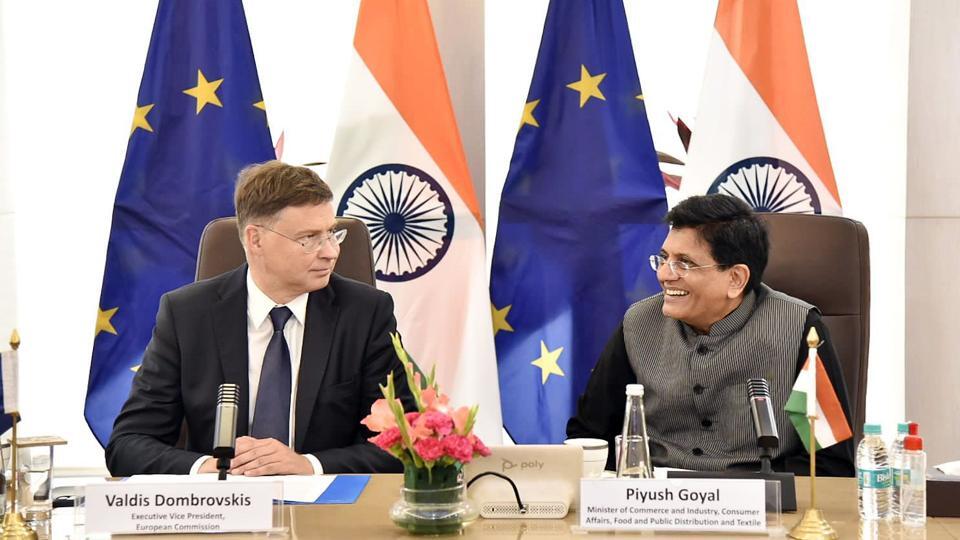
Valdis Dombrovskis, the EU executive vice-president and commissioner for trade who is visiting India for a meeting of G20 trade ministers, said the 27-member bloc is assessing how to deal with the entry of products processed from Russian crude into European markets in “large quantities”.
Dombrovskis also pointed to Russia’s withdrawal from the Black Sea Grain Initiative and accused Moscow of using energy supplies and food as “weapons of war and manipulation”. Against such a backdrop, the EU-India strategic partnership based on trust and friendship is crucial for addressing big challenges, he told a small group of reporters.
“This is indeed a new development that [petroleum] products which are processed from Russian oil are arriving in the EU market in large quantities, so we are going to see how exactly to deal with this,” he said in response to questions. The issue is in the “early stages of reflection”, but the EU has concerns as this “defeats the purpose of restrictions we put in place against Russia”, he said.
Dombrovskis noted that India and China haven’t joined sanctions imposed on Russia by the EU or the price cap on Russian oil put in place by G7 countries since exports of oil and petroleum products are Moscow’s biggest revenue source.
“We are also aware that Russia is actively seeking alternative markets following the loss of the European market...There are also some issues which are linked to developments which we are currently assessing. For example, what we see is now a rapid increase of refined oil products imported into the EU from India. But if they are made with Russian oil, in a sense, it defies the purpose which we are putting as the EU, as the Western democratic world to reduce Russia’s ability to wage this aggressive war,” he added.
India hasn’t publicly censured Russia’s invasion of Ukraine, though it has called for respecting the sovereignty and territorial integrity of all states. India has also ramped up the purchase of discounted Russian crude, making Moscow one of the largest energy suppliers over the past year.
Dombrovskis declined to say how the differences among the G20 member states over text to refer to the Ukraine crisis in outcome documents could impact the leaders’ declaration to be adopted at the upcoming summit next month. “On Russia’s aggression against Ukraine, I see the difficulty at the end of the day to have agreement on this, with Russia sitting at the table and it’s obviously not taking a constructive approach in this regard,” he said.
“The EU position is clear – we condemn the Russian aggression against Ukraine, call for ceasing this aggression and pulling Russian troops beyond the internationally recognised borders of Ukraine,” he added.
Russia should immediately resume its participation in the Black Sea Grain Initiative – which was brokered by the UN to facilitate exports of Ukrainian grain and Russian fertilisers – since Moscow’s withdrawal from this arrangement and the blocking of grain exports has created problems for many developing countries, Dombrovskis said.
Developing countries are “paying the price for Russia using food as a weapon of war”, he said. The EU is supporting efforts by the UN and Turkiye to resume the Black Sea Grain Initiative and has provided alternative export routes via Poland and Romania to export 45 million tonnes of food from Ukraine.
The EU will do everything possible to support Ukraine economically, financially and militarily to defend itself and “eventually to win this war”, Dombrovskis said. “We need to continue to put all pressure on aggressor Russia...and we are also following the principle ‘nothing about Ukraine without Ukraine’. It’s not that someone should be negotiating something behind Ukraine’s back about Ukraine’s future,” he added.