
 E-Paper



Ex-CJI Chandrachud says bail should be a right if speedy trial not possible
Former CJI Dhananjaya Yeshwant Chandrachud made the remarks on the Supreme Court recently denying activist Umar Khalid’s bail plea in the 2020 Delhi riots case


Jaipur: Former Chief Justice of India (CJI) Dhananjaya Yeshwant Chandrachud on Sunday said bail before conviction should be a matter of right, while asserting that it is a court’s duty to examine a case in depth where national security is involved before granting such relief.
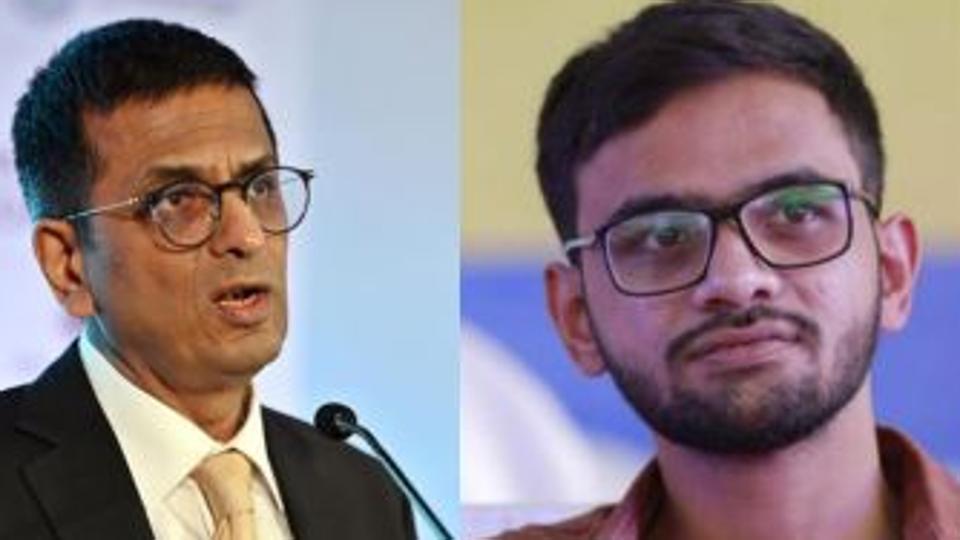
He made the remarks at the ongoing Jaipur Literature Festival in response to a question from senior journalist Vir Sanghvi, who raised the issue of the Supreme Court recently denying the bail plea of activist Umar Khalid in the 2020 Delhi riots conspiracy case.
Khalid and fellow activist Sharjeel Imam have been incarcerated since 2020. Denying bail to both, the top court on January 5 observed that they were involved in the “planning, mobilisation and strategic direction” of the northeast Delhi riots.
“Bail, before the constitution, should be a matter of right. Our law is founded on one presumption: that every accused is innocent until they are proved guilty at a trial. Pretrial detention cannot be a form of punishment. If someone is jailed for five to seven years before trial and then is acquitted finally, how would you compensate for that lost time?” Chandrachud said during a session ‘Ideas of Justice’.
Giving examples from various cases, the former chief justice of India said that bail can be denied if there is a possibility that the accused “may repeat offence, tamper with the evidence, or flee.”
“If these three grounds are not present, then bail must be granted. I think that where national security is involved, it is the court’s duty to examine the case in depth. Otherwise, what is happening is that people remain imprisoned for years,” he said.
“Now, one of the serious problems of the criminal justice administration in India is the inability of our prosecutions to conclude trials within a reasonable period of time. If that is so, you have one fundamental right which is the right to life. Article 21 includes the right to a speedy trial... If an expeditious trial is not possible under present conditions, then bail should be the rule, not an exception,” he said.
The former CJI said that over 24,000 bail applications had been disposed of during his tenure as CJI. However, he said that the denial of bail by sessions and district courts is a matter of concern, adding that judges fear their integrity might be questioned. “This is the reason why bail cases reach the Supreme Court,” he said.
“The net result is that the Supreme Court is now dealing with 70,000 cases per year. No Supreme Court, except perhaps the one of Brazil, deals with such a volume of cases. But how do we answer this general culture of distrust for public authority?” he said.
In response to a question, the former CJI suggested including eminent persons from civil society in the collegium for the appointment of judges in high courts and the Supreme Court to ensure transparency and strengthen people’s faith in the judiciary.
“Most of the criticism regarding the collegium system is misplaced. The process of appointing judges takes place at different levels. It is vetted in the High Courts. After the recommendations are vetted in the High Court, they are considered by the state governments. State governments are not necessarily the governments who are in power at the centre. The file is then vetted by the Intelligence Bureau for a character check. The Government of India comes back with its inputs, and finally, the file goes to the Supreme Court of India,” he said.
“The members of the collegium should be recommended by the Chief Justice, and his recommendations should be placed before the President of India for final selection.”


