
 E-Paper



Four pleas filed in Supreme Court seeking review of Ayodhya temple verdict
The petitions claim that the November 9 order of the Supreme Court was a miscarriage of justice.


Four separate review petitions filed in Supreme Court on Friday against its November 9 judgment in the Ayodhya dispute claimed that the order has resulted in failure of justice.
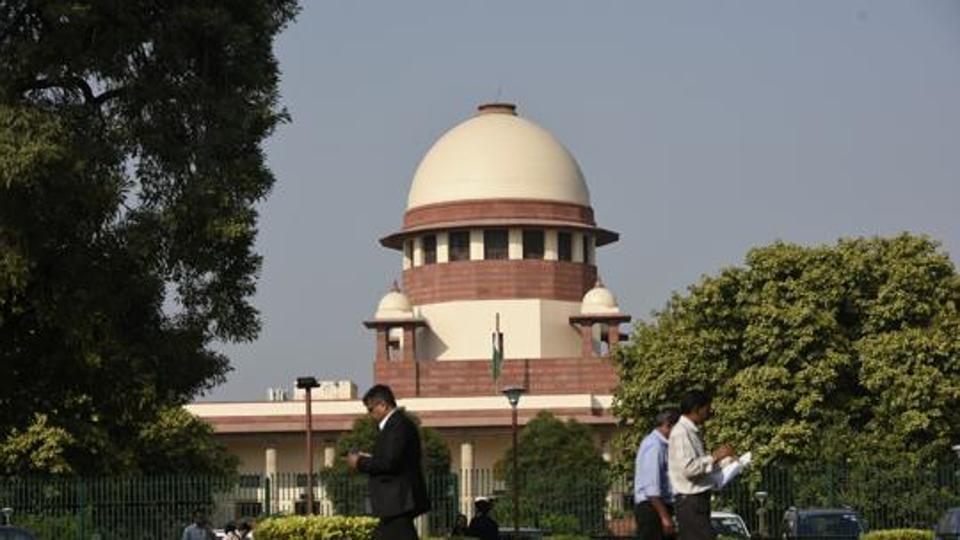
The review petitions filed by four individuals with the backing of the All India Muslim Personal Law Board (AIMPLB) submitted that the judgment of Supreme Court takes advantage of the destruction of the mosque in effectively holding that had the mosque not been destroyed in 1992, this judgment would have ordered it to be destroyed.
The five-judge bench headed by then Chief Justice of India (CJI) Ranjan Gogoi, his successor SA Bobde and justices DY Chandrachud, Ashok Bhushan and S Abdul Nazeer, Supreme Court had on November 9 awarded title of the 2.77-acre disputed land to Ram Lalla Virajman, the child deity while granting 5 acres of land to Muslims at an alternative site for construction of a new mosque.
The court also asked the government to set up a trust to oversee construction of the temple and manage the disputed site.
The review petitioners claimed that the title could not have been awarded to Hindu parties based on exclusive possession of the site since it has been admitted that Muslims entered and prayed at the site till 1949.
“Title could not have been given to Hindu parties on the basis of exclusive possession of entire site which never existed at any point in time with the Hindus since it is admitted that Muslims entered and prayed at the site till December, 1949 and later prevented from doing so because of the attachment while unfairly permitting Hindu worship following criminal trespass”, the petition stated.
The petitioners argued that the judgment of the top court sanctions serious illegalities of destruction, criminal trespass and violation of rule of law including damaging the mosque and eventually destroying it.
Earlier this week, Jamiat Ulama-i-Hind had also filed a review petition against the November 9 judgment.
The Sunni Central Waqf Board, which was a main litigant in the case had said it will not file a review petition but is yet to take a call on accepting of five-acre land alternative as directed by the apex court.


