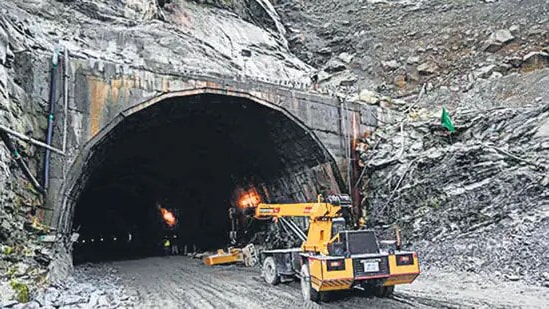
Even as the Sela and Nechiphu tunnels on Balipara-Charduar-Tawang axis are expected to be opened to public by June 2023, the national security planners are considering constructing multi-purpose road tunnels in future in border states with side tunnels to house critical ammunition and land-based short range tactical missiles.
This military move is in response to China building hardened bomb-proof underground shelters to house fighters and missiles at Gonggar air base in Lhasa and revetments at Gar-Gunsa base across Demchok in East Ladakh and at Nyingchi airport across Arunachal Pradesh as part of PLA military infrastructure upgradation.
With deep winter setting in all along the 3488 km Line of Actual Control (LAC), the Chinese military posture across Arunachal Pradesh appears to be reducing in troop numbers with two out of three additional combined armed brigades (CABs) inducted a month before the 20th National Party Congress in October seem to be in a withdrawal mode. It is learnt that one CAB deployed across Tawang in Cona county and another one deployed across Dibang in Mainling appear to be in withdrawal phase with President Xi Jinping elected for the third term at Communist Party meeting.
However, an additional CAB (some 4500 men with support arms) deployed across Siliguri Corridor in Phari Dzong area and another south of Nyingchi are still part of the PLA beefed up military posture along the LAC.
{{/usCountry}}However, an additional CAB (some 4500 men with support arms) deployed across Siliguri Corridor in Phari Dzong area and another south of Nyingchi are still part of the PLA beefed up military posture along the LAC.
{{/usCountry}}Given the rapid upgradation of military infrastructure by PLA in Western Theatre Command with permanent troop and equipment barracks, optical fiber networks and electricity, the Indian military planners are countering this by crafting a rapid deployment strategy with battalion commanders empowered to take spot tactical decisions through standard operating procedures.
Given the PLA’s heightened military posture post May 2020 East Ladakh transgressions, the national security planners even considered making side tunnels at both Sela and Nechiphu sites, but the road alignment and area relief did not allow the option. With the future wars expected to be fought by stand-off weapons rather than large scale infantry and armor movements, it is crucial that the nation’s war making machine is not exposed to enemy missile or rocket attacks. It is for these very reasons that Indian Army used RCC pipes with huge diameters post May 2020 in East Ladakh to defend the LAC. The RCC pipes at forward localities near LAC allowed troops to move and ammunition to be carted inside the connected tubes and not get exposed to enemy gaze in the worst-case scenario. As PLA is fully deployed in occupied Aksai Chin across East Ladakh LAC and in a alert posture all along the LAC, Indian Army cannot afford to take chances.