Colonel B Santosh Babu, the commanding officer of 16 Bihar battalion, who led soldiers to evict Chinese soldiers from East Ladakh’s Galwan Valley last June, has been posthumously named for Mahavir Chakra, India’s second-highest military award for acts of conspicuous gallantry in the presence of the enemy, an official announcement by the Defence Ministry said on Monday.
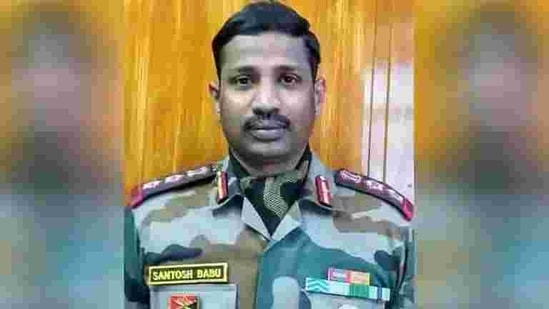
The government also named four other soldiers who made the supreme sacrifice in the Galwan operation for the gallantry awards announced on the eve of the Republic Day parade. The four Vir Chakra awardees, also posthumous, are Naib Subedar Nuduram Soren (16 Bihar), Havildar K Palani (81 Field), Havildar Tejinder Singh (3 Medium), Naik Deepak Singh (16 Bihar) and Sepoy Gurtej Singh (3 Punjab).
The bloody Galwan clash was the first deadly conflict between India and China in at least 45 years and was seen to underline the risk of the border standoff escalating into a full-scale confrontation. The news of the Republic Day honours for the Galwan bravehearts came hours after a fourth clash between Indian and Chinese troops in the last year was reported from north Sikkim.
Twenty Indian soldiers including Col Santosh Babu were killed in the seven-hour-long clash that at its peak involved more than 600 rival soldiers. China acknowledged the PLA suffered casualties in the violent scrap but didn’t give any figures.
{{/usCountry}}Twenty Indian soldiers including Col Santosh Babu were killed in the seven-hour-long clash that at its peak involved more than 600 rival soldiers. China acknowledged the PLA suffered casualties in the violent scrap but didn’t give any figures.
{{/usCountry}}Also Read: Naku La face-off and Taiwan show of force are part of Beijing expansionist plans
The Indian Army, based on intelligence inputs and communication intercepts, believes the PLA lost at least 50 soldiers including the commanding officer of the battalion concerned.
India’s national security planners believe PLA soldiers, who had come prepared with clubs wrapped with barbed-wire and spears, had hoped to wrest control of Galwan Valley from India. But they were evicted by the Indian soldiers in the operation listed in army records as Operation Snow Leopard.
A majority of the casualties on both sides were caused by hypothermia when soldiers were pushed off the cliff into the freezing Galwan river.
Also Read: How the Galwan Valley tragedy can transform Himalayan geopolitics
Prime Minister Narendra Modi who had travelled to Ladakh soon after the Galwan clash had lauded the courage of soldiers who repelled the Chinese aggression. “Bharat Mata’s enemies have seen your fire and fury,” PM Modi had said.
A memorial was also built for the soldiers who laid down their lives. According to the inscription at the memorial: “The (Indian Army’s) column successfully evicted the PLA OP from Y Nala and reached Patrolling Point 14 where a fierce skirmish broke out between the Indian Army and PLA troops. Col B Santosh Babu led from the front and his troops fought gallantly in hand-to-hand combat, causing heavy casualties to the PLA”.