E-Paper



‘God’s own man’: Justice CT Ravikumar bids farewell to Supreme Court
Chief Justice of India Sanjiv Khanna praised Justice Ravikumar’s calm and composed demeanour on the bench, and also his humility, integrity and judicial acumen.

 Prefer HTon Google


Presiding over a ceremonial bench to mark the retirement of justice CT Ravikumar, Chief Justice of India (CJI) Sanjiv Khanna on Friday described the outgoing judge as “God’s own man” from “God’s own country,” Kerala.
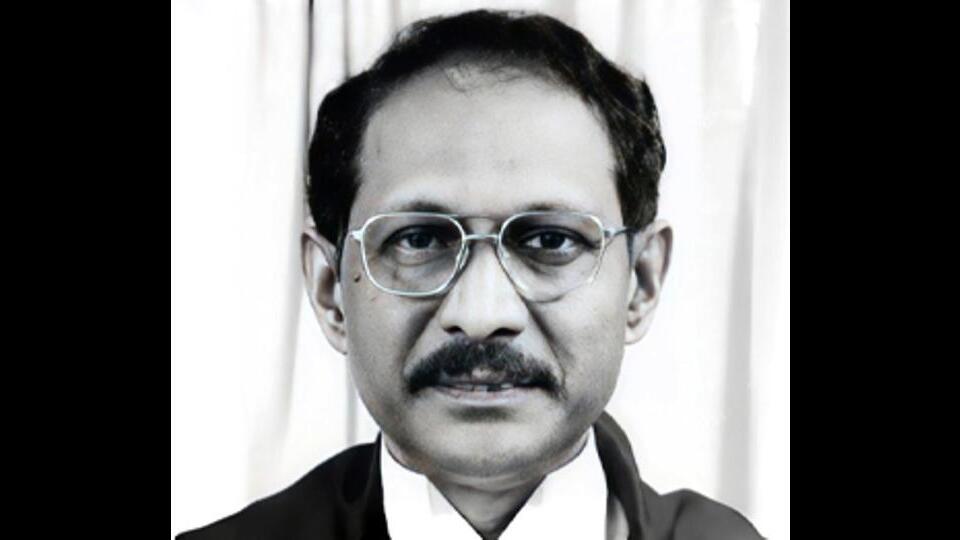
The farewell, attended by senior members of the Bar, was marked by emotional tributes celebrating justice Ravikumar’s humility, integrity and judicial acumen.
CJI Khanna praised Justice Ravikumar’s calm and composed demeanour on the bench, saying, “He has been gentle yet firm, so important for a judge. I have never seen him raise his voice.”
Reflecting on the judge’s journey from a small village in Kerala to the Supreme Court, the CJI highlighted his inspiring rise. “Coming from a village and reaching the highest pedestal of the judiciary is exemplary. Many of us were born in cities and had access to resources that he might not have. To come from a rural background and become a judge in the highest court of the land is a huge milestone. Let’s hope we have more judges like him, but we are going to miss him,” CJI Khanna remarked.
Attorney general (AG) R Venkataramani honoured justice Ravikumar’s legacy with a heartfelt poem, which, he said, captured the essence of the judge’s personality. “How I wish he stayed longer for the bench,” said Venkataramani, highlighting justice Ravikumar’s gentle demeanour.
Solicitor general (SG) Tushar Mehta added, “Your Lordship is simplicity personified. You have always remained a God-loving person and not a God-fearing person.”
Senior advocate and Supreme Court Bar Association president Kapil Sibal struck a personal note, drawing parallels between justice Ravikumar’s judicial philosophy and his love for cricket. “He played so well and always with a straight bat. Never threw a googly. It was a pleasure to be in your court. Simple, gentle and never the one to raise his voice. That’s the kind of judge the Bar loves, and we will miss you.”
Supreme Court Advocates-on-Record (SCAoRA) president Vipin Nair referred to him as an “extremely courteous and disciplined” judge, expressing confidence in a spectacular “second innings” post retirement.
Justice Ravikumar, in his response, expressed gratitude and humility, reflecting on his roots and career. “An advocate has always remained in me, that’s why I respect the Bar,” said the judge, adding, “Traditionally in cricket, they bat well in the second innings. I hope I also do well in my second innings. Thank you very much!”
Born on January 5, 1960, in the village of Thazhakara, near Mavelikara in Kerala’s Alappuzha district, justice Ravikumar’s early life was modest. His father was a bench clerk in a magistrate court. After enrolling as an advocate in 1986, he began independent practice in civil, criminal, service and labour matters in various courts, including the Kerala high court. Over the years, he served as government pleader and special government pleader (SC/ST).
Justice Ravikumar was elevated to the Supreme Court on August 26, 2021, becoming the fifth judge from the Kerala high court to reach the apex court without serving as a chief justice of a high court. He belonged to a scheduled caste community.
During his tenure, he authored landmark judgments across diverse areas of law. In a judgment just a day before his last day in office, he led a bench that ruled that tribunals under the Maintenance and Welfare of Parents and Senior Citizens Act, 2007, have the authority to restore property to parents if their children fail to fulfill care-giving obligations. The decision strengthened the rights of senior citizens.
In November, justice Ravikumar cautioned courts against the indiscriminate prosecution of a husband’s relatives in dowry harassment cases, warning of the psychological scars inflicted by wrongful trials. In an October ruling, he emphasised the need for proportionality in bail conditions, advocating for judicial discretion that respects civil liberties while ensuring justice.
Another significant judgment came in September when he ruled that the 14-day timeline for granting prosecution sanctions under the Unlawful Activities (Prevention) Act (UAPA) is mandatory, ensuring swift governmental action in matters of national security. His bench also handled key aspects of the Prevention of Money Laundering Act (PMLA), with his retirement necessitating a reconstitution of the special bench for reviewing the controversial provisions of the PMLA.
Justice Ravikumar’s three-year tenure at the Supreme Court was marked by empathy, simplicity and a keen sense of justice. As CJI Khanna aptly summarised, “He is a humane and noble person, and that’s what was always evident in whichever role he played.”