E-Paper



Govt: 9.5% hike in PM Poshan material costs
The central government will bear the additional cost of ₹954 crore approximately in 2025-26 due to this enhancement

 Prefer HTon Google


NEW DELHI: The Union government on Thursday increased the material cost for midday meals from ₹6.19 to ₹6.78 per student per day for those enrolled in kindergarten and primary schools (classes 1 to 5) and from ₹9.29 to ₹10.17 for students in upper primary schools (classes 6 to 8). The new rates will be applicable across the country from May 1.
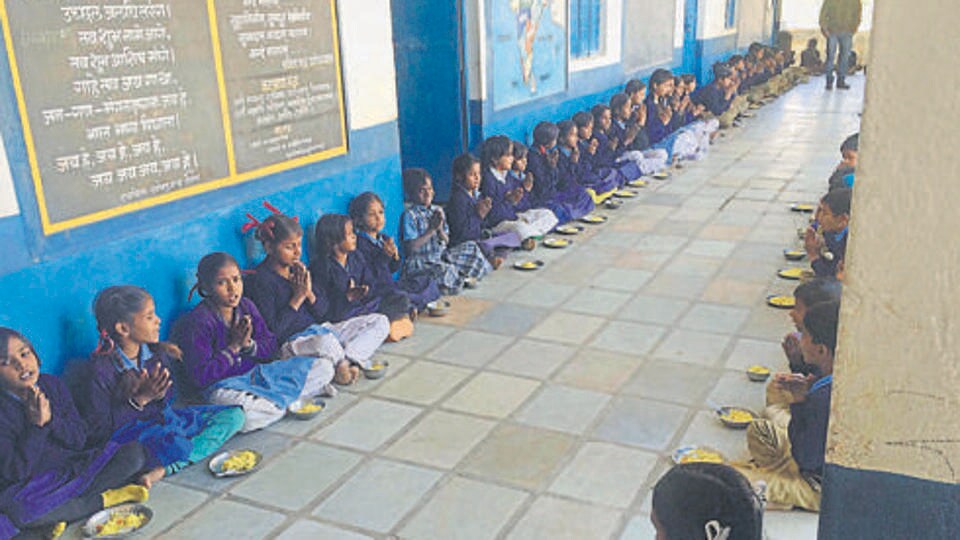
The Union education ministry, in a statement, said it has increased the material cost of the centrally sponsored Pradhan Mantri Poshan Shakti Nirman (PM POSHAN) scheme (formerly midday meal scheme) by 9.5 % on the basis of inflation index provided by the labour ministry.
“The central government will bear the additional cost of ₹954 crore approximately in FY 2025-26 due to this enhancement,” the statement said.
Under the PM POSHAN scheme — which operates on a 60:40 funding model between the Centre and the states — one hot cooked meal is provided every school day to around 112 million students up to class 8 across 1.36 million government and aided schools.
Under the scheme, material cost is provided for procurement of ingredients such as pulses vegetables, oil, spices and condiments, and fuel required for cooking the meals. In addition to material costs, the Centre also supplies around 2.6 million metric tonnes of food grains annually through the Food Corporation of India (FCI), covering 100% of the cost, including a ₹9,000 crore subsidy and transportation.
Factoring in all components, the per meal cost under the scheme is approximately ₹12.13 for primary classes, and ₹17.62 for upper primary classes, the statement said.
This is the second revision in the material cost of midday meals in six months. In November, the Centre increased the material cost from ₹5.45 to ₹6.19 per Bal Vatika (kindergarten) and primary school student per day, and from ₹8.17 to ₹9.29 for every upper primary student per school day.
Despite two revisions in the material costs within half a year, development economist and activist Jean Dreze claimed the Centre was not funding the scheme properly.
“If you take the inflation figures into account, the budget for the scheme has been more or less the same as it was 10 years ago. Since the scheme follows funding 60:40 and the Centre is not allocating enough money, states struggle to provide nutritious food to students and depriving them good future,” he alleged.
The Centre had allocated ₹12,467.39 crore in FY 25 to PM POSHAN scheme and later revised it to ₹10,000 crore, but it could spend only ₹5,421.97 crore by February 18, 2025. The scheme has been allocated ₹12,500 crore in FY 2025-26 budget.
“We revise the rates of material cost for the PM POSHAN scheme in line with the consumer price index – rural labourers (CPI-RL). We have been revising the rates based on CPI-RL and have done the same now as well,” an education ministry official said, requesting anonymity.
The CPI-RL is constructed by the labour ministry on the basis of collecting continuous monthly prices from the sample of 600 villages spread over 20 states of the country. The ministry released the CPI-RL for February 2025 on March 24, keeping the year-on-year inflation rate at 4.10% as compared to 7.36% in February 2024.