
 E-Paper



Govt begins work on staving off climate crisis farm impact
The government has constituted two scientific panels to assemble an advanced countrywide agricultural weather information system and introduce tech-enabled assessment of crop yields to ward off the impacts of extreme weather linked to climate change

 Prefer HTon Google


The government has constituted two scientific panels to assemble an advanced countrywide agricultural weather information system and introduce tech-enabled assessment of crop yields to ward off the impacts of extreme weather linked to climate change, officials said.
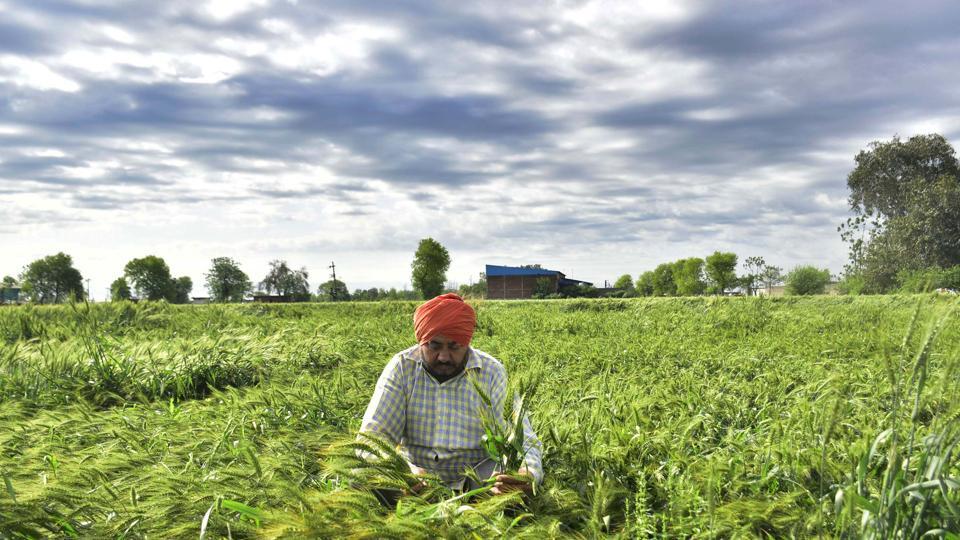
The committees anchored in the Mahalanobis National Crop Forecast Centre in New Delhi comprises multidisciplinary experts and representation from states to step up responses to the climate crisis, which have cut yields and farm incomes.
Agriculture employs half of the country’s workforce and accounts for 18% of India’s GDP. Climate scientists have consistently warned that severe heatwaves, changing rainfall patterns and flooding will threaten India’s food security, especially its rice and wheat cropping systems, which are critical to feeding the world’s most populous nation.
Heatwaves have dealt blows to India’s wheat output in recent years. In 2022 and 2023, spikes in temperatures, especially around harvest, have crimped yields of wheat. Two years ago, India recorded its hottest March on record, which shaved off 3 million tonne of the winter staple. Late surges in monsoon over the past three years have flooded several states, destroying oilseeds and pulses, and delaying rice harvesting.
Weather disruptions sent federally held wheat stocks to a 16-year low this month. Lower food stocks have prompted India to ban wheat, rice and onion exports, which are still in force, hurting farm incomes.
The first panel has the task of putting in place a string of high-tech, automatic weather stations to generate timely data and forecasts to help farmers and policymakers prepare better for changes in temperatures, drought and extreme rainfall events.
For India, the first of the four Intergovernmental Panel on Climate Change (IPCC) reports in 2022 highlighted concrete evidence of a changing monsoon, rising seas, deadlier heat waves, intense storms, flooding and glacial melts. The monsoon rainfall system, the lifeblood of the world’s fifth-largest economy, waters 60% of the country’s crops.
Risks to agriculture tend to be more acutely felt because they are most visible, studies have shown. The government’s 2017-18 Economic Survey had calculated that extreme weather and drought, when rainfall loss is greater than 40% than the median, will cut farmer incomes by up to 14%.
The second panel will put in place faster calculation of yield losses due to extreme weather for quicker payouts of farm insurance under the flagship Pradhan Mantri Fasal Bima Yojana. Scientists are working on satellite data and technologies such as artificial intelligence for yield calculation. “With frequent turns in weather patterns, proper yield estimates have become important from national food security point of view,” said an official, declining to be named.
The government is switching to more advanced technologies to estimate crop output. “From this kharif (summer) season onwards, the ministry is trying out a programme called Yield Estimation System based on Technology (YES-Tech) to gather data on rice and wheat,” a second official said, seeking anonymity. The programme relies on data collected by satellite and remote sensing to determine output.
The YES-Tech programme for now is being aimed primarily to estimate crop losses to better implement the farm insurance scheme.
Rising temperatures have already made Indian agriculture more resource hungry. Farming now consumes up to 30% more water due to “high evaporative demand and crop duration due to forced maturity” in states such as Andhra Pradesh, Punjab and Rajasthan, according to studies by the Indian Council of Agricultural Research (ICAR).
Apple orchards in Himachal Pradesh are shifting to higher altitudes for lack of sufficient cold weather. “Temperature in apple-growing regions of Himachal Pradesh showed an increase, whereas precipitation showed a decrease in recent years in Lahaul and Spiti and Kinnaur,” one of the ICAR studies said.


