The Cabinet on Tuesday set fresh minimum support prices (MSPs) for crops to be sown during rabi, or the winter season, offering a substantial raise for pulses, the commonest source of proteins for most Indians, but only a modest hike for wheat, the main staple.
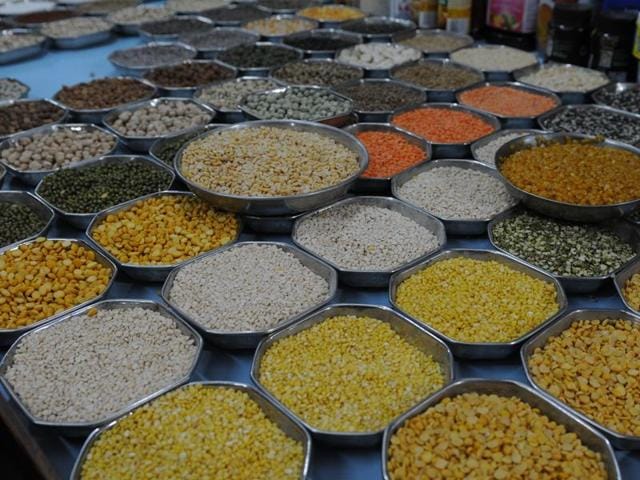
The new prices are in line with the Narendra Modi-led government’s overall farm strategy of boosting the output of lentils, a scarce item whose short supply had roiled household budgets this summer.
Better prices for pulses in the summer-sown season had helped wean farmers away from big surplus staples such as rice.
For this winter, the MSP for the best variety of wheat was raised by Rs 100 at Rs 1,625 a quintal (100 kg) while the most expensive pulses variety will see its farm-end price go up by Rs 550 a quintal.
MSP is the price the government offers for produce it buys from farmers, which also acts as the floor rate in private markets, thereby helping avoid distress sale. Quite simply, an MSP hike is like a pay raise for farmers.
India does not produce enough pulses and relies on imports to meet domestic demand. In a good farm year, the country manages only about 18 million tonnes while demand usually hovers between 22-24 million tonnes. A drought this year shrunk supplies further, creating a political challenge for the Modi government.
{{/usCountry}}India does not produce enough pulses and relies on imports to meet domestic demand. In a good farm year, the country manages only about 18 million tonnes while demand usually hovers between 22-24 million tonnes. A drought this year shrunk supplies further, creating a political challenge for the Modi government.
{{/usCountry}}A good monsoon and better MSP for pulses has cooled retail inflation, which moderated further to 4.2%, a one-year low, in October compared to 4.3% in September, government data showed on Tuesday.
Overall, the MSP for wheat was raised by 6.6% and barley by 8.2% and including a bonus, while pulses saw up to 16% hike. These include gram, whose MSP will rise by 14.3%, while masur is set to go up by 16.2%, an official statement said.
Gram MSP now stands at Rs 4,000 per quintal, including a bonus, from Rs 3,500 per quintal in the previous year, while masur stands at Rs 3,950 a quintal from Rs 3,400 earlier.
The Modi government has generally avoided large MSP hikes to control inflation, among other things. In the three years it has been in power, the NDA has increased MSPs by 3.9% on an average a year, compared to 9.5% raise by the UPA’s 9.5% average hike.
Also read | Sweet paradox: India’s drought-stricken farmers plant thirstiest crop