
 E-Paper



How Ram Mandir was created in Ayodhya step-by-step: Watch video
The video has been released by L&T, which built the temple.

 Prefer HTon Google


Industrialist Harsh Goenka on Tuesday took to X to share a video of the construction of the Ram Janmabhoomi Temple in Ayodhya. “Step by step, how the Ram mandir was created in Ayodhya….” Goenka captioned his post.
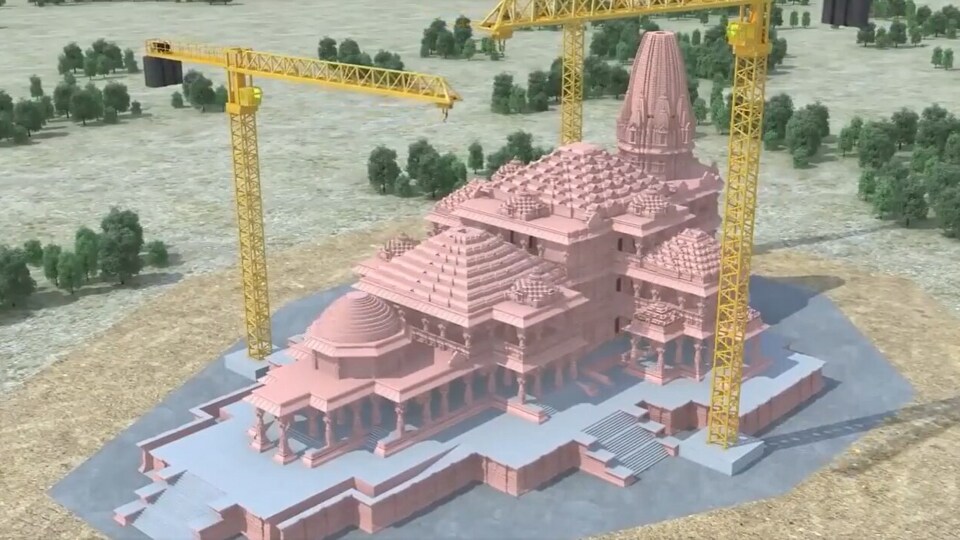
The video is sourced from Larsen and Tubro, which built the temple. The video shows the construction of the temple from start to finish.
Reacting to the video, a user wrote, “Very nicely captured the sequence of events.” Meanwhile, another wrote, “Indeed an Engineering Marvel with no cement and sariya, and with the expected life of 1000 years.”
The Ram Janmabhoomi Temple in Ayodhya stands within a 70-acre complex, with its design rooted in the ancient Nagara style of architecture. It is 161.75 feet in height, 380 feet in length, and 249.5 feet in width. The temple is a three-story structure comprising five mandaps -- Nritya Mandap, Rang Mandap, Gudh Mandap, Kirtan Mandap, and Prarthana Mandap -- along with the Main Shikar.
"In designing and constructing the Shri Ram Janmbhoomi Mandir, we express our heartfelt gratitude to the Government...." L&T chairman and managing director S N Subrahmanyan said.
A significant number of columns provide support to the foundation of the temple. The ground floor is upheld by 160 columns, the first floor by 132 columns, and the second floor, distinguished by intricate design and detailing, is supported by 74 columns. This collective arrangement not only enhances the stability but also contributes to the overall aesthetic appeal of the temple.
Additionally, there are ramps and lifts in place for the ease of access for individuals with disabilities and the elderly. The Mandir is enclosed by a rectangular compound wall known as Parkota, measuring 732 meters in length and 14 feet in width.
The construction of the Ram Mandir in Ayodhya adopts a distinctive method that eschews the utilization of steel or iron. Instead, the project employs traditional construction materials, aligning with ancient building practices and showcasing a dedication to sustainability.
(With inputs from PTI)


