
 E-Paper



HT interview: ‘India’s economic miracle made it key in global reforms,’ says Larry summers
Lawrence Summers forecasts India's economy could grow sixfold by 2047, emphasizing its role in global development and climate finance reform.

 Prefer HTon Google


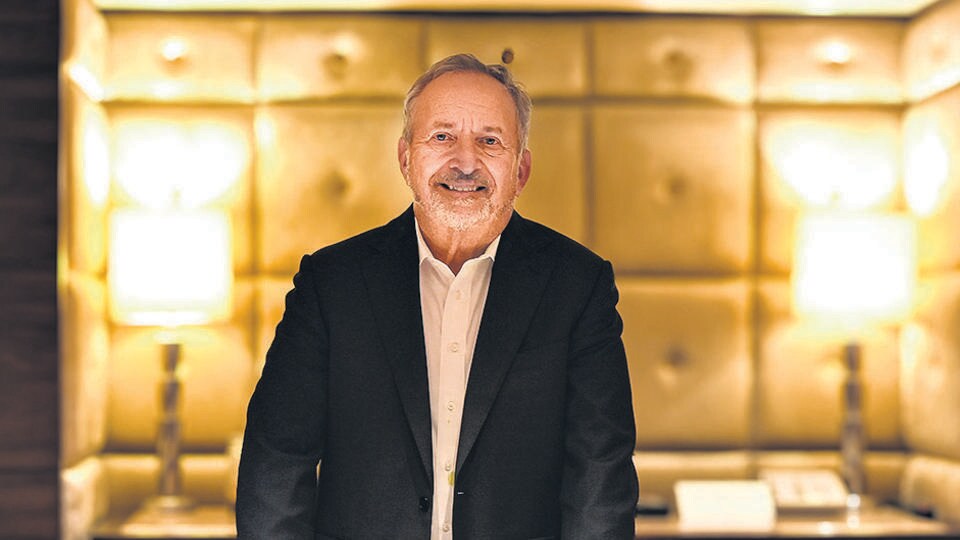
Lawrence Summers, the Charles W. Eliot University Professor and President Emeritus at Harvard University, former chief economist of the World Bank, adviser to two US Presidents and a co-convener of the independent expert group on reforming the multilateral development banks under India’s G20 presidency, spoke to HT on Monday over a broad range of issues. Summers believes that Indian economy could become six times its current size by 2047; that the advanced world and multilateral system needs to do much more to address the concerns of poor countries and mitigating the climate crisis; and that India has an important role in aligning the world towards what needs to be done. Edited excerpts:
You joined the World Bank as its chief economist in 1991, which is when India started its economic reforms. Last year, you were one of the co-conveners (the other was chairman of the 15th Finance Commission, NK Singh) of an independent expert group on reforming multilateral development banks under India’s G20 presidency. How do you see India’s economic trajectory in these last three decades?It’s an extraordinary story. India, at that time, was so short of money that it had to put a quantity of gold on a ship to London in order that it could be security for a $1 billion loan. Today, India has $600 billion in reserves and is a generous provider of support to countries around the world.
India has had an economic miracle over the last generation, and I believe that the next generation could see quite remarkable economic growth. I am hopeful that between now and the 100th anniversary of India’s independence, the Indian economy could grow sixfold from its current level. And I think India has the very great prospect of being the most rapidly growing significant economy in the world over the next five years, the next 10 years, and the next generation.
There’s a genuine concern today that the interests of Global South are getting squeezed out because of a growing US-China competition. The crisis of multilateralism is one of the biggest symptoms of this. Do you see India as capable of pioneering a new deal for the Global South? This was one of the overarching themes of the G20 under India’s presidency.I was honoured to have been asked to work with Mr. NK Singh on an independent experts’ group to give advice as to the future of the multilateral development banks. We made what I think are a variety of important recommendations pointing towards the need for them to be bigger, bolder and better. And I am gratified by the rhetorical commitments to act on those recommendations. But we will have to see what actually happens on the ground. I do think that India, which is respected for what its own economy has accomplished, for all the thinking that India has done on development issues and because of its connections in the Global South, can play an important role in strengthening the architecture not just in the multilateral development banks, but also in the IMF, so as to assure that we are maximizing the prospects for development that is both environmentally sustainable and successful in its impact on people.
In a 2009 Lunch with FT you were almost prescient in predicting a pushback against imports in the US. “The global imbalances have to add up to zero and so, if the US is going to be less the consumer importer of last resort, then other countries are going to need to be in different positions as well,” you said. The falling appetite for imports in the world’s largest economy is coming at a time when the largest exporter, China, is sitting on massive excess capacity. What does this mean for the rest of the world, especially India? I think it’s a very substantial challenge and we’re going to have to operate both to curb China’s solving the problem of its insufficient consumption through channelling resources into export capacity. That’s a margin on which we’re going to have to operate. And I think we’re also going to have to operate to do everything we can to keep markets open in industrial countries to countries like India.
I think India has an opportunity to be a substantial beneficiary of the fact that resilience is now a far greater concern in the United States and in Europe than it was a few years ago. And many firms that were all about just-in-time are now also heavily about just-in-case. And that means reducing sole dependence on China.
And that desire, both on the part of businesses and on the part of public authorities, to reduce single points of dependence, will, I think, create very substantial opportunities for Indian producers.
Rise in national debt of advanced economies, including the US is seen as one of the most important legacies of the Covid-19 pandemic. How big a problem is this in your view? What do you see as the most plausible way out? The humanitarian consequences of debt burden in poorer countries are even worse -- what you and NK Singh have termed as “financial defaults have been avoided only by the moral default”.
I think that there have been fewer national bankruptcies than I would have expected a few years ago. But that is only because countries have slashed their budgets for health, education, for investments in the next generation. And that if we are going to maintain cohesion in the global system, it is going to be essential that we figure out how to increase net resource transfers to the poorest countries in the world. That is why the next International Development Association replenishment is so important. That is why it is so important that we think creatively about debt issues as well.
It certainly does not help when large amounts of global savings are being channelled into the sterile asset represented by industrial country debt. And I am concerned about issues of fiscal sustainability in the United States. I hope that at some point they will be addressed. But it does not appear right now that they are a top priority. And I fear we are going to have to have some episode in which interest rates spike for a time before the necessary alarm is generated to lead to fiscal prudence.
You described Brexit as the “worst self-inflicted policy wound that a country has done since the Second World War” and called on the elite to “develop a responsible nationalism”, which did not show denial but sought to “design an approach to economic policy that hear the anger that’s being expressed in this vote”. Have the political elite in the advanced economies done a good job on this front? Is the newly emerging consensus vis-à-vis resurrection of industrial policy to generate jobs and manage economic discontent in advanced countries a change for good?
I think there are elements that are right. The sense of activism and obligation that is manifest in those policies is welcome. I’m sceptical of placing as much emphasis only on manufacturing as much of the discussion does. My own suspicion is that given rapid productivity improvements in manufacturing that it is almost inevitable that production work in manufacturing is going to account for a declining share of employment in almost all countries. And so I think we are going to have to look at finding ways of strengthening the quality and quantity of service sector jobs, making service sector jobs good jobs. I think we are going to see a need for substantial increases in activity in construction. For example, the United States is very short on new houses. That is part of why housing has become so unaffordable. And at the same time, we have all these workers who are regretting that there is less production work. Many of those workers could become involved in the construction of new homes and that would in a sense be a win-win solution, meaning more employment and solving an important national problem.
Climate finance is an issue which has eluded both the ex-ante and ex-post consensus. We have had 28 COPs. We are heading into the 29th. How important do you think is the reform in multilateral development banks to solving the issue of climate finance, especially for poor countries? Are global leaders listening to what you and NK Singh have said in your report?I think they are listening, but I think if anything, our report did not go far enough relative to all that needs to be done. And I don’t think the world is currently on a trajectory to doing nearly as much as we called for in our report. I think unfortunately, the huge geopolitical challenges of this moment in Russia and Ukraine, in the Middle East, have somewhat diverted attention from the climate problem. And if anything, the good news on climate that has come from reducing prices of renewable energy and improvements in battery technology, those developments have been offset by a greater sense that various non-linearities are kicking in and increasing climate risks.
So, I think there is a very good chance that historians will judge that about now was the moment that we crossed the 1.5-degree threshold that had previously been identified as very dangerous. If so, that would be sooner than most people anticipated a few years ago. So, it is going to be a very difficult challenge, and I don’t think there is any chance that it will be successfully met without much more robust activities from the MDBs. Everything that the MDBs do that is successful has both a direct effect and because with any new technology, the more of it that is done, the more the costs of doing it in the future diminish. There is an extra multiplier associated with anything that the MDBs are able to do. So, I hope that their activity in this sphere will very substantially increase, particularly in catalysing private sector effort. The ratio of happy talk to real investment commitments from the private sector has been extremely high to date.
Let me end with a slightly provocative question. The multitude of today’s crisis, notwithstanding, there has been massive wealth-creation in the world in the last few decades. Do you think winners in the larger economic game have any incentive to push for the reforms and course correction which is needed? Are our democratic processes robust enough to align these incentives properly? You have had ringside view of policy making in two US administrations.
I am ultimately optimistic about my country. There is a line that is attributable to Winston Churchill that I don’t think he actually ever said, that the United States always does the right thing but only after exhausting the alternatives. I think that ultimately, we will take many of the steps that are necessary.
Some of the actions will come too late but I think the very encouraging thing is the extraordinary progress that human ingenuity is bringing about. I calculated not long ago that only about 7% of the people who have ever lived are now alive but that more than two-thirds of the world’s GDP that has ever been produced was produced during my lifetime and there will be twice as much or more produced in the next 50 years as there has been through all of human history to date. I think those technologies create enormous potential for solving problems for bettering lives everywhere.
I could not have imagined when I was in school years ago that there would be smartphones, let alone that there would be more smartphones than adults on this planet and while there is all kinds of political fractiousness and division, I think there are also very substantial gains from the application of technology that brings people together and creates opportunity.
I don’t think there’s any question that with all the challenges and problems the life prospects of a child born in India or in Africa today are far greater than the life prospects of a child born at any point in the past and we should never lose sight of that idea of progress.
I am an alarmist but an alarmist in the hope and the deep belief in self-denying prophecy that it is the expression of alarm and concern that brings about the responses that pushes the world forward.


