The Indian Air Force (IAF) tested its capability in dealing with a possible scenario of nuclear and biological warfare during a 13-day-long mega military exercise whose aim was to sharpen its war waging capability in the wake of fast evolving regional security situation.
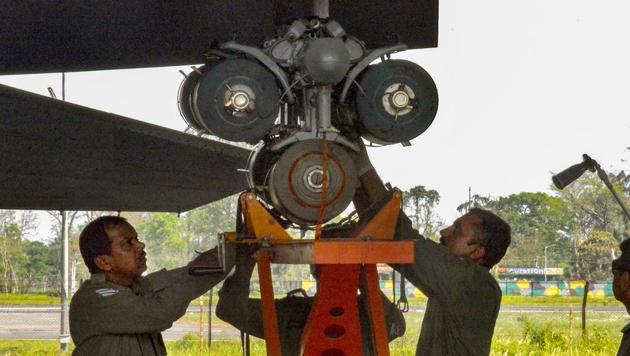
Official sources said the focus of the Gagan Shakti exercise from April 8-20 was to check the viability of IAF’s operational plans to deal with any kind of challenge including nuclear warfare and a possible situation of a two-front war with China and Pakistan.
A major focus of the exercise was to check combat capability of the indigenously developed Light Combat Aircraft (LCA) Tejas and their performance was satisfactory, IAF sources said.
They said eight Tejas were deployed during the exercise and some of these had reported minor technical issues, adding each of the six Tejas had flown six sorties daily like any other platforms including Sukhoi, Mirage 2000 and MiG 29 jets.
The sources said aim of the exercise was to test IAF’s combat readiness in a real time scenario, adding it had never carried out an exercise of this scale earlier. A key focus of the exercise was to check IAF’s readiness to deal with a biological, chemical and nuclear war and we were satisfied with our capability to deal with such situations, they said.
{{/usCountry}}The sources said aim of the exercise was to test IAF’s combat readiness in a real time scenario, adding it had never carried out an exercise of this scale earlier. A key focus of the exercise was to check IAF’s readiness to deal with a biological, chemical and nuclear war and we were satisfied with our capability to deal with such situations, they said.
{{/usCountry}}They also said all types of aerial weapons, including standoff and precision weapons were deployed to validate their use in the air operations matrix. As part of the massive drill, the IAF deployed its entire assets for the pan-India exercise with fighter jets, equipped with strategic weapons like Brahmos and Harpoon anti ship missiles, carrying out deep penetration strikes to revalidate its strategic reach.
During the exercise, the sources said over 11,000 sorties were flown which included nearly 9,000 sorties by fighter aircraft. The combat drill was carried out at a time when China was increasing its assertiveness along the borders with India and while Pakistan has been continuing its skirmishes along the Line of Control in Jammu and Kashmir.
The exercise covered all terrains including desert, high altitude areas like Ladakh and maritime sphere.
During combat drills near Sino-India border, the IAF significantly focused on inter valley transfer of troops considering various possible situations of conflict and taking a lesson from the Doklam standoff.
Ensuring serviceability of fighter aircraft and various missile systems were a priority area and the IAF succeeded in its endeavour, officials said. The serviceability of surface-to-air missiles were around 97 per cent while serviceability of fighter jets were close to 80 per cent, they said.
Serviceability refers to availability of an aircraft or a weapon system for deployment. The IAF has been struggling to maintain high serviceability levels of its platforms due to difficulty in getting required spares.
Similarly, the IAF could ensure high levels of dispatch reliability which refers to ability to make the serviceable flying platforms airborne as and when required, the officials said.