Indian Institute of Technology (IIT) Kharagpur in West Bengal has become the first IIT in India to introduce postgraduate medical degree programmes recognised by the National Medical Commission (NMC), offering 12 MD seats across six specialisations for the 2026-27 academic session, the institute announced on Thursday.
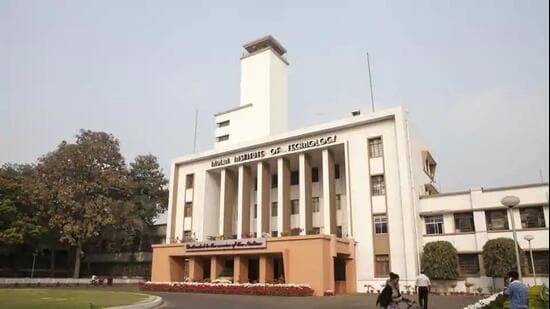
“The Institute undertook the prescribed regulatory process with the NMC, including submission of applications, documentation of academic and clinical facilities, and fulfilment of the applicable requirements in March 2026. The process culminated in permission for the six MD programmes for the academic session 2026–27,” director of IIT Kharagpur Suman Chakraborty said.
The programmes will be offered at the institute’s Dr B C Roy Multi-Speciality Medical Research Centre, with admissions through the second round of NEET-PG 2026 counselling from November 10 to 23, according to the announcement. Fees of the PG medical course and stipends paid to students will be on the lines of AIIMS.
“The postgraduate medical programmes are supported by the in-house expanding clinical infrastructure of Dr. Shyama Prasad Mookerji Superspeciality Hospital - new Hospital of IIT Kharagpur, together with the South Eastern Railway Hospital, Kharagpur, under the established institutional partnership. This arrangement provides the clinical training ecosystem for the approved postgraduate programmes, in accordance with the applicable NMC requirements,” Chakraborty said.
The six specialisations are general medicine, radiology, physiology, pathology, community medicine and biochemistry, with two seats in each discipline. The programmes will be available for eligible candidates through the Medical Counselling Committee’s (MCC) online counselling process.
{{/usCountry}}The six specialisations are general medicine, radiology, physiology, pathology, community medicine and biochemistry, with two seats in each discipline. The programmes will be available for eligible candidates through the Medical Counselling Committee’s (MCC) online counselling process.
{{/usCountry}}MCC is the government body responsible for conducting online counselling to allot medical and dental seats based on NEET scores.
The move marks the entry of an IIT into postgraduate medical education and is aimed at bringing clinical medicine closer to engineering, artificial intelligence (AI), biomedical sciences and translational research.
IIT Kharagpur said in a statement that the programmes would provide opportunities for medical students to engage with research across areas such as AI-assisted clinical decision-making, advanced medical imaging, computational pathology, biomedical devices, molecular diagnostics, precision medicine and population health.
The institute added that its existing strengths in microfluidics, bioengineering, healthcare diagnostics, AI, computational sciences and translational medical technologies would provide a foundation for the interdisciplinary approach.
Chakraborty said the institute’s objective was not limited to training specialist doctors but also included developing medical professionals capable of addressing healthcare challenges through research and technology.
“India’s first IIT is now taking a historic step towards shaping the future of medical education. Our vision is not simply to train specialist doctors, but to create an ecosystem where clinical excellence meets engineering ingenuity, artificial intelligence and translational research,” he said.
“We want our medical graduates to be not only outstanding clinicians, but also innovators capable of addressing some of humanity’s most pressing healthcare challenges,” Chakraborty added.
He said the first batch would be pioneers of a new academic journey, with the institute aiming to nurture doctors who can combine clinical understanding with scientific discovery and technological innovation.
Established in 1951, IIT Kharagpur was the first institute in the IIT system. Its entry into postgraduate medical education comes in its 75th year and is part of its broader ambition to expand the role of technological institutions in addressing healthcare challenges.
The institute also said that it has identified research-driven learning and international academic exposure as elements of the proposed academic environment.