E-Paper



India backs 2016 tribunal award that rejected Beijing’s claims in South China Sea
The external affairs ministry’s position is unlikely to go down well with Beijing, which has already been angered by the joint statement issued by 14 countries.

 Prefer HTon Google


India on Tuesday reiterated its support for a 2016 ruling by an international tribunal that rejected China’s expansive territorial claims over the South China Sea and called for upholding freedom of navigation and unimpeded commerce in a region where New Delhi has developed close ties with several key players.
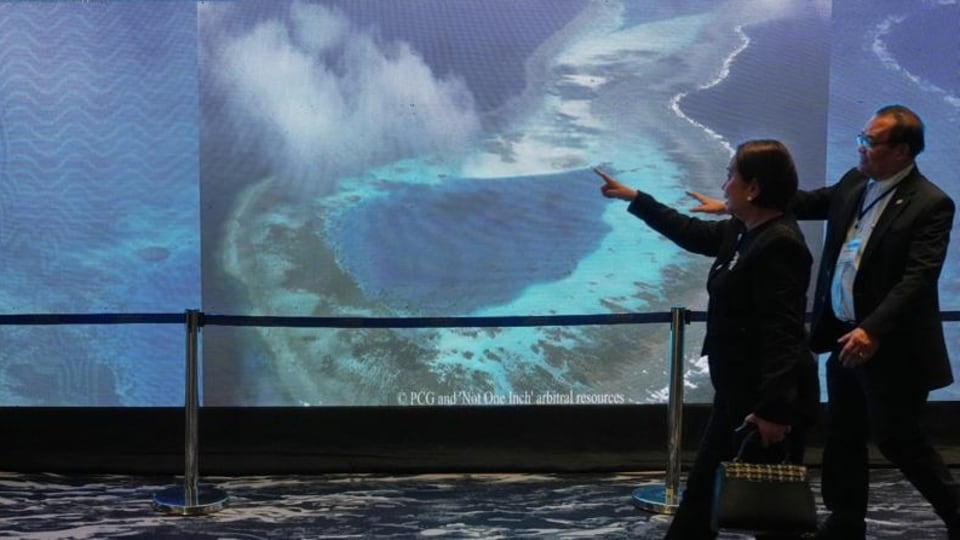
External affairs ministry spokesperson Randhir Jaiswal clarified India’s position at a regular media briefing when he was asked about a joint statement issued by the Philippines, the US and 12 other countries on Sunday to mark the 10th anniversary of the landmark international tribunal ruling that said China’s maritime claims in the South China Sea have no legal basis.
The Philippines won the 2016 case at the Permanent Court of Arbitration, which ruled that China’s claim of sovereignty in the South China Sea had no basis under international law. However, China has continuously rejected the ruling and said in a statement on Sunday that the tribunal’s award is “nothing but a worthless piece of paper”.
“We reaffirm that maritime disputes must be resolved peacefully and in accordance with UNCLOS (United Nations Convention on the Law of the Sea) and reiterate that the award rendered 10 years ago by the arbitral tribunal is a significant milestone and the basis for peacefully resolving disputes between the parties,” Jaiswal said.
India’s position on the South China Sea issue is well known, Jaiswal said. “We emphasised the importance of freedom of navigation and overflight and other lawful uses of the sea, and unimpeded commerce consistent with international law, as reflected in UNCLOS,” he said.
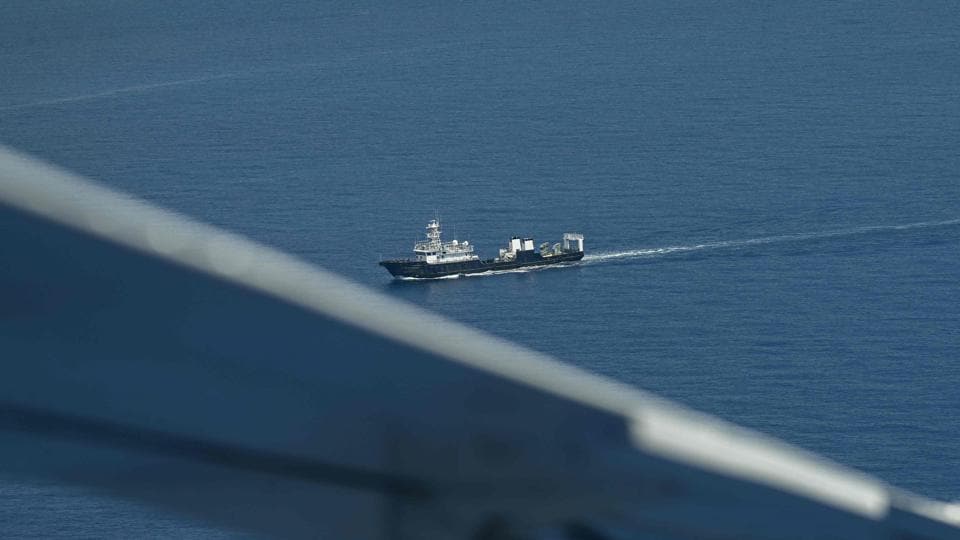
The external affairs ministry’s position is unlikely to go down well with Beijing, which has already been angered by the joint statement issued by 14 countries over the weekend.
Also read: China’s Latest Tool to Control a Disputed Atoll: a Strange Floating Platform
In recent years, India has built close security and strategic cooperation with countries such as the Philippines and Vietnam that are involved in territorial disputes with China in the South China Sea. Both the Philippines and Vietnam have concluded deals with India to acquire the BrahMos cruise missile. The Indian Navy has also deployed its warships in the South China Sea for port visits, joint exercises and coordinated patrols with the maritime forces of the Philippines, Vietnam, Singapore and Malaysia.
The joint statement, issued by the US, Australia, Britain, Canada, Estonia, Germany, Italy, Japan, Latvia, Lithuania, New Zealand, the Philippines, Romania and Slovenia on the 10th anniversary of the Philippines-China South China Sea Arbitral Tribunal Award, said these countries are committed to maintaining a free and open Indo-Pacific that is peaceful, stable and rules-based.
“We reaffirm that maritime disputes must be resolved peacefully and in accordance with UNCLOS. We reaffirm that the Award rendered ten years ago by the Arbitral Tribunal is a significant milestone and is final, legally binding, and definitive between China and the Philippines with respect to the maritime entitlements and claims addressed by the Arbitral Tribunal,” the joint statement said.
The countries reiterated the arbitral tribunal’s decision that there is “no legal basis for China’s expansive maritime claims in the South China Sea”, including those based on “historic rights”.
China’s foreign ministry responded with its own statement that claimed the arbitration violated fundamental principles of international law and contravened UNCLOS. “The so-called ‘award’ is nothing but a worthless piece of paper that is illegal, null and void, and has no binding force. China does not accept or recognize the ‘award’ and opposes and does not accept any claim or action based on it,” the statement said.