E-Paper



India backs peaceful, inclusive Syrian-led political process in Damascus
Syria was once home to a sizeable Indian community but its size shrunk to 92 because of the dragging civil war

 Prefer HTon Google


NEW DELHI: India on Monday joined other countries in calling for stability in Syria after opposition forces overthrew the regime of Bashar al-Assad, and urged all stakeholders to preserve the country’s unity, sovereignty and territorial integrity.
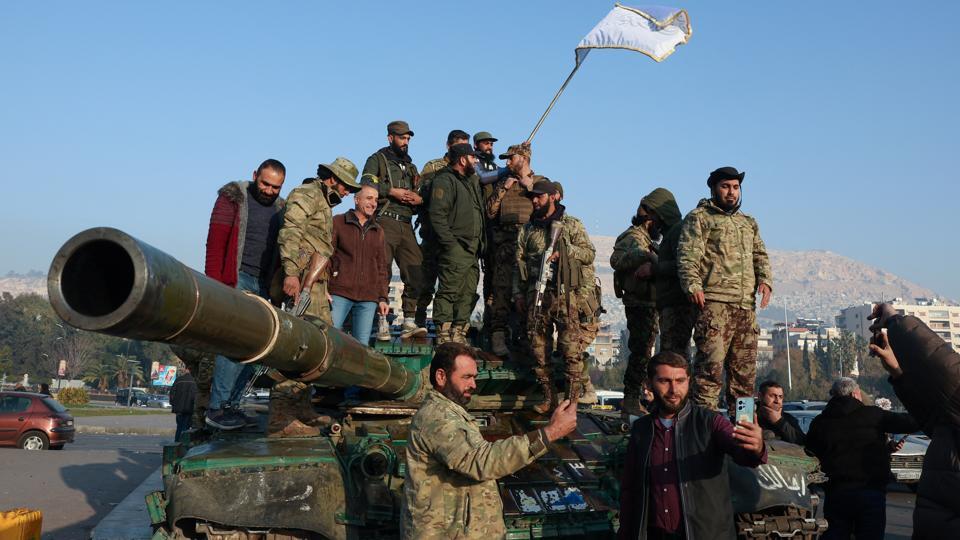
Assad fled Syria on Sunday in the face of a lightning offensive led by a rebel group dominated by Hayat Tahrir al-Sham (HTS), which was previously associated with al-Qaeda. The rebel fighters entered the capital Damascus unopposed, ending the Assad family’s rule of more than five decades.
The external affairs ministry said it was monitoring the evolving situation in the West Asian country and said in a statement: “We underline the need for all parties to work towards preserving the unity, sovereignty and territorial integrity of Syria.”
The ministry added: “We advocate a peaceful and inclusive Syrian-led political process respecting the interests and aspirations of all sections of Syrian society.”
The Indian embassy in Damascus is in contact with the Indian community to ensure their safety and security, the ministry said.
The 90-odd Indian nationals in Syria are safe, people familiar with the matter said on Sunday after opposition fighters took control of Damascus.
On Saturday, India urged its citizens in Syria to leave the country and advised others not to travel to the West Asian country following major gains by the rebel forces.
Syria was once home to a sizeable Indian community but its size shrunk to 92 because of the dragging civil war, according to the website of the Indian embassy. This includes 14 nationals working for different UN organisations and NGOs.
According to Russian state media, Assad and his family were in Moscow and had been granted asylum. Russia’s foreign ministry said earlier he had stepped down and left the country.
The fall of Assad’s regime ended a bastion from which Iran and Russia exercised influence across West Asia.
Abu Mohammed al-Golani, the rebel leader whose campaign toppled Assad’s regime in just 11 days, said in a victory speech that a “new history...is being written in the entire region after this great victory”. It will take hard work to build a new Syria that will be “a beacon for the Islamic nation”, he said.
Mohammad Ghazi al-Jalali, the prime minister under Assad, called for free elections and said he was in touch with Golani to discuss the transitional period.
UK Prime Minister Keir Starmer was among world leaders calling for peace and stability in Syria. “Our focus is now on ensuring a political solution prevails, and peace and stability is restored,” he said in a statement.
Egypt’s foreign ministry urged all parties in Syria “to unify objectives and priorities and initiate a comprehensive and inclusive political process that lays the groundwork for a new phase of consensus and internal peace”. China’s foreign ministry too called for the restoration of stability and order in Syria, and the search for a “political solution” as soon as possible.