India has rejected the UN Human Rights Office’s (OHCHR) remarks on the events in New Delhi, calling its concerns “misplaced” and accusing it of unwarranted interference in the country’s internal affairs.
In a statement shared by the Permanent Mission of India to the UN in Geneva on X, India said the right to peaceful assembly was guaranteed by the Constitution and safeguarded by the country’s institutions, an independent judiciary and a free media.
“We have seen the OHCHR’s remarks about today’s events in New Delhi,” the mission said, adding that citizens exercise their right to peaceful assembly subject to reasonable restrictions in the interest of public order.
Deep Dive
Why were people protesting in Delhi against Chief Election Commissioner Gyanesh Kumar?
Why did the UN raise concerns about the Delhi protests?
Why did India call the UN Human Rights Office’s concerns misplaced?
“The authorities, for their part, act in accordance with the law, and our courts remain available to all for redressal of any grievances,” it said.
{{/usCountry}}“The authorities, for their part, act in accordance with the law, and our courts remain available to all for redressal of any grievances,” it said.
{{/usCountry}}India also called on the OHCHR to devote comparable attention to large-scale protests elsewhere, arguing that the UN body should act in keeping with its mandate of impartiality and non-selectivity.
UN raises concerns over Delhi detentions
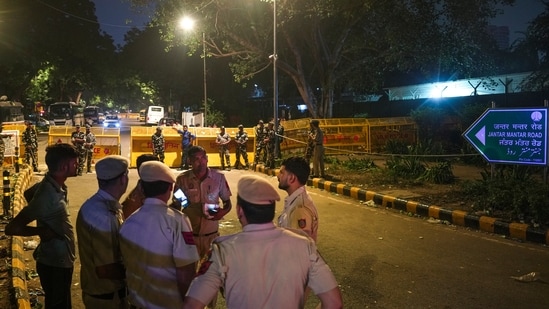
The response came after the United Nations expressed concern over mass detentions in Delhi amid protests against Chief Election Commissioner Gyanesh Kumar. The demonstrations have been accompanied by heightened security measures and restrictions in parts of the national capital.
The protests, called by the Cockroach Janta Party (CJP) and other groups, are linked to demands for Kumar’s resignation over alleged irregularities in the Special Intensive Revision (SIR) of electoral rolls.
Delhi Police denied permission for the CJP’s proposed October 10 demonstration at Jantar Mantar, citing short notice, alleged violations during earlier protests and concerns over public safety, traffic and law and order.
The restrictions triggered legal scrutiny, with the Supreme Court intervening over curbs affecting public transport and calling for a balance between the right to protest and the need to prevent disruption to essential services.
India, in its response to the OHCHR, maintained that authorities acted in accordance with the law and that judicial remedies remained available to those who believed their rights had been violated.