
 E-Paper



India exercises strategic autonomy, worried at Russia’s ‘no limit’ China tilt
National Security Advisor Ajit Doval made it clear to his Russian counterpart that India only takes decisions based on its national interests and questioned Russia’s “no limits” partnership with China as this directly impacted New Delhi’s security concerns.

 Prefer HTon Google


National Security Advisor Ajit Doval had a heart-to-heart conversation with his Russian counterpart Nikolai Patrushev in Moscow this week with both sides discussing developments in Indo-Pacific, Ukraine and addressing each other’s concerns in the unfolding security scenario in Asia. Doval also met the newly appointed Russian Deputy Prime Minister in-charge of weapon industries Denis Manturov.
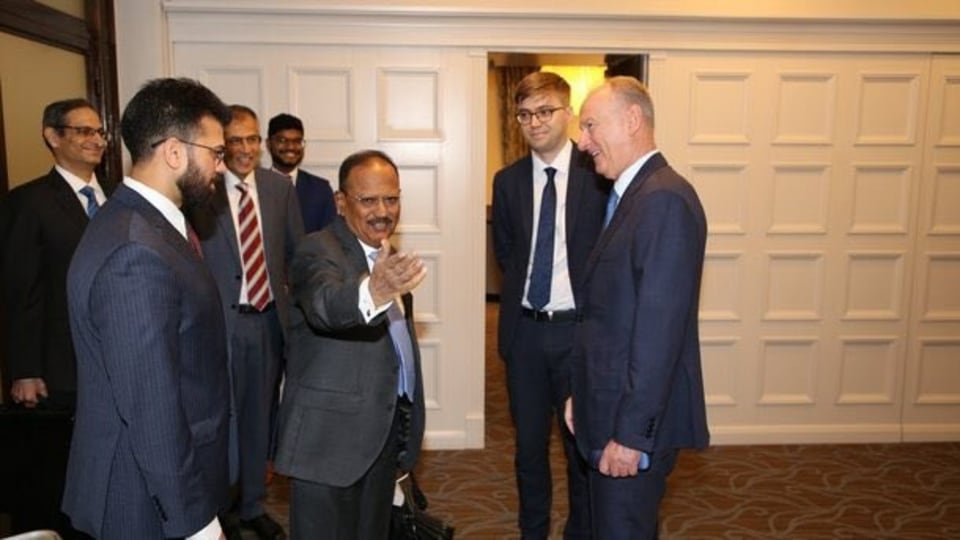
During his Moscow visit, NSA Doval dispelled any Russian notion that India had distanced itself from its strategic partner of the past and moved closer to the western camp. He made it clear to his interlocutors that India only takes decisions based on its self-interests and national security concerns and is not bound to any camp.
However, NSA Doval also conveyed that India was concerned about Russia leaning toward China, which had a long-standing boundary dispute with India and had recently flared up by PLA’s unilateral actions in the East Ladakh sector in May 2020. He said to date the boundary issue has been hanging fire with China still to restore April 2020 status quo ante in the East Ladakh sector.
The two sides discussed the Chinese power projection post House Speaker Nancy Pelosi's August 2 Taiwan visit with Russia expressing concern over the rapid militarization of the Indo-Pacific. With Russian energy exports from Vladivostok being impacted by the growing China-US tussle in the Indo-Pacific, Moscow is concerned about the military response by Japan, Taiwan and US over the Chinese missile firing around Taiwan post Pelosi’s visit.
While the two NSAs exchanged notes over the developments in the Ukraine war, it is quite evident that the western sanctions have hit the Russian military industrial complex as key spare parts from Europe can no longer be sourced due to American sanctions. In this context, Russia will increasingly become dependent on China for outsourcing hardware manufacturing and in turn weapon supplies to India will be hit. The Ukraine war is now into its sixth month with neither the Russian nor the Ukrainian forces being able to make a decisive move towards its objectives and the conflict bleeding both the economies.
At the NSA level dialogue, the two sides discussed cooperation in atomic energy, space, trade, and investment with both countries worried about the developments in Afghanistan. Despite the Taliban being in power for an year, Afghanistan continues to be restive with no space for minorities, women and children. The Central Asian Republics are seeing increasing economic penetration by Beijing much to the chagrin of Russia with countries bordering restive Xinjiang already in the Chinese debt trap through the enticing Belt Road Initiative (BRI).


