E-Paper



India rejects elections in PoK, opposes reference to Kashmir statement
India on Thursday rejected the recent elections held in Pakistan-occupied Kashmir (PoK) that were swept by

 Prefer HTon Google


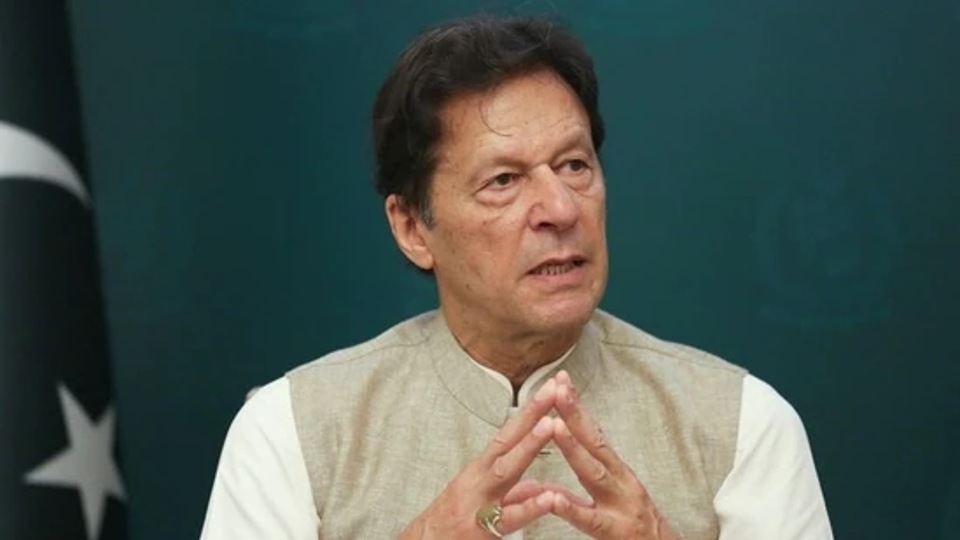
India on Thursday rejected the recent elections held in Pakistan-occupied Kashmir (PoK) that were swept by Prime Minister Imran Khan’s party, Pakistan Tehreek-e-Insaf (PTI), and said the polls were an attempt to camouflage Pakistan’s “illegal occupation” of the region.
External affairs ministry spokesperson Arindam Bagchi also dismissed a reference to Kashmir in a joint statement issued after a meeting of the Pakistani and Chinese foreign ministers on July 24, saying the union territories of Jammu and Kashmir and Ladakh are integral parts of India.
Khan’s PTI party won the elections held in PoK on July 25. This was the first time the PTI came to power in the region, which has so far been mostly ruled by the PML-N or Pakistan People’s Party. There were, however, allegations of the Pakistan Army playing an impartial role in the elections.
Asked about the elections during a weekly news briefing, Bagchi said, “Let me make very clear that the so-called elections in Indian territory under the illegal occupation of Pakistan are nothing but an attempt by Pakistan to camouflage its illegal occupation and the material changes undertaken by it in these territories.”
India, he said, had lodged a strong protest with Pakistani authorities on “this cosmetic exercise, which has been protested and rejected by the local people”.
Bagchi said the elections “can neither hide the illegal occupation by Pakistan nor the grave human rights violations, exploitation and denial of freedom to people in these occupied territories”.
He added, “Pakistan has no locus standi on these Indian territories. We call upon Pakistan to vacate all Indian areas under its illegal occupation.”
Responding to another question on the reference to Kashmir in the Pakistan-China joint statement, Bagchi reiterated India’s categorical rejection of any such reference to Jammu and Kashmir.
“The union territory of Jammu and Kashmir and the union territory of Ladakh have been and will remain an integral and inalienable part of India,” he said.
Noting that the joint statement also contained a reference to the China-Pakistan Economic Corridor (CPEC), he said India has consistently told both China and Pakistan that the “so-called CPEC is in India’s territory that has been illegally occupied by Pakistan”.
India has not signed up for China’s Belt and Road Initiative (BRI) and has always opposed CPEC, a flagship project under BRI, because a crucial part of it passes through PoK.
Bagchi said India opposes “any attempts by other countries to change the status quo in areas illegally occupied by Pakistan, as also to Pakistan bringing up any material change in Indian territories under its illegal occupation”. He added, “We call upon parties concerned to cease such actions.”
The joint statement issued on July 24 after a meeting between Chinese foreign minister Wang Yi and his Pakistani counterpart Shah Mahmood Qureshi in Chengdu had said the Chinese side believes the Kashmir issue is a “dispute left over from history between Pakistan and India”, and it should be resolved in line with the UN Charter, Security Council resolutions and bilateral agreements.
China also opposed “any unilateral actions that complicate the situation” in Kashmir, and the joint statement said the two countries would “continue to firmly advance the development of CPEC”.
...