E-Paper



India world’s largest source of energy demand growth: International Energy Agency
Non-fossil sources are likely to contribute to over half of India’s electricity generation by 2035, even as it is the largest contributor to growth in oil demand

 Prefer HTon Google


Increasing economic activity has propelled India to be the world’s largest source of energy demand growth, and this is projected to be as much as that of China and South East Asian countries combined by 2035, according to the International Energy Agency (IEA)’s World Energy Outlook report released on Wednesday.
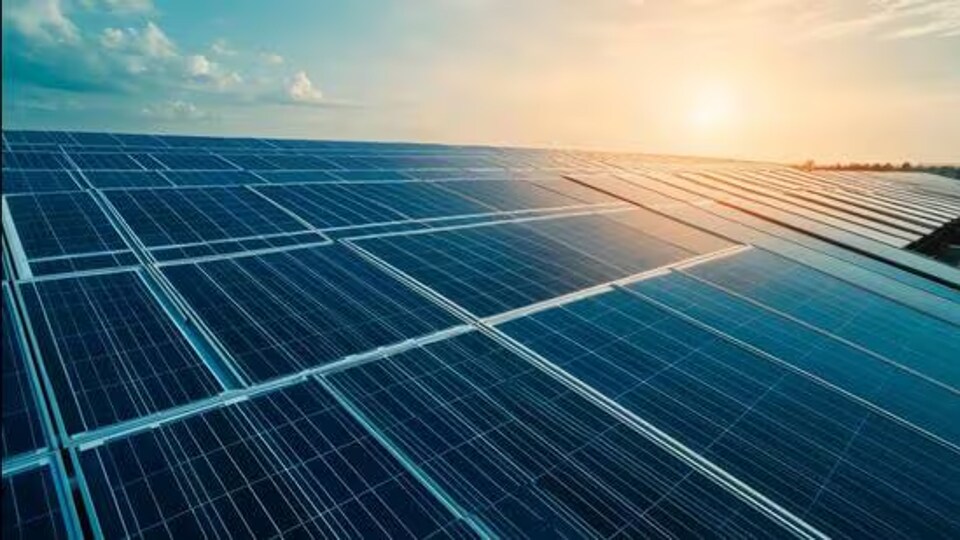
The report said the share of non-fossil sources in installed generation capacity, already 50%, is expected to rise to 60% in 2030 and 70% in 2035. This would account for over 95% of the capacity increase until then, based on current policies. Non-fossil sources are likely to contribute to over half of India’s electricity generation by 2035, even as it is the largest contributor to growth in oil demand. India is the second-largest in electricity generation and coal demand growth, and the third-largest in natural gas demand growth.
The IEA noted that India’s GDP growth rate was second only to China among major countries and regions between 2010 and 2024. It added that India’s GDP was growing on average by 6.1% annually, more than any other major country or region. The IEA projected the GDP per capita to be 75% higher in 2035 than today.
The report, which coincided with the UN Climate Talks (COP30), said India adds the equivalent of one Bengaluru annually to its urban population, and its built floor space expands by 40%. It said India adds nearly 12,000 cars to its roads daily, and is projected to add over 250 million air conditioners to its homes over the next decade.
In 2022, India announced an objective to increase the share of non-fossil sources in the power generation mix to 50% by 2030 for net zero emissions by 2070. It met this target for grid-connected capacity in 2025, five years ahead of schedule.
The IEA said this success was underpinned by surging investment in renewables. “In 2015, every dollar invested in fossil power generation sources in India was broadly matched by a dollar invested in non-fossil sources, a 1:1 ratio. By 2025, this ratio had increased to 1:4 in favour of non-fossil sources.”
The IEA said solar PV alone has attracted $113 billion in cumulative investment in the past decade, compared with $112 billion for all fossil fuel power generation sources combined.
It projected the share of non-fossil sources in installed generation capacity to rise to 60% in 2030 and 70% in 2035. In the 2015-2024 period, coal and natural gas accounted for over 70% of the increased generation.
The IEA projected the industry-led demand for coal to rise moderately to 2035, and to be a mainstay in the electricity generation mix, providing valuable dispatchable generation and flexibility. The share of solar PV and wind power generation was expected to rise from 11% in 2025 to over 25% by 2030 and to nearly 40% by 2035.
Non-fossil sources were likely to contribute to over half of electricity generation by 2035, reducing its carbon intensity by nearly 45% to around 400 grammes of carbon dioxide per kilowatt-hour. It was expected to narrow India’s gap with the global average level of carbon intensity of electricity generation. Other benefits include significant declines in emissions of key air pollutants such as fine particulates and sulphur dioxide, the IEA said.
The IEA said the rising share of variable renewables in power generation brings both challenges and opportunities, including the need for investment in storage and transmission to facilitate the deployment of renewables.
Over 230 gigawatt-hours of battery storage are likely to be added to the system by 2030 as the government is in the process of tendering for new storage capacity.
The IEA said countries were overall contending with pressing energy security threats and growing longer-term risks across an unprecedented range of fuels and technologies, thrusting energy into the heart of geopolitical tensions and elevating it as a core issue of economic and national security.
“In particular, a group of emerging economies – led by India and Southeast Asia and joined by countries in the Middle East, Africa, and Latin America – comes to increasingly shape energy market dynamics in the years ahead. Collectively, they take up the baton from China, which accounted for half of global oil and gas demand growth and 60% of electricity demand growth since 2010, although no country or group of countries comes close to replicating China’s energy-intensive rise,” the report said.
It said traditional energy risks affecting the security of oil and gas supply are now accompanied by other major concerns, especially critical minerals, due to high levels of market concentration.
“A single country is the dominant refiner for 19 out of 20 energy-related strategic minerals, with an average market share of around 70%. The minerals in question are vital for power grids, batteries, and EVs, but they also play a crucial role in AI chips, jet engines, defence systems, and other strategic industries.”
The IEA said geographic concentration in refining has increased for nearly all key energy minerals since 2020, and particularly for nickel and cobalt. “Analysis in this year’s WEO of the pipeline of announced projects suggests that reversing this process is set to be slow, calling for stronger action by governments.”
Access to critical minerals has emerged as a key factor in India’s pursuit of its long-term net-zero emissions goal, prompting the country to sign agreements with resource-rich nations, including Australia, Argentina, and Chile, for mining, exploration, and investment.
India has launched a ₹34,300 crore (approximately $4 billion) National Critical Mineral Mission to secure supplies amid China’s tightening control over global reserves and processing.
China’s success lies in its vertical integration strategy. The country mines 50% of the world’s rare earth elements but refines and produces almost 90% of processed rare earth elements and industrial products, utilising extremely polluting and energy-intensive processes.
IEA executive director Fatih Birol cited the history of the energy world in recent decades and said there is no other time when energy security tensions have applied to so many fuels and technologies at once. He said the situation calls for the same spirit and focus that governments showed when they created the IEA after the 1973 oil shock. “With energy security front and centre for many governments, their responses need to consider the synergies and trade-offs that can arise with other policy goals – on affordability, access, competitiveness, and climate change.”
“The World Energy Outlook’s scenarios illustrate the key decision points that lie ahead and, together, provide a framework for evidence-based, data-driven discussion over the way forward.”
Satat Sampada Climate Foundation founding director Harjeet Singh said the report confirms India is a global leader in the energy transition, having met its 50% non-fossil capacity target five years ahead of schedule. “It proves that ambitious renewable-energy goals are not only possible; they are being delivered in the Global South.”
Singh said India is showing how to power a growing economy with clean energy. “The report notes that India is set to be the ‘largest source of energy-demand growth in the world’.”
Singh said the challenge is to meet this demand cleanly. “That will require massive investment in domestic infrastructure, particularly electricity grids and battery storage to integrate the nearly 40% of generation we expect from wind and solar by 2035.”
Singh said the report rightly identifies the financial health of distribution companies as a critical hurdle to overcome.