
 E-Paper



India-China boundary resolution a tough grind with PLA dragging feet
Even though the possibility of PLA withdrawal from advance positions at patrolling point 15 or KongKa La area cannot be ruled out in near future, the adherence to bilateral 1993-96 border agreements by the PLA would be a challenge as the powerful Chinese Army reports only to President Xi Jinping.

 Prefer HTon Google


With no firm commitments on restoring the April 2020 status quo ante on Ladakh Line of Actual Control (LAC) forthcoming from Chinese Foreign Minister Wang Yi, the road to normalization of India-China bilateral ties appears to be a tough grind on the ground. Wang flew to Nepal on Friday after holding talks with External Affairs Minister S Jaishankar and National Security Advisor Ajit Doval in the capital.
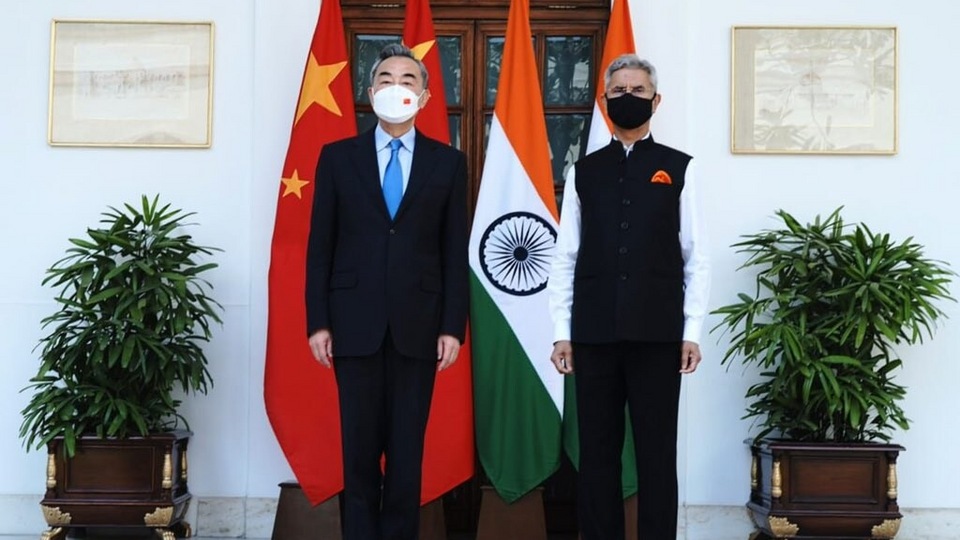
While the Chinese State Councilor tried to decouple Ladakh LAC tensions with the overall relationship, it was quite evident from the candid conversations that the People’s Liberation Army (PLA) is dragging its feet and the disengagement process along the 597 km LAC would be a long haul on the ground.
This means that the Indian Army will remain deployed on the Ladakh LAC as the PLA forces with all the support artillery, rocket, missile elements continue to be deployed in the occupied Aksai Chin area and in-depth areas of Xinjiang and Tibet. The massive military up-gradation of infrastructure by PLA in the name of Sinicization of Tibet all along the 3488 km LAC has pushed the Indian Army to respond in kind.
Even though the possibility of PLA withdrawal from advance positions at patrolling point 15 or KongKa La area cannot be ruled out in near future, the adherence to bilateral 1993-96 border agreements by the PLA would be a challenge as the powerful Chinese Army reports only to President Xi Jinping as Chairman of the Central Military Commission (CMC) with Foreign Minister Wang hardly exercising any influence on the Red Army strategic objectives along the LAC. One must recall that it took India and China nearly eight years to normalize the 1986 Sumdrong Chu stand-off caused by PLA transgressions in Arunachal Pradesh.
Over the past decades, Beijing while relentlessly pursuing its military objectives on the LAC have asked New Delhi to look at the bigger picture to maintain normalization of ties. This parallel diplomacy may have worked for Beijing during the Congress regimes of the 1980s-1990s but under the Modi government, the instructions are that it cannot be business as usual with China if the border situation is tense and unstable. Adherence to 1993-96 border agreements, peace, and tranquility on the LAC with PLA in the barracks is the key to normal India-China bilateral ties.
NSA Ajit Doval clearly pointed fingers at the Chinese deep defence relationship with Pakistan and with other countries in the Indian sub-continent when he asked Minister Wang to ensure that actions do not violate the spirit of equal and mutual security. The message was that India will also dabble in the Chinese neighbourhood if the mutual security clause continues to be violated by Beijing making statements on internal affairs of India and supplying hardware to countries in the Indian sub-continent. Hope Foreign Minister Wang has got the message.


