
 E-Paper



Aditya-L1 launch: Meet the women who helmed Sun mission success
Nigar Shaji, the project director of India's first solar mission, Aditya-L1, expressed excitement and pride over the successful launch of the mission.

 Prefer HTon Google


New Delhi: The successful launch of Aditya-L1 is a “dream come true”, said 59-year-old Nigar Shaji, the project director whose name shines the brightest among the brilliant women behind India’s first solar mission.
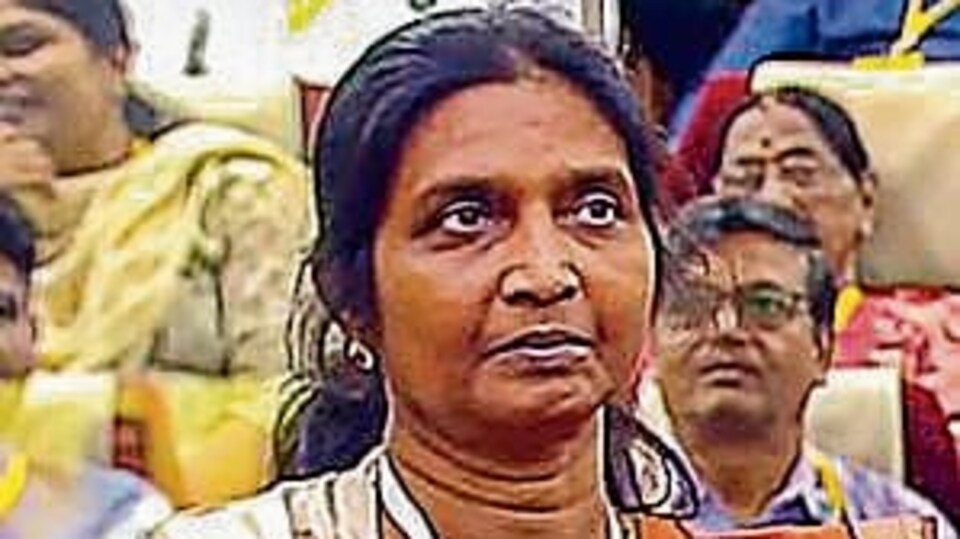
“This is like a dream come true. I am extremely excited that PSLV (Polar Satellite Launch Vehicle) was able to place Aditya-L1 in the intended orbit. Once Aditya L-1 is commissioned, it will be an asset to the country and the global scientific fraternity,” said Shaji, a resident of Tenkasi district of Tamil Nadu who comes from a family of farmers.
She completed her engineering in electronics and communication from the Tirunelveli Government Engineering College and later pursued her Masters in electronics and communications from Birla Institute of Technology (BITS), Ranchi. After her Masters, she joined the Satish Dhawan Space Centre in 1987 and later went on to be a part of the team at the UR Rao Satellite Centre.
An expert in communications and interplanetary satellite programmes, Shaji has also made significant contributions to the space agency’s remote sensing programme. She was also the associate project director of “‘Resourcesat-2A” — the Indian Remote Sensing Satellite for National Resource Monitoring and management.
While Shaji took the lead in the launch activities of the mission, another woman scientist, Annapurni Subramaniam, ensured that India’s maiden mission to study the Sun goes smoothly.
Also read: Aditya will shape the next phase of our space forays
Subramaniam is the director of the Indian Institute of Astrophysics — an autonomous institute under the department of science and technology that developed the primary instrument on-board Aditya-L1 spacecraft.
Resident of a village in the Palakkad district of Kerala, Subramaniam comes from a family of musicians. She has completed her PhD in Physics from IIA, which she now heads, and specialises in the areas of star clusters (open and globular), star formations and pre-main sequence star, galactic structures, Magellanic clouds and stellar population.
“We have designed the primary instrument that is being carried on Aditya-L1. It (VELC) is basically a coronograph, which will see the Sun in a total solar eclipse all the time. This mission will for the first time help us see the inner most part of the Sun,” she said.


