
 E-Paper



Initial probe points to Iran link in tanker drone strike
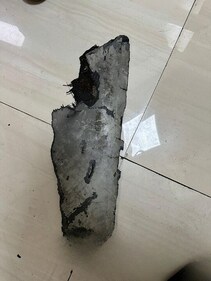
The missile debris is being examined by Central Forensic Science Laboratory in Pune, which is likely to give a full report in a week.

 Prefer HTon Google


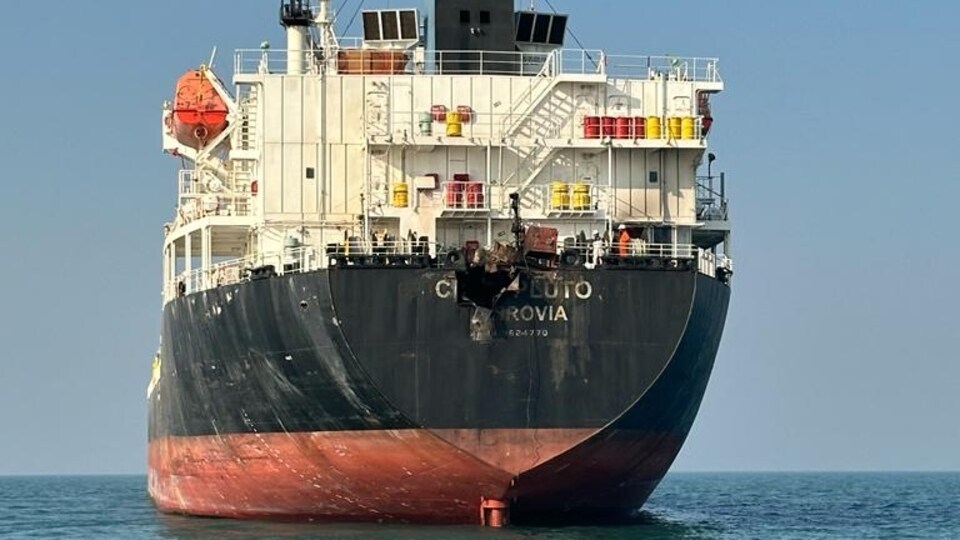
An initial probe into the debris recovered from the Merchant Vessel (MV) Chem Pluto, which was struck by a missile while sailing in the Arabian Sea on its way to New Mangalore Port, points to the use of Iranian Shahed 136 loitering ammunition in the attack, according to people aware of the matter.
The missile debris is being examined by Central Forensic Science Laboratory in Pune, which is likely to give a full report in a week, the people added, asking not to be named.
Based on the Russian Geran-2 expendable drone, the Shahed 136, with delta wings, has a range of 2,500km and a warhead of 50kg.
The Indian Navy has recovered what appears to be the burnt out wings of the loitering ammunition, the person cited above said.
READ | Ship docks in Mumbai safely after drone strike
While initially it was thought that two Iranian vessels — MV Saviz (general cargo and 100 nautical miles off the attacked ship) and MV Artenos (Bulk carrier 280 nautical miles of MV Chem Pluto) -- could be involved in firing the missile, nothing was found on these two vessels when the Indian Navy boarded them after the incident, a second person said.

The MV Chem Pluto, a chemical tanker carrying a 22-member crew of which 21 were Indians, flies under the Liberian flag. It was heading from Saudi Arabia’s Al Jubail port to New Mangalore when it was struck 217 nautical miles off India’s Gujarat coast. The ship was escorted to Mumbai by coast guard patrol vessel Vikram on Monday. A group of naval explosive experts carried out an initial assessment that confirmed a drone attack.
Though Iran has dismissed US allegations that Tehran was involved in targeting the MV Chem Pluto, the first person cited above said that the initial assessment of the debris by experts points the needle towards Iran, and not towards the Houthi militia in South Yemen or other Iran-backed Shia groups in Iraq such as the Kaitab Hezbollah.
READ | Why Iran-backed Houthi attack on MV Chem Pluto is a threat to global maritime security
As war rages in West Asia between Israel and the Hamas leadership in Gaza, the situation in the Arabian Sea and the Red Sea has become unstable with the targeting through drones and ballistic missiles of commercial vessels with even a tenuous connection to Israel.
These events have made the commercial shipping mega-companies jittery, and some are exploring the possibility of using the northern sea route off the coast of Russia for trade to Japan and China. The other option to reach Europe is via the Cape of Good Hope, but it is much longer and more expensive, adding to the cost of transported goods.
The Indian Navy is playing its part in securing the shipping lanes from missile while keeping Somali pirates at bay off the Gulf of Aden. At present, an Indian Navy guided missile destroyer is near the Bab el-Mandeb chokepoint in Red Sea, another is south of the Yemeni island of Socotra, a third one off the Gulf of Oman, and the fourth one in central Arabian Sea. As HT first reported on Tuesday, these ships – INS Kolkata, INS Kochi, INS Chennai and INS Mormugao – have been deployed to protect commercial ships from missile-drone attacks in West Asia.


