The launch of two satellites for the space docking experiment (SpaDeX) also marked a first for the industry, which built the two spacecraft on their own under guidance from the Indian Space Research Organisation (ISRO) engineers.
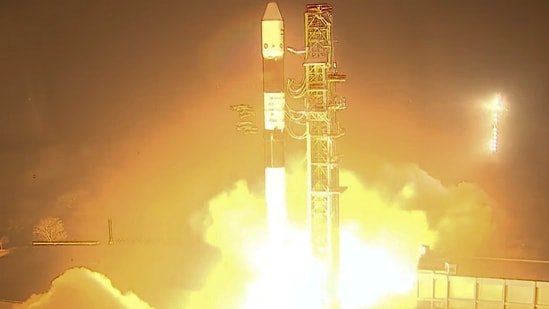
The two satellites -- SDX01 (chaser) and SDX02 (target) -- each weighing 220 kg were integrated and tested by Ananth Technologies Limited (ATL), which has been associated with a number of ISRO projects for the past several years.
"So far, large satellites have not been realised in the industry by themselves. This is the first time that the two satellites have been integrated and tested in the industry," said U R Rao Satellite Centre (URSC) Director M Shankaran after the two satellites were placed in a 476 km circular orbit by the Polar Satellite Launch Vehicle (PSLV-C60) on Monday night.
Shankaran described the launch of the two satellites a “trailblazer” for the industry.
"We hope that this is going to be the first of the several such satellites done by the industry on their own," he said.
The Assembly, Integration and Testing (AIT) of the satellites were conducted at ATL's new state-of-the-art facility in the KIADB Aerospace Park, Bengaluru.
{{/usCountry}}The Assembly, Integration and Testing (AIT) of the satellites were conducted at ATL's new state-of-the-art facility in the KIADB Aerospace Park, Bengaluru.
{{/usCountry}}This 10,000 square meter facility is equipped to manufacture electronic subsystems and integrate up to four large satellites simultaneously.
The SPADEX mission exemplifies India's capability to achieve on-orbit docking, a critical technology for future manned and deep-space missions.
It marks a significant milestone in India's space exploration ambitions, with applications including human spaceflight, space exploration and supporting repair, refueling and upgrades for operational satellites.
The mission's objectives include demonstrating autonomous rendezvous and docking, controlling one spacecraft using the Attitude Control System of the other in a docked configuration, formation flying and operating a remote robotic arm.
"Being a part of this milestone mission highlights ATL's commitment to India's human space program and our evolving contributions from subsystem manufacturing to full satellite and launch vehicle integration," said ATL Chairman and Managing Director Dr Subba Rao Pavuluri.
The docking of the two satellites is expected to take place in the fore-noon of January 7 next year, making India the fourth nation to master such complex technologies.