The Lok Sabha on Thursday passed a bill that penalizes talaq-e-biddat (triple talaq), a practice of divorce in the Muslim community, amid strong protests by the Opposition which demanded that the bill be referred to a parliamentary panel for review as it criminalized a civil right issue.
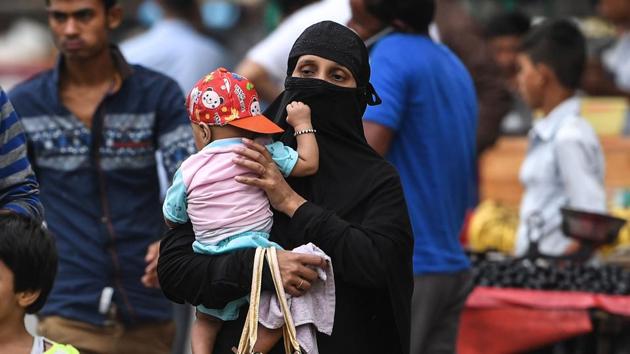
The Muslim Women (Protection of Rights on Marriage) Bill 2019 was passed by a voice vote after the Congress, the Trinamool Congress, and key Bharatiya Janata Party (BJP) ally, Janata Dal (United), among other Opposition parties staged a walkout.
The bill, which will now be sent to the Rajya Sabha, makes the practice of instant triple talaq — under which a Muslim man can divorce his wife by uttering the word “talaq” thrice in succession — a cognizable offence, attracting up to three years’ imprisonment and a fine. A cognizable offence is one in which the police may carry out an arrest without a warrant, and is used for serious crimes such as theft, rape and murder.
The bill allows the wife or her relatives to file a complaint, and has a provision for a magistrate to grant bail to the accused. It also leaves scope for reconciliation between the couple.
NK Premachandran of the Revolutionary Socialist Party, who led the Opposition charge, said that provisions to protect women already existed in form of the Domestic Violence Act and Section 498A of the Indian Penal Code, which penalized cruelty against a woman in her marital home. He alleged that the bill was discriminatory, because divorce among other faiths — regulated by personal laws — was not a criminal offence.
{{/usCountry}}NK Premachandran of the Revolutionary Socialist Party, who led the Opposition charge, said that provisions to protect women already existed in form of the Domestic Violence Act and Section 498A of the Indian Penal Code, which penalized cruelty against a woman in her marital home. He alleged that the bill was discriminatory, because divorce among other faiths — regulated by personal laws — was not a criminal offence.
{{/usCountry}}All India Majlis-e-Ittehadul Muslimeen (AIMIM) chief Asaduddin Owaisi, who opposed the bill pointed out that if the husband was jailed, he would not be able to pay maintenance to his wife, which was also a provision in the bill.
However, law minister Ravi Shankar Prasad said, “The Indian Constitution is equal for all daughters. So the bill is needed.”
He pointed out that despite a 2017 Supreme Court ruling which struck down the practice and found it unconstitutional, hundreds of cases have been reported since then.
“When Hindus and Muslims are jailed under the dowry law [Dowry Prohibition Act] or the Domestic Violence Act, no one objects. What is the objection in penalising the practice? It is needed to provide gender justice and equality,” Prasad said.
In the 2017 Shayara Bano versus Union of India and Others case, a five-judge bench of the Supreme Court held in a 3-2 majority verdict that instant triple talaq, polygamy and nikah halala (in which a woman must marry and divorce another man to re-marry her first husband) were unconstitutional practices.
The previous National Democratic Alliance (NDA) government then tabled a version of the bill, which was passed by the Lower House in December 2018, but remained pending in the Upper House.
With the dissolution of the 16th Lok Sabha, the bill lapsed and was introduced in the first session of the newly elected Lok Sabha. The previous NDA government also promulgated two ordinances—in September 2018 and February 2019 — penalizing the practice.
Prasad and other Bharatiya Janata Party (BJP) parliamentarians, including Meenakshi Lekhi and Kirron Kher, outlined that the bill was about gender justice. “The idea that religious law is immutable, this thinking needs to change,” Lekhi said, adding that no area could lie outside the Constitution.
Many social evils among Hindus in the country, such as ‘sati’ — an outlawed practice of widow-burning on the funeral pyre of the husband —were penalized, Prasad said, and added that such laws acted as deterrents.
Prasad said that 20 Islamic countries including Pakistan, Afghanistan, Malaysia, Indonesia, Jordan, Egypt and Tunisia had outlawed triple talaq. “And if they could do it, why cannot it be done in India which is a secular country?” the minister asked.
However, members of the Opposition, including Congress’ Gaurav Gogoi pointed out that among all the countries that outlawed the practice, only one (Bangladesh) criminalized it