This year could see frequent and more intense cyclones over Bay of Bengal during October-November and a relatively higher frequency of cold waves during winter season, India Meteorological Department (IMD) chief, M Mohapatra said.
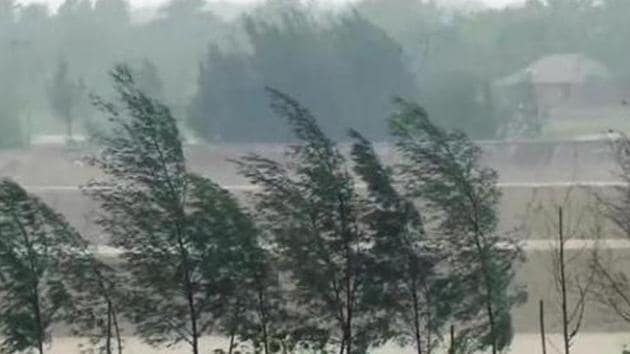
La Nina conditions have set in. “We associate La Niña years with a higher frequency of intense cyclones over Bay of Bengal and colder winters. But many other factors influence the winter. A forecast will be issued in November for the winter months. But if we consider only the impact of La Niña then that is definitely linked to colder winters,” said M Mohapatra, director general, IMD.
IMD in its El Niño Southern Oscillation (ENSO) bulletin for October said that currently, weak La Niña conditions are prevailing over equatorial Pacific and sea surface temperatures (SSTs) are below normal over central and eastern equatorial Pacific. The latest forecast indicates cooling of SSTs will most likely continue and weak La Niña conditions will likely turn into moderate La Niña conditions during the coming months and sustain till early next year. No cyclone has developed this October yet. But the depression over north interior Karnataka and adjoining areas of Maharashtra moved west-northwestwards and weakened into a well-marked low-pressure area over south Madhya Maharashtra. But after merging with the Arabian Sea, it is likely to intensify once again with energy from the ocean.
Also Read: Extremely heavy rain warning for parts of west coast today
{{/usCountry}}Also Read: Extremely heavy rain warning for parts of west coast today
{{/usCountry}}It is very likely to move west-northwestwards and over eastcentral Arabian Sea off the Maharashtra coast around October 16 morning. It is then very likely to intensify into a depression again during the next 24 hours over eastcentral and adjoining northeast Arabian Sea off Maharashtra–south Gujarat coasts, move gradually west-northwestwards and intensify further. Monsoon withdrawal from northwest India will resume only after these weather systems subside and rain stops.
El Niño and the Southern Oscillation (ENSO) is a periodic fluctuation in sea surface temperature and the air pressure of the overlying atmosphere across the equatorial Pacific Ocean according to the National Oceanic and Atmospheric Administration (NOAA).
ENSO has a major influence on weather and climate patterns such as heavy rains, floods and drought. El Niño has a warming influence on global temperatures, whilst La Niña has the opposite effect. In India for example, El Nino is associated with drought or weak monsoon while La Nina is associated with strong monsoon and above average rains and colder winters.
Several studies have shown that La Nina conditions enhances the chances of extreme tropical cyclones in the Bay of Bengal during the post-monsoon season said Roxy Mathew Koll, a climate scientist at Indian Institute of Tropical Meteorology in Pune. ‘La Nina conditions modulate the ocean-atmospheric conditions in the Bay (enhancing the low-level vorticity and convection) and make it favourable for cyclone activity,” Koll added.