
 E-Paper



Need to focus on livelihood, poverty, inequality: PM's principal secy at World Reconstruction Conference
PK Mishra delivered an online keynote address at the inaugural ceremony of the 5th World Reconstruction Conference jointly hosted by the UNDP, World Bank, Global Platform for Disaster Risk Reduction and the government of Indonesia in Bali.


PK Mishra, principal secretary to the prime minister, on Monday underlined the five main points that must underpin the practice of post-disaster reconstruction and recovery. He delivered an online keynote address at the inaugural ceremony of the 5th World Reconstruction Conference jointly hosted by the UNDP, World Bank, Global Platform for Disaster Risk Reduction and the government of Indonesia in Bali.
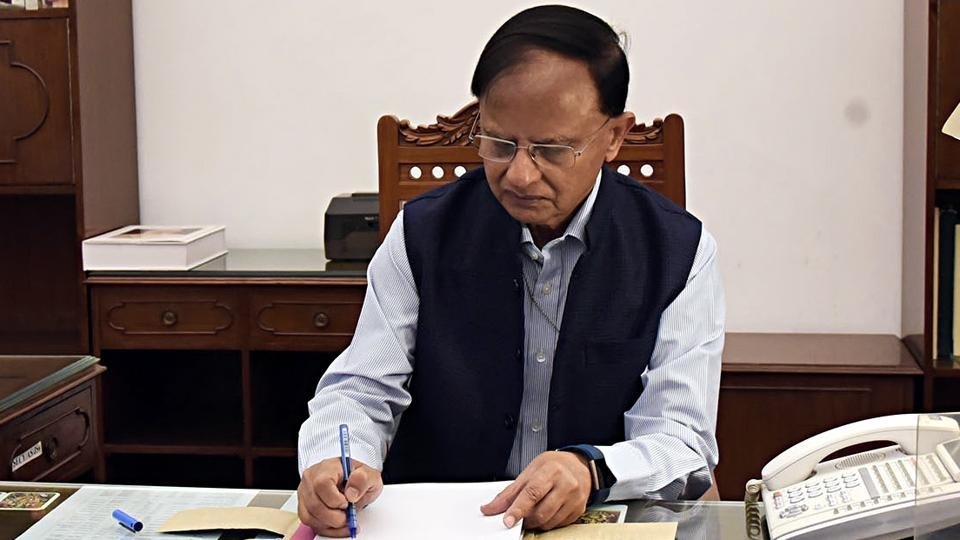
Recalling the brunt of the tsunami in the Indian Ocean almost two decades ago and many other major disasters, Mishra said the practice of post-disaster recovery has come a long way.
Underlining the five-point post-disaster reconstruction and recovery, Mishra said, first, “build back better” must focus on better outcomes, and not merely on better inputs.
“We need to go beyond recovery at the household level to recovery at the community level. The Covid-19 pandemic has added a new dimension to our approach to recovery: greater focus on livelihood, poverty and inequality,” the principal secretary to the prime minister said.
Second, he emphasised putting the agency in the hands of the affected people. “In India, since the Gujarat earthquake of 2001, the practice of Owner Driven Reconstruction or ODR has evolved and we have seen how it leads to better overall outcomes,” said Mishra said, adding that “we need to develop a vibrant global community of practice that continuously nurtures methods of ODR".
Third, such a community of practice be nurtured by having predictable mechanisms – financial, institutional and technical – at all levels for supporting post-disaster recovery and reconstruction.
“In India, for the first time, in the country’s disaster risk management financing architectures, we have created a specific window for financing reconstruction and recovery, with $7.5 billion over five years," he added.
Fourth, the practice of post-disaster reconstruction and recovery is the need to focus on outcomes - not just over the short term but also long term. “Recovery and reconstruction programmes supported by governments and other institutions take four to six years. However, actual recovery on the ground takes almost half a generation,” Mishra said.
Fifth, he said, "In the context of challenges in reconstruction and recovery, we often use the term ‘tyranny of rush’! Balancing the demand for a quick recovery with ‘build back better’ is always difficult. However, new technologies – for example, drones, geo-spatial technologies, and sensing technologies – can help accelerate the recovery process by expediting assessments, beneficiary identification, and tracking the progress of recovery and reconstruction. We need to make the most of the promise of technology.”


