
 E-Paper



NEP 2020 paves way for transformational education reforms: MoS Subhas Sarkar
MoS Sarkar stressed that the Bharatiya Janata Party (BJP)-led central government had meticulously crafted the NEP 2020 through an unprecedented in-depth consultative process

 Prefer HTon Google


Union minister of state (MoS) for education Dr Subhas Sarkar on Monday said that the National Education Policy (NEP) 2020 aims to pave the way for transformational reforms and embracing a holistic approach to education is the core essence of the policy.
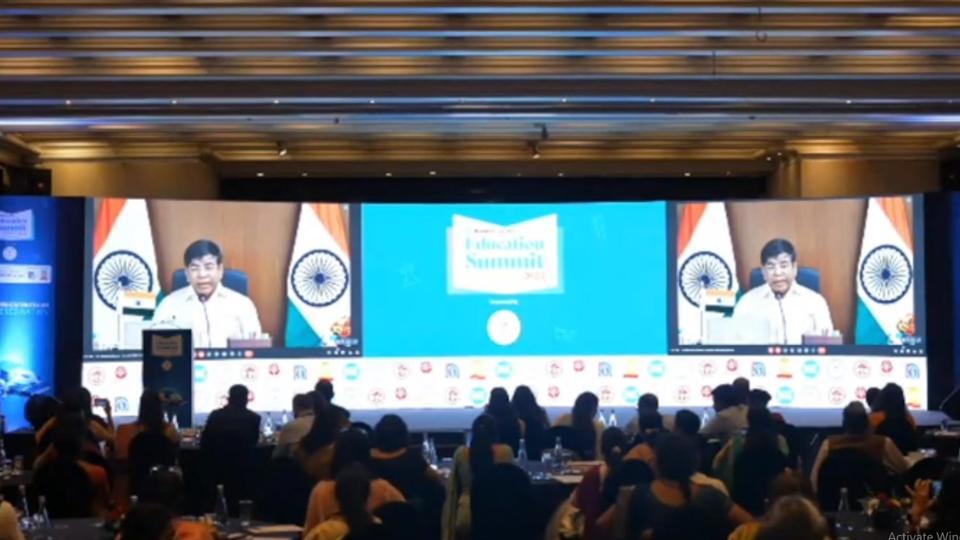
Speaking at the Hindustan Times Education Summit 2023, MoS Sarkar stressed that the Bharatiya Janata Party-led central government had meticulously crafted the NEP 2020 through an unprecedented in-depth consultative process adding that the discussions which took place at the summit will pave the way for substantial education reforms in India.
“This policy (NEP) ushers in transformative curricula designed to holistically develop learners, equipping them with crucial 21st century skills, enhancing their critical thinking, and prioritizing experiential learning. These reforms are poised to ensure equitable access, elevate the quality of learning, and foster holistic development for every learner”, he said.
Also Read: Government doing its best to retain IIT grads: Education ministry
“The policy also recognizes the language barrier as a significant challenge in education. It encourages the use of the mother tongue or regional language as the medium of instruction at the foundational stage, facilitating better comprehension and learning outcomes,” MoS Sarkar said.
“In the realm of school education, we have worked towards establishing a 5+3+3+4 class system, with a keen focus on Early Childhood Care and Education. To this end, we have introduced Balvatika Classes for children aged 3+, 4+, and 5+ years, aimed at stimulating their cognitive, physical and emotional growth”, he said.
“This initiative equips children with Linguistic and Numeric competencies that are prerequisites for learning to read, write and develop number sense through a play-based approach. We have also introduced the NIPUN BHARAT scheme in 2021, aimed at attaining the goals of Foundational Literacy and Numeracy (FLN) in the country as directed by NEP 2020. The scheme aims to achieve FLN by 2026-27 for all children in the country by Grade 3,” he added during his address.
Heaping praises on the summit, Sarkar said, “I am glad that this summit has curated a diverse array of sessions, each with a distinct focus. The topics covered span a wide range, from Literacy for Empowerment to Employability, from Teacher Education to Technology for Effective Learning. I am hopeful that the discussions from these sessions will usher in a wave of fruitful and transformative changes within the education sector and propel India toward a new era of development as envisioned by Prime Minister Narendra Modi.”
MoS Sarkar further noted that to facilitate internationalisation of higher education in India, the University Grants Commission (UGC) had issued guidelines for Academic Collaboration between Indian and Foreign Educational Institutions adding, “In tandem, numerous memorandum of understanding (MoUs) have been signed with various nations, fostering student exchange programs and study abroad opportunities.”
The second edition of the Hindustan Times Education Summit (HTES) aims at bringing together policymakers, civil society members and stakeholders from the government and corporate sector to exchange insights and hold a dialogue to reimagine the education system from the Indian perspective.


