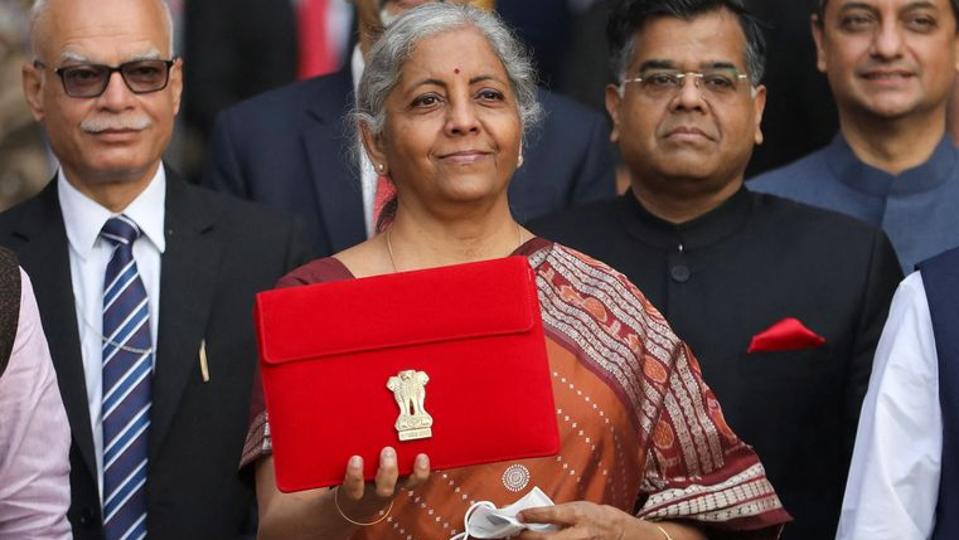
Finance minister Nirmala Sitharaman’s proposals to set up new thematic funds, put a cap on the long-term capital gains (LTCG) surcharge, and extend tax benefits to registered startups for another year, stand to benefit founders, investors and high net worth individuals (HNIs), even as the government took no steps to encourage overseas direct listing for startups.
To begin with, the budget has proposed to set up thematic funds emulating the Fund of Funds (FoF) set up under the Small Industries Development Bank of India (Sidbi) and the National Investment and Infrastructure Fund (NIIF) to invest in the agri-tech, climate action, and pharma. This will create a multiplier effect by seeding multiple alternative investment funds with these funds of funds, said Gopal Srinivasan, chairman and managing director of TVS Capital Funds.
Gopal Jain, managing partner at Gaja Capital, said this proposal will help onshore private equity (PE) and venture capital (VC) industry and provide a boost to startups as each FoF will in turn invest in 150-200 start-ups.
The second big move that has excited investors is the cap on LTCG tax surcharge at 15%. The investor community has been for long calling to align the LTCG taxation on unlisted and listed securities. That said, the budget has proposed to only cap the surcharge and not offered parity.
“Overall, the long-term capital gains tax on unlisted securities is now at 23.92% as opposed to 28.5% previously. This will apply to founders, Esop (Employee Stock Option) holders and domestic investors. This is a 16% reduction in the tax rate,” said Siddarth Pai, co-founder of 3one4 Capital, and the co-chair of the IVCA regulatory committee. However, even with the cap, unlisted securities will be levied LTCG at 2.18 times the rate of their listed counter parts, Pai added.
{{/usCountry}}“Overall, the long-term capital gains tax on unlisted securities is now at 23.92% as opposed to 28.5% previously. This will apply to founders, Esop (Employee Stock Option) holders and domestic investors. This is a 16% reduction in the tax rate,” said Siddarth Pai, co-founder of 3one4 Capital, and the co-chair of the IVCA regulatory committee. However, even with the cap, unlisted securities will be levied LTCG at 2.18 times the rate of their listed counter parts, Pai added.
{{/usCountry}}This, however, has come as “an unexpected move” for individual taxpayers, especially high net worth individuals who earn over ₹2 crore a year but less than ₹5 crore a year, said Indruj Rai, Partner, Khaitan & Co. Many of these HNIs invest in the start-up and funds ecosystem. They, too, will be subject to a lower tax slab on their long-term capital gains, Rai said. “Most of the domestic money for AIFs (alternate investment funds) still comes from large family offices where the rate of surcharge was 37%, that now stands reduced to 15% -- the same as the public markets. This will enhance the supply of investments into start-ups and the AIF industry,” Srinivasan corroborated.
Third, the move to set up an expert committee to provide a holistic evaluation of the regulations governing the PE and VC industry has also brought cheer. The expert committee is expected to take up over 42 items covering the principles of indirect and direct taxation, securities law, the Securities Exchange Board of India (Sebi), International Financial Services Centres and Authority (IFSCA) and Reserve Bank of India (RBI) regulations, as well as Department of Industrial Policy & Promotion (DPIIT), Srinivasan said.
On the downside, though, the budget failed to extend tax benefits to startups not registered by the Inter-Ministerial Board (IMB), investors rued.
Registered start-ups get a tax holiday for three years after their incorporation and their investors get exemption from “angel tax”. The finance minister has proposed to extend this benefit, first put in place in 2016, to start-ups incorporated till March 31, 2023.
However, only start-ups incorporated and approved by the IMB qualify for it. “Out of 62,000 DPIIT-registered startups in India, only 450 are IMB-certified. The reform in this system was an oft-requested ask in order to broad-base the Income Tax benefits of being a startup,” Pai pointed out.
The budget also makes no mention of the allowing direct overseas listing for startups, which has been an industry demand for over two years. “The lack of clarity for close to two years is causing uncertainty in the boards of the startups in terms of exploring listing options,” Pai said.