
 E-Paper



PM Modi wraps up Ladakh visit with a swipe at China, says times have changed
PM Modi also referred to the violent clash between soldiers of India and China at Galwan on 15 June and paid his tributes to soldiers who laid down their lives.

 Prefer HTon Google


On a quiet visit to Ladakh designed to deliver a loud message to China, Prime Minister Narendra Modi told soldiers posted along the Line of Actual Control that the courage they had demonstrated had sent a message to the entire world. Addressing soldiers deployed in Ladakh, PM Modi said tales about their valour were being spoken in every house across the country.
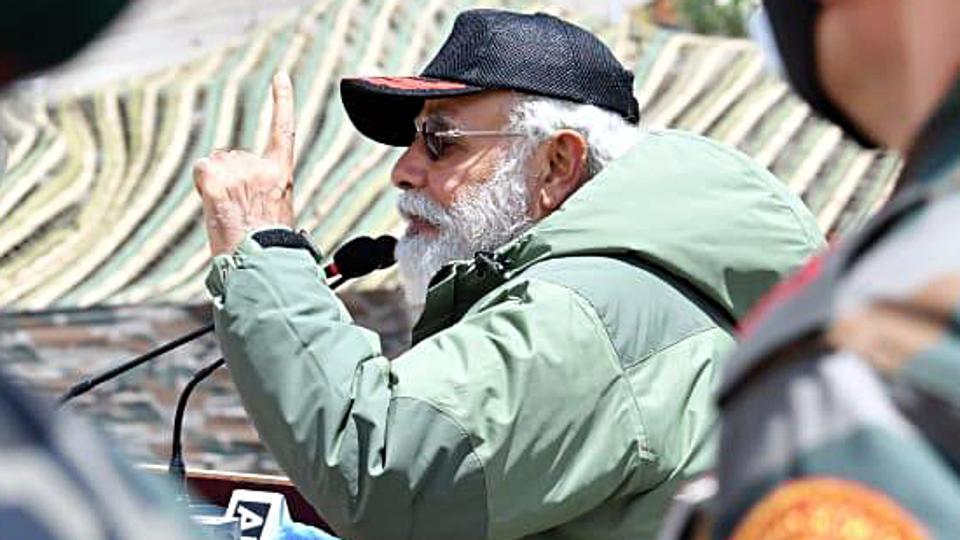
‘The enemy has seen your fire and fury as well,’ PM Modi told the soldiers in an address telecast live from Ladakh to the country. PM Modi also referred to the violent clash between soldiers of India and China at Galwan on 15 June and paid his tributes to soldiers who laid down their lives.
“From Leh, Ladakh to Siachen and Kargil...and Galwan’s icy waters...every mountain, every peak is witness to the valour of Indian soldiers,” PM Modi said. “You have given a befitting reply to people who attempted to conquer,” he told them before going on to deliver his direct message to China.
Also Watch l ‘Age of expansionism is over’: PM Modi’s dig at China during Ladakh visit
PM Modi underscored that India had always pursued the path of peace in the world but at the same time, those who are weak can never initiate steps for peace. “Bravery and courage is a prerequisite for peace,” he said.
“We are the same people who pray to the flute playing Lord Krishna but we are also the same people who idolise and follow the same Lord Krishna who carries the ‘Sudarshana Chakra,” the Prime Minister said.
Without naming Beijing that has been trying to encroach into Indian territory in Galwan valley and Pangong Tso and create new boundary disputes, PM Modi said times had changed and the era of expansionism was over. This is the time for development, not expansion, he said.
PM Modi stayed on target and continued hurling darts at China. The expansionist policies of some countries had affected world peace, he said, a clear reference to China that has disputes with 21 of its neighbours.
But history records that expansionist forces have either lost or were forced to turn back, PM Modi said, delivering his final shot before wrapping up his surprise visit. PM Modi’s office had finalised the day-trip to Ladakh late last evening but kept it a closely-guarded secret till the last moment.
News of the visit got out sometime after he landed at Leh’s airport, a height of over 11,000 feet with rarefied atmosphere, dry air and ultra-violet rays from the sun in the cold desert.
PM Modi, 69, headed straight for his briefing by top military commanders at the XIV Corps headquarters at Nimu outside Leh. He had had similar briefings back in Delhi also.
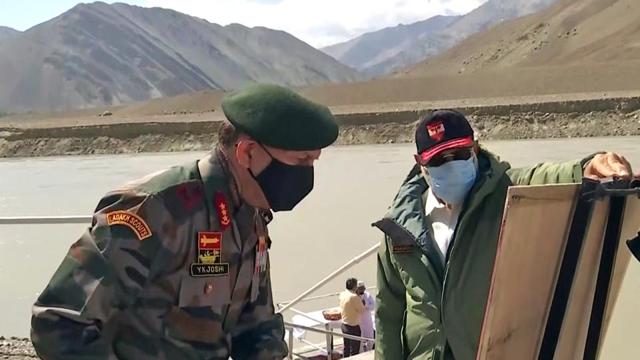
This time, PM Modi could see the Zanskar and the mighty Karakorams that he had been spotting on the maps during the briefings. He also interacted with the soldiers to give them pep talks and hear their perspectives before he came around to delivering his speech.
His arrival in Leh had already delivered the first set of messages to Beijing. It also contrasts India’s approach to the standoffs along the Line of Actual Control to Chinese leadership’s efforts to signal a hands-off approach.
Also Read: India sends high-powered boats to match heavier Chinese vessels to patrol Ladakh lake
The PM’s visit is also a very strong message to President Xi Jinping that either he gets his aggressive Western Theatre Commander Zhao Zongqi to restore status quo ante or accept the inevitable consequences of PLA escalation. The Indian Army and Chinese PLA are locked up at four points on the LAC in East Ladakh with the latter consolidating on ground while mouthing peace overtures.
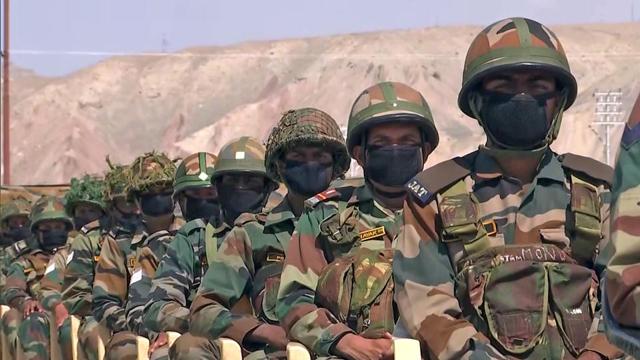
The location at Nimu where PM Modi addressed soldiers from the army, air force, ITBP and border road organisation resembled an active forward base. “There were artillery guns and other heavy equipment all under camouflage with soldiers wearing helmets and sitting in trenches and other kinds of dug out positions with a rare glint of courage on their faces,” a top military commander said.
Referring to some veterans who taunted that Nimu is a picnic spot, the commander said it was “a picnic spot for those who have treated their tenures as picnics instead of doing serious soldiering. For them even Kargil and Pangong Tso are picnic spots. If only they had treated these locations as future combat zones, they would not dare to comment,” he said.


