E-Paper



October is the new June: India’s chaotic rain calendar
Here are three charts which summarise the chaotic rainfall this year (headline numbers suggesting a technically normal monsoon).

 Prefer HTon Google


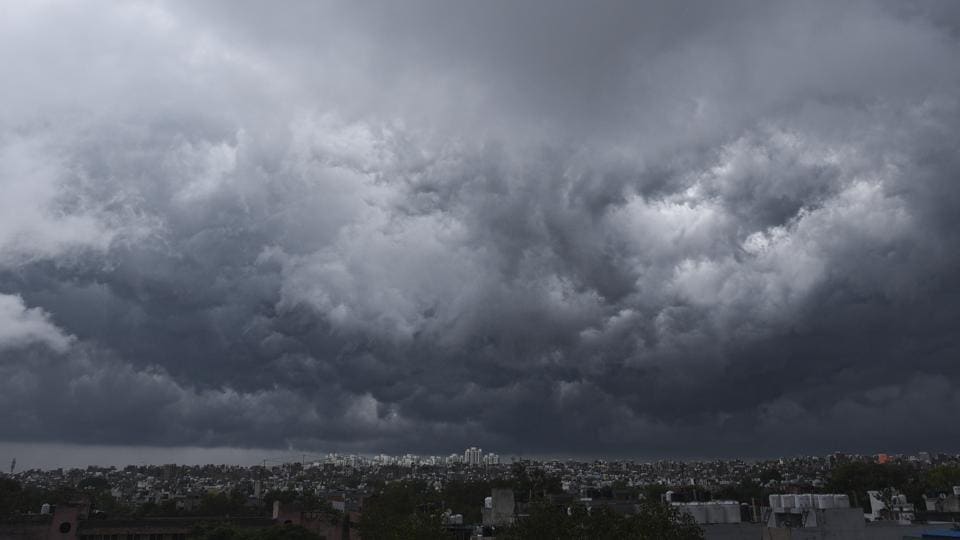
New Delhi: At least 62 people have lost their lives in extreme rainfall events in the states of Kerala and Uttarakhand in the past few days. Delhi witnessed its seventh highest non-monsoon (outside the June-September period) in the 24 hours ending 8:30 am on October 18. While people in Delhi woke up to a hill-station like weather on Monday morning, many hill stations in India’s Northeast are facing an exceptionally dry and hot October.
Here are three charts which summarise the chaotic rainfall this year (headline numbers suggesting a technically normal monsoon).
One of wettest Octobers on record in Delhi
As of 8:30 am on October 18, Delhi had received 65.88 mm of rains in October. 93% of this rainfall (61.24 mm) took place in the 24-hour period ending 8:30 am on October 18. These are far from normal statistics for Delhi.
The Long Period Average (LPA) – defined as the average rainfall between 1961 and 2010 – for October rains (until the 18th) in Delhi is 7.76 mm. The October 18 rainfall is the seventh highest outside the official monsoon season in Delhi. Even if one excludes the monsoon season, the October 18 rainfall is within the top 2% (112 of 9,970) daily rainfall in Delhi.
Higher post-monsoon rainfall at the all-India level too
Delhi is not the only region which has seen a higher-than-expected rainfall even after the withdrawal of the monsoon season. All-India October rainfall as of 8:30 am on October 18, was 66.4 mm, 27.8% more than the LPA value of 51.95 mm. This is the 29th highest value since 1901. Some of this high October rainfall has to do with the late withdrawal of monsoon although other weather formations are also causing rainfall right now in different parts of the country.
But many states are experiencing one of their driest Octobers
The October 1-October 18 interval rainfall is the highest since 1901 in Kerala, 13th highest in Tamil Nadu, 15th highest in Karnataka, 18th highest in Uttarakhand. To be sure, states such as Haryana (17th highest) and Rajasthan (19th highest) have also seen exceptional October rainfall, but it is low in absolute amounts.
For example, Haryana has received 20.56 mm rainfall while Kerala has received 419.12 mm. That’s why there is extensive damage in Kerala but not in Haryana.
Of the 13 states and UTs with a rainfall deficit, eight have received deficient rainfall (deficit of more than 19%). All north-eastern states have a deficit and all except Meghalaya have received rainfall in the deficient range. Manipur’s rainfall is the seventh lowest since 1901, Arunachal’s 15th lowest, and Assam’s 19th lowest. Most states and UTs that have a surplus or deficit in October are in the same situation for the overall rainfall so far this year. Assam, Manipur, Arunachal, Tripura, and Nagaland for instance are in the deficient range for the overall rainfall too this year.