E-Paper



Odisha’s Ganjam tops districts in providing jobs under MGNREGS
Officials said till Monday, 103,000 households in the district were provided work under the scheme in 2021-22

 Prefer HTon Google


Bhubaneswar: Odisha’s Ganjam has again topped districts in providing jobs under the Mahatma Gandhi National Rural Employment Guarantee Scheme (MGNREGS). Officials said till Monday, 103,000 households in the district were provided at least 100-day work this financial year under the flagship programme. They added the number will rise as 24 more days remained in the financial year.
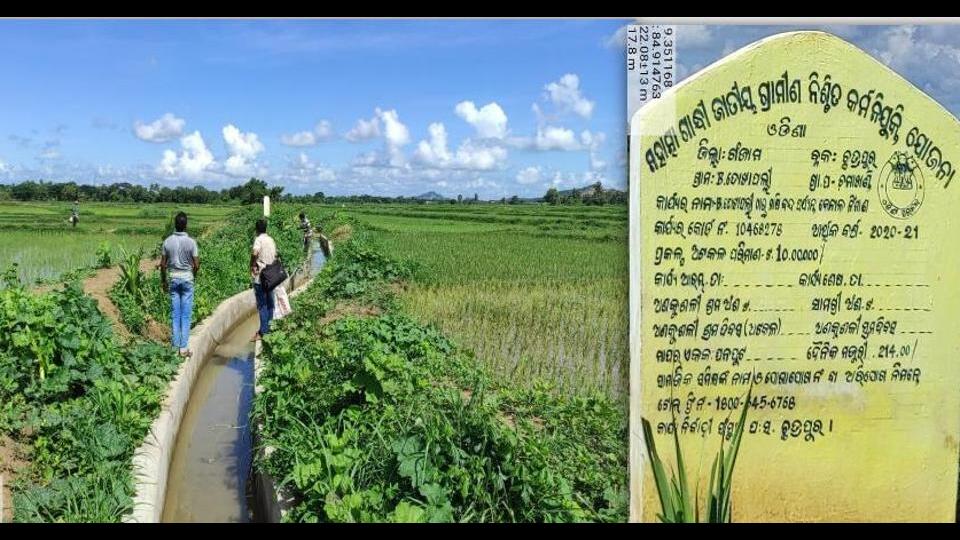
Rajasthan’s Barmer and Nagaur followed Ganjam with 94,586 and 82,731 households getting work under the scheme. Ganjam also topped the list of districts in 2020-21 when 77,275 households were employed under MGNREGS. The highest ever, 392,000 households, got jobs under the scheme in Odisha this financial year. In Sundargarh, 32,422 households were provided work followed by Bolangir (32,234).
Ganjam collector Vijay Amrita Kulange blamed a lack of work during the Covid-19 pandemic for the rise in the number of households seeking work under MGNREGS. He added the “smart planning” of the administration also worked. “We focussed on the scope for community and individual work and accordingly planned. MGNREGS has traditionally been an employment generation programme. We made it assets generation programme and that worked.”
Over 400,000 migrant workers returned to Ganjam from Gujarat, Tamil Nadu, Maharashtra, Kerala and Karnataka when a national lockdown was announced in 2020 to check the pandemic spread. A significant portion of them stayed back when the workers returned to their workplaces. This led to a jump in demand for MGNREGS jobs.
Officials said many were initially reluctant to take up jobs under the scheme as they are skilled workers. They slowly warmed up to the idea as many could not get back their previous jobs.
District Rural Development Agency (Ganjam) project director Bhausaheb Dattatreya Shinde said the administration planned for each family. “If a family was not interested in community work, we gave individual work... We focussed on agriculture and natural resource management. Around 500,000 coconut saplings were planted while 5,000 wells were excavated. Around 2,000 farm ponds were built. We constructed cowsheds, check dams, irrigation channels and irrigation trenches through the programme. We also planned gram panchayat wise and tried to have assets such as educational and agriculture infrastructure that the area lacked.”
Officials said the government managed to pay wages quickly through the creation of a fund, unlike previous years. “The Centre is yet to release the payment for the MGNREGS works, but we have released ₹752 crore from our fund as advance. We have asked for ₹450 crore more from the Centre for MGNREGS workers for the current financial year as we do not want to delay payment,” said state panchayati raj secretary AKK Meena.