...
...
Next Story

On China’s outburst over Confucius centres’ review, India pulls out 2009 rulebook

Indian security agencies had last month red-flagged the growing footprint of Chinese institutions that could be a proxy for the Chinese government or have close ties to the ruling communist party.

Updated on: Aug 7, 2020, 08:08:28 IST
Hindustan Times, New Delhi | By
Prefer HTon Google
Advertisement

India on Thursday rebutted Beijing’s attempt to attribute motives to New Delhi’s review of the Confucius Institutes, citing a 2009 rule that mandates cultural centres sponsored or supported by foreign organisations to seek the foreign ministry’s approval.
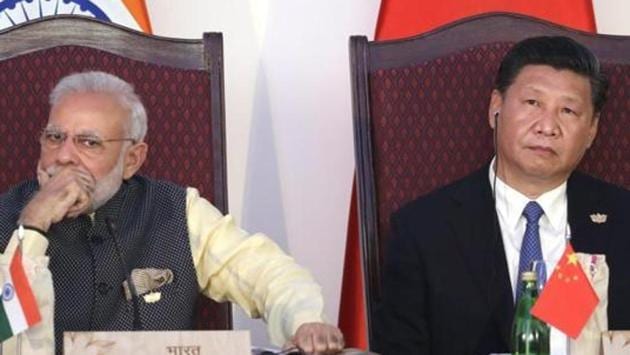
The Chinese embassy on Tuesday asked India to handle collaboration in education in an objective and fair manner and “avoid politicising normal cooperation”. (File photo/AP)

Hindustan Times had first reported the government’s move to initiate the review of Confucius institutes and 54 agreements signed by Indian institutions with Chinese universities.

External affairs ministry spokesperson Anurag Srivastava said the detailed guidelines issued in 2009 applied to Confucius centres also.

“Naturally, if any Indian institution were to enter into or has entered into an arrangement which would come under the purview of these guidelines, then it would require the approval of the Government. And as a corollary if the approval was not taken when establishing such centers, then it was not in conformity with the guidelines,” Srivastava said, without directly referring to the review of agreements signed by central universities and institutions with their Chinese counterparts.

Srivastava’s curt statement was a response to Chinese embassy in Delhi that this week attempted to pressurise New Delhi from going slow on action against Confucius centres opened without fulfilling mandatory requirements.

In a statement 24 hours before India’s higher education regulator and top education ministry officials were to initiate the review exercise, the Chinese embassy on Tuesday asked India to handle collaboration in education in an objective and fair manner and “avoid politicising normal cooperation”.

The Chinese statement didn’t have the desired impact. A government official involved in the process told Hindustan Times that they had gone right ahead to initiate the review at a two-hour-long meeting on Wednesday. “It is still work in progress and some more details have been sought,” the official said.

The education ministry review would, besides taking a close and hard look at the setting up of Confucius Institutes and Confucius Classrooms in seven colleges and universities, would also review 54 memoranda of understanding (MoUs) signed between Chinese institutions and prestigious Indian institutions such as the Indian Institutes of Technology, Banaras Hindu University, and Jawaharlal Nehru University.

The review came against the backdrop of the three-month long border standoff between the two sides, which currently shows little signs of abating. India has already banned over 100 Chinese mobile apps and its clones and barred Chinese companies from getting any government contract without a special permission.

 
ABOUT THE AUTHOR
Shishir Gupta

Shishir Gupta is Executive Editor at Hindustan Times and one of India's top journalists covering national security, strategic affairs, foreign policy and geopolitics. Over the past three decades, he has extensively reported on India's military, diplomatic and security landscape, covering every major conflict and national security challenge, from the 1999 Kargil War and the 2020 East Ladakh standoff to Operation Sindoor in 2025. He has also covered major terror attacks, including the IC-814 hijacking, the 26/11 Mumbai attacks and the 2025 Pahalgam terror strike, along with numerous Pakistan-backed terrorist incidents in the Kashmir Valley and across India. He has reported on national and state elections for more than three decades. A recognised authority on strategic affairs, Gupta has covered India's nuclear programme since the Pokhran-II (Shakti series) tests in May 1998 and has written extensively on global nuclear issues, Indian diplomacy and the country's expanding global outreach. He has also reported widely on international conflicts and terrorism, with a special focus on the Indian subcontinent. Gupta has interviewed Prime Minister Narendra Modi more than four times, including Modi's first interview with the print media after becoming Prime Minister in May 2014. His other interviews include three with the Dalai Lama, as well as conversations with Benjamin Netanyahu, Amit Shah, Yogi Adityanath, S. Jaishankar, Nirmala Sitharaman and Piyush Goyal. He is the author of Indian Mujahideen: The Enemy Within (Hachette, 2011) and Himalayan Face-off: Chinese Assertion and Indian Riposte (Hachette, 2014). He was awarded the Chevening-Wolfson Joint Scholarship at Wolfson College, University of Cambridge, UK, in 1998 and participated in the International Visitor Leadership Program (IVLP) of the US State Department in 2006. He received the Ben Gurion Prize from Israel in 2011 and the K. Subrahmanyam Prize for Strategic Studies in 2015 from the Manohar Parrikar Institute for Defence Studies and Analyses (MP-IDSA). Since 2024, he has hosted Point Blank, Hindustan Times' weekly YouTube show on global geopolitics.

Get the latest India News, breaking headlines and real-time updates from across the country. Stay informed about politics, government policies, crime, weather major national developments and Karnataka Bandh LIVE.
SHARE THIS ARTICLE ON
Hindustantimes wants to start sending you push notifications. Click allow to subscribe