
 E-Paper



Chinese firms, mobile apps blocked, India could next target university tie-ups
India China border tension: The Confucius Institutes are directly funded by Ministry of Education of People’s Republic of China with the ostensible aim to promote Chinese language and Culture.

 Prefer HTon Google


India’s education ministry has decided to review in the coming week, the setting up of local chapters of the Confucius Institutes in association with seven local colleges and universities after security agencies alerted it to the growing Chinese influence in higher education in India.
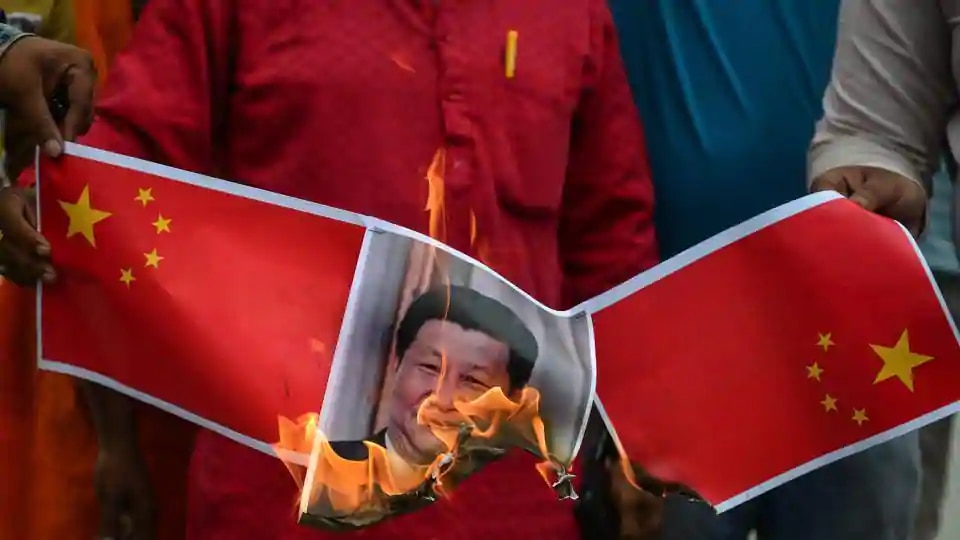
The ministry also plans to review 54 Memoranda of Understanding (MoUs) signed between prestigious educational institutions including IITs, BHU, JNU and NITs and Chinese institutions. It has already issued a notification to the Ministry of External Affairs and the University Grants Commission.
The Confucius Institutes are directly funded by Ministry of Education of People’s Republic of China with the ostensible aim to promote Chinese language and Culture. But they have come in for criticism all around the world, including the US and the UK for helping spread Chinese propaganda. Most recently, according to a BBC report of September 2019, Australia launched an investigation of “whether the agreements between universities and the institute have broken anti foreign-interference laws”.
Also Read: China moves PLA battalion across India’s Lipulekh Pass. It’s a signal
Around the same time, several universities around the world shut down programmes operated by the institute, that report added.
Ranking members of the Chinese Communist Party Politburo Standing Committee have been quoted saying that Confucius Institutes are part of the overseas propaganda to project Beijing’s soft power.
The decision to review the Confucius Institutes and the MoUs comes at a time when the People’s Liberation Army (PLA) has been amassing more than 50,000 troops, tanks, missiles and artillery guns in occupied Aksai Chin, in an open display of aggression against India along the Line of Actual Control in Ladakh. The PLA has even spread the deployment to the middle sector in Uttarakhand and the eastern sector in Arunachal Pradesh.
Also Read: Army won’t take eyes off Ladakh, preps to shop for Siachen-like gear for troops
According to high ranking officials in the government, the Confucius Institutes in India to be reviewed are at: the University of Mumbai; Vellore Institute of Technology; Lovely Professional University, Jalandhar; . O P Jindal Global University, Sonepat; School of Chinese Language, Kolkata; Bharathiar University, Coimbatore; and KR Mangalam University, Gurugram.
The officials, who asked not to be named ahead of the review said Delhi’s Jawaharlal Nehru University also has an MoU with Hanban (the Confucius Institute’s HQ) though it hasn’t set up a centre.
Also Read: Security agencies red-flag Chinese fronts in education, not just power and telecom
The MoU was signed between JNU and Peking University around 2005 during the-then Chinese premier’s visit to India. The institute was never set up since there some disagreements over constitution of the board . Since the MoU was signed for five years, it lapsed. Chinese officials wanted to revive it later but the university did not show much interest,” said sinologist BR Deepak, chairperson at JNU’s Centre for Chinese and South East Asian Studies, who was an associate professor at the varsity when the MoU was signed.
The education ministry called the review after security agencies made a presentation before Cabinet Secretary Rajiv Gauba on July 15 to red-flag Chinese penetration in the Indian telecommunication sector and higher education. The meeting was attended by the senior-most secretaries to Government of India. It was in this meeting that the decision to review Beijing’s presence in the two highly sensitive sectors was taken. It isn’t clear what the government will decide after the review but HT learns that the education ministry will question the universities, colleges and institutions whether they took permission from it (until recently, the ministry of HRD) or the ministry of external affairs before signing the MoUs with Chinese universities or Hanban.
Interestingly, this isn’t the first time the education ministry is acting along these lines. On October 1, 2019, the University Grants Commission (UGC) issued a circular asking universities to get approvals from the central government before offering courses in association with any Chinese institutions. The University of Mumbai maintained that the circular was not valid for existing institutes.
“The (Confucius) Institute first started eight years ago with a grant that came from the Chinese government of about ₹90 lakh. Ever since there’s been no additional grants but we have managed to keep the institute up and running by increasing courses,” said Vibha Surana, director of the Confucius Institute at the university. She added that learning Mandarin “has opened many job prospects for students in the past.” The Confucius Institute was established in 2013 at the University of Mumbai following an MoU with Hanban in the same year. It was set up as an apex Chinese institution providing standard international certification and assuring quality Chinese language teaching.
There was no response to queries seeking comment from KR Mangalam University and Lovely Professional University. HT couldn’t immediately reach the other universities and colleges that have partnered to set up Confucius Institutes.
Among the other MoUs reviewed by the ministry will be those involving the Indian Institutes of Technology (IITs) and the National Institutes of Technology (NITs) with top Chinese technical institutions for research, student and faculty exchange, and language courses. These institutions account for around 30 of the 54 MoUs.
According to a central government document accessed by HT, the list of 54 MoUs that will be reviewed this week at a high-level committee are:
IIT Kharagpur - (1) Tianjin University, (2) Henan Polytechnic University [HPU], (3) Chang Gung University
IIT Bombay - (1) Central University of Finance and Economics, (2) Tongji University
IIT Madras - (1) Beijing Jiaotong University, (2) Huazhong University of Sciences and Technology, (3) Shanghai International Studies University, (4) Dalian University
IIT Delhi - (1) Chang’an University, (2) City University Of Hong Kong Hiksar Peoples & Republic of China, (3) China Jiliang University, (4) Nanyang Normal University
IIT Guwahati - (1) Hunan University, (2) Shantou University, (3) Soochow University, (4) University of Macau, (5) Yunnan University
IIT Gandhinagar - (1) Confucius Institute Headquarters [HANBAN]
IIT Roorkee - (1) The Center for Monsoon System Research of the Institute of Atmospheric Physics at Chinese Academy of Sciences, (2) East China Normal University [ECNU]
IIT Bhubaneswar - (1) Engineering Centre of Materials, Manufacturing, School of Materials Science & Engineering, Shanghai Jiao Tong - University, China [during state visit of President of India to China]
NIT Durgapur - (1) Tianjin Polytechnic University, (2) Hohai University, (3) Integrated Risk Governance Project, Future Earth Program [hereafter IRGP/FE], Beijing Normal University, (4) Southwest University for Nationalities [SWUN], Chengdu, (5) Beijing Normal University, (6) School of Materials Science and Engineering, Jiangsu University, (7) Hunan University, Changsha, Hunan
NIT Surathkal - (1) Institute of Radio Frequency and optoelectronics Integrated Circuits plus State Key Lab of Bioelectronics, Southeast University
NIT Warangal - (1) Chang’an University
IISER Kolkata - (1) Hubei University, (2) Changshu Institute of Technology
IISC Bangalore - (1) China University of Geosciences
Jawaharlal Nehru University - (1) Tsinghua University, (2) Beijing Normal University, (3) Shandong University, Jinan, (4) Guiyang University, Guiyang, Guizhou, (5) Tongren University, Tongren, Guizhou, (6) Guizhou Minzu University, (7) Sichuan University of People’s Republic of China, (8) Jinan University, (9) Yunnan Academy of Social Sciences/ the Chinese [Kunming] Academy of South and Southeast Asian Studies, (10) Yunnan Minzu University, (11) Shenzhen University, Guangdong, (12) Renmin University of China, Beijing
Manipur University - (1) Yunnan Open University
Central University of Punjab - (1) Kunming Institute of Botany, Chinese Academy of Sciences, Kunming, (2) Xishuangbanna Tropical Botanical Garden, Chinese Academy of Sciences, Xishuangbanna, Yunnan
Banaras Hindu University - (1) Soochow University, School of Law, Taipei, Taiwan, Republic of China (2)Beijing Language and Culture University, (3) Beijing Foreign Studies University, (4) North China University of Water Resources & Electric Power, (5) Dali University


