
 E-Paper



On Israel-Hamas conflict, India says de-escalate, create conditions for talks
India, which has strong strategic ties with Israel and key Arab states, has fashioned a nuanced approach to the conflict triggered by the October 7 terror attacks by Hamas

 Prefer HTon Google


NEW DELHI: India on Thursday again called on the parties in the Israel-Hamas conflict to de-escalate, avoid violence and create conditions that facilitate an early resumption of direct peace negotiations for achieving a two-state solution.
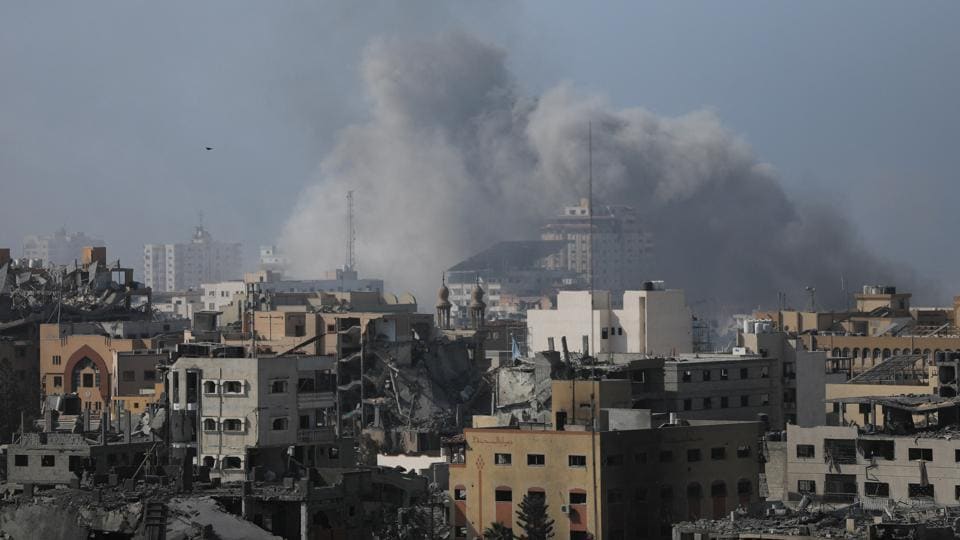
The Indian side, which has strong strategic ties with both Israel and key Arab states, has sought to fashion a nuanced approach to the conflict triggered by the October 7 terror attacks by Hamas. While condemning the terror attacks, India has asked for adherence to international humanitarian law but has stopped short of directly calling for a ceasefire.
India has “urged the parties to de-escalate, eschew violence and work towards creating conditions for an early resumption of direct peace negotiations towards a two-state solution”, external affairs ministry spokesperson Arindam Bagchi told a regular media briefing in response to questions on the Israel-Hamas conflict.
“We have made our position clear on multiple occasions, including during the United Nations General Assembly debate on October 27. We have strongly condemned the horrific terrorist attack on Israel, urged the need for zero tolerance for terrorism, and called for immediate and unconditional release of hostages,” he said.
“We have also conveyed our deep concern at the humanitarian crisis in Gaza and the increasing civilian toll and welcomed efforts to de-escalate the situation and provide humanitarian assistance,” he said. The Indian side has also emphasised the need for “strict observance of international humanitarian law”.
Describing the situation as “difficult”, Bagchi said India has so far provided 38 tonnes of humanitarian relief materials.
The Hamas’ terror attacks killed more than 1,400 people while Israel’s bombardment of Gaza has killed more than 10,500 people and injured 26,400.
In the wake of several media reports that a builders’ association in Israel is keen to bring in up to 100,000 Indian workers to replace Palestinian labour, Bagchi said he was not aware of any “specific conversations or requests”. He added that many Indians are employed in Israel, especially as caregivers.
“Since 2022, we have been discussing a bilateral framework in the construction and care-givers sectors but this is a long-term initiative and I’m not aware of any specific requests or numbers floating around,” he said. These discussions are part of India’s efforts to give its citizens access to the global workplace.
Bagchi didn’t rule out the possibility that the Israel-Hamas conflict could figure in the India-US 2+2 dialogue of defence and foreign ministers in New Delhi on November 10. “I guess considering the nature of our relationship and the global strategic partnership, a variety of issues are discussed, including topical issues, regional developments. I wouldn’t rule it out but I certainly wouldn’t like to prejudge it,” he said.
In response to another question, he said the Indian side would be “happy to discuss” the diplomatic row with Canada over the killing of Khalistani leader Hardeep Singh Nijjar if it comes up in the 2+2 dialogue.
“On Canada, if they wish to discuss it, we are happy to discuss all issues but again I wouldn’t have a position yet,” he said.
India-Canada relations have plummeted since Canadian Prime Minister Justin Trudeau alleged there was a potential link between Indian government agents and Nijjar’s killing. Both sides expelled one senior diplomat each, and Canada withdrew 41 diplomats from India after New Delhi sought parity in diplomatic presence.



