
A Member of Lok Sabha on average represents around 26.3 lakh citizens, nearly 3.3 times the figure in the United States of America, according to sources.
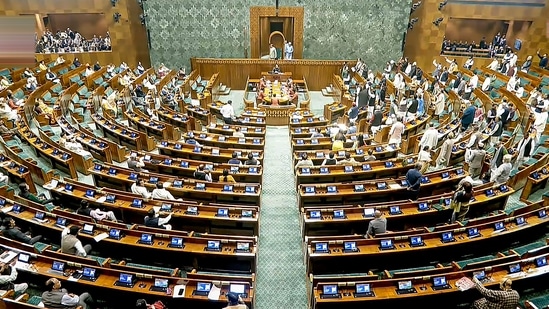
India has 543 directly elected seats while the United States House of Representatives has 435 voting members and 6 non-voting members. Each MP there represents 8.02 lakh citizens, the sources said, citing data analysis.
The figures assume significance as the Indian government says a delimitation exercise will rationalise the size of constituencies so that MPs represent lesser number of people, allowing them to raise their issues more effectively.
Deep Dive
How many people does one Lok Sabha MP represent on average?
Why does the government say India needs delimitation?
How could the proposed Lok Sabha expansion change the number of people represented by each MP?
Iceland has the smallest constituency load with 6.39 thousand persons per MP, followed by Luxembourg with 11.46 thousand persons per MP. The two countries have 63 and 60 elected seats in Parliament, respectively.
In Finland, which has 200 elected seats, one MP represents 28.11 thousand citizens, followed by 30.66 thousand citizens in Sweden with 349 elected seats.
Ireland has 174 elected seats, with each MP representing 30.79 thousand citizens, followed by 33.45 thousand persons per MP in Norway, which has 169 elected seats.
Denmark has a constituency load of 33.65 thousand citizens per MP, while Uruguay has 34.17 thousand persons per MP. The two countries have 179 and 99 elected seats, respectively.
{{/usCountry}}Denmark has a constituency load of 33.65 thousand citizens per MP, while Uruguay has 34.17 thousand persons per MP. The two countries have 179 and 99 elected seats, respectively.
{{/usCountry}}With 130 elected seats, New Zealand has 40.67 thousand citizens being represented by one MP.
Switzerland and Portugal have nearly the same constituency load with 45.04 thousand persons and 45.20 thousand persons, even though they have 130 and 200 elected seats respectively.
Austria has a constituency load of 49.77 thousand persons per MP with 183 elected seats and Costa Rica has a constituency load of 90.79 thousand persons per MP with 57 elected seats.
Among the countries where over 1 lakh citizens are represented by one MP are -- UK (1.08 lakh), Canada (1.18 lakh), France (1.20 lakh), Netherlands (1.23 lakh), Germany (1.33 lakh), Italy (1.47 lakh), South Africa (1.64 lakh) and Australia (1.82 lakh).
Both Taiwan and Japan have a constituency load of over 2 lakh persons per MP -- 2.04 lakh and 2.63 lakh -- even as Japan has 465 elected seats in its Parliament as against 113 seats in Taiwan.
ALSO READ: The size of parliaments around the world, and how countries decide the number of lawmakers
In Brazil, 4.16 lakh citizens are represented by one MP with 465 elected seats.
The Centre government in India is set to introduce a fresh Constitution amendment Bill in the Lok Sabha on Monday to roll out one-third reservation for women by increasing the seat allocation for each state and Union Territory in the House and the strength of their legislative assemblies by 50 per cent, and freeze the revised allocations and boundaries until 2051.
A special sitting of Parliament has been convened. The Lok Sabha has been reconvened on November 30 and the Rajya Sabha on December 2. The sittings will conclude on December 3.
ALSO READ: President recommends Lok Sabha to consider delimitation bill ahead of Parliament sitting
The Constitution (132nd Amendment) Bill, 2026, seeks to raise the House's maximum strength to 850, with up to 815 members from states and 35 from Union Territories. It also proposes to raise the ceiling on the size of a state Assembly from 500 to 650
Urging the opposition to support the passage of a bill to implement a 33 per cent quota for women in legislatures in 2029, Union Home Minister Amit Shah had said in April in the Lok Sabha that the delimitation exercise was essential to rationalise the number of voters in every constituency.