
 E-Paper



Opposition gets battle-ready for Parliament, five key issues to watch out for
Lok Sabha speaker Om Birla has called a meeting on Thursday to finalise arrangements to conduct the session during the pandemic. This may include the use of 10 display screens for live proceedings, placards to indicate names of parties and ultraviolet germicidal irradiation of the air conditioning system.

 Prefer HTon Google


From the collapse of the economy and staggering job losses, to the mismanagement of the Covid-19 pandemic and alleged Chinese incursion into Indian Territory, the opposition is getting battle-ready to take on the ruling Bharatiya Janata Party in the monsoon session of Parliament.
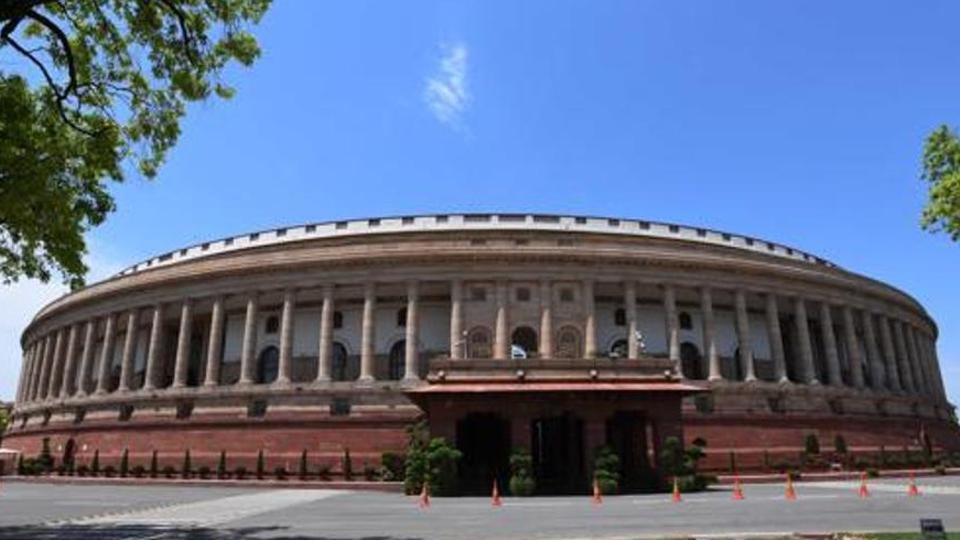
Hindustan Times reported on Wednesday that the Parliament session is slated to start from September 14 and will go on till October 1, as per recommendations made by the Cabinet Committee on Parliamentary Affairs. Lok Sabha speaker Om Birla has called a meeting on Thursday to finalise arrangements to conduct the session during the pandemic. This may include the use of 10 display screens for live proceedings, placards to indicate names of parties and ultraviolet germicidal irradiation of the air conditioning system.
While the BJP has prepared its own game plan to counter the opposition offensive, the Congress and the Trinamool Congress will soon hold Parliamentary Party meetings to deliberate and strategise on how best to take on the ruling party. The Central government is looking to clear 11 ordinances, HT reported on Wednesday, as they expire after six months if not replaced by a Bill, which has to be passed in six weeks, is not passed.
“Before Parliament begins, the Congress Parliamentary Party will meet and have a threadbare discussion about the best strategy to counter the BJP,” said Congress MP Adhir Ranjan Chowdhury.
Derek O’Brien, Trinamool’s leader in Rajya Sabha, said that the party would deliberate and decide what subjects to take up. “The main assertion is that the Parliament belongs to the Opposition and an appropriate amount of time ( about two of the four hours daily) should be factored in so that all issues can be addressed. Zero Hour and Question Hour must happen “ O’Brien said.
DMK MP Sumathy Thamizhachi Thangapandian and RJD MP Manoj Jha too concurred that an adequate amount of time should be made available for discussion on the floor of the house. The broad issues the opposition flagged are as follows
Alleged Chinese incursion
According to Chowdhury, the claims that China had occupied Indian Territory in Ladakh will be central in the proceedings of the House. The Congress has been attacking the BJP for being in ‘denial’ about the incursions.
DMK MP Sumathy too said that the government will have to answer for the ‘loss of the life of 20 Indian soldiers’.
“The Chinese statement clearly shows that there has been an incursion,” said Jha. “Then why is the government in denial, why are they fixated on trial balloon diplomacy.”
CPI(M)’s Sitaram Yechury asserted that India’s relationship with all its neighbours was in a state of decline. “Look at Nepal, Bhutan, Sri Lanka and even Bangladesh, there has been a collapse in the relations with all the neighbours.”
He added that the CPI(M) supports the government when it comes to China but the party would like to know if there was no incursion, how were 20 soldiers killed.
Covid-19 crisis mismanagement
Three of the parties believe that the government has failed to adequately address the global pandemic, leading to job losses across the spectrum, and especially for migrant workers.
“Unemployment is at an all time high,” said Chowdhary. “The government will have to explain why the youth do not have jobs anymore.”
Jha added that mismanagement of the crisis is clear from the fact that a lockdown was imposed when there were only 100 cases a day, but now that there over 60,000 cases per day, the government was not even addressing the issue. “This shows the government is not serious about the crisis,” Jha said.
According to Sumathy, the government had failed to provide help to the states even when they had repeatedly asked for it. “What have the Prime Minister and his cabinet done to resolve the crisis, it is a failure on part of both the state and the Central government” she said. “The issue of migrant labourers is also an important one that demands accountability.”
CPI(M) general secretary Sitaram Yechury said that the mismanagement of the Covid-19 pandemic will be taken up by the party.
“The Central government not only failed to provide the wherewithal to contain the pandemic, but also failed to bolster health infrastructure,” Yechury said.
Economic downturn
According to all four opposition parties mentioned above, the government’s handling of the Covid-19 crisis has had a cascading effect on the economy and the country.
“Our economy is in shambles,” said Chowdhury. “The government has done nothing to provide stimulus for it.”
Sumathy concurred with Chowdhury. Jha, meanwhile, added that it was not even a ‘bleeding economy anymore, but a dead one’. “The level of unemployment is unprecedented,” said Jha.
A TMC MP who did wish to be named said that government will have to offer a roadmap to fix the economy, something it has failed to do till now.
Yechury said that it was already in crisis before the pandemic hit. “The Modi government’s policies have destroyed the economy. There is a lack of demand and until that is addressed, no amount of loans can fix the economy,” he said.
Passing of executive orders
The National Education Policy, the Environmental Impact Assessment and setting up of the PM-Cares fund, among others are likely to be questioned by the opposition.
“What are these 11 ordiances, has India become an ordiance raj,” said the TMC MP.
Sumathy added that the DMK had opposed the NEP and EIA from their draft stages itself. “Imposition of Hindi is another issue we would like to take up,” she said.
According to Jha, the truncated houses will limit the opposition’s ability to question the multiple executive decisions taken by the government. “So many executive decisions have already been taken, they must be subjected to legislative scrutiny,” said Jha.
Chowdhury mirrored Jha’s concerns and said that the House must not be ‘disempowered’. “Question hour is integral to the functioning of the house, any proposal to strike it down should not be considered,” said Chowdhury.
He added that the turning of Jammu and Kashmir into a ‘virtual prison’ would also be taken up. The issue became contentious on Tuesday after Speaker Om Birla wrote a letter to all panel chairs that subjects that are sub judice should not be taken up by panels for discussion.
“It is an individual member’s right to express themselves,” said Chowdhury. “2G was being heard by the Supreme Court, but the issue was raised in Parliament. While there may not be scope for discussion, but everything can’t be restricted in such a manner. We will certainly raise the issue of Jammu and Kashmir.”
Failure of cooperative federalism
In terms of compensating GST dues and lending a helping hand to the states to tackle the pandemic, the opposition parties feel that the government has disappointed the states.
“In Bihar, BJP leader Sushil Modi is also saying that the government needs to pay the states their dues,” said Jha.
The TMC MP added that cooperative federalism, and it’s ‘murder’ by the Central government, is also being taken up a meeting of the party on Wednesday and will certainly be on the party’s agenda.
Sumathy too said that states had not received enough support from the government in terms of Covid-19 supplies or payment of GST dues.
“Opposition is victim of half glass empty syndrome”: BJP MP
BJP leader and MP Rakesh Sinha, however, dismissed the issues raised by the opposition as an example of political ‘cynicism’.
“In recent years obstructionism and cynicism have acquired centrality in the opposition‘s politics. Narendra Modi’s popularity graph went up not only in India, but also in the international arena due to his role in managing the crisis that has emanated from Covid 19 pandemic. He succeeded in isolating China in the international fora by aggressively questioning its policy of expansionism,” said Sinha.
He also added that the Opposition in India has never been so marginalised, not only numerically but also morally.
“It has been backing the forces which intend to create civil anarchy. People abhor such politics whether inside or outside the parliament,” Sinha added.


