
 E-Paper



Pak attempt to raise Kashmir at SAARC virus talks draws flak
Zafar Mirza, special adviser on health to Prime Minister Imran Khan, represented Pakistan in the video conference organised at Prime Minister Narendra Modi’s suggestion.

 Prefer HTon Google


Pakistan’s move to raise Kashmir during a video conference of South Asian Association for Regional Cooperation (Saarc) leaders on the coronavirus (Covid-19) situation was unwarranted and an attempt to politicise a humanitarian issue, people familiar with developments said.
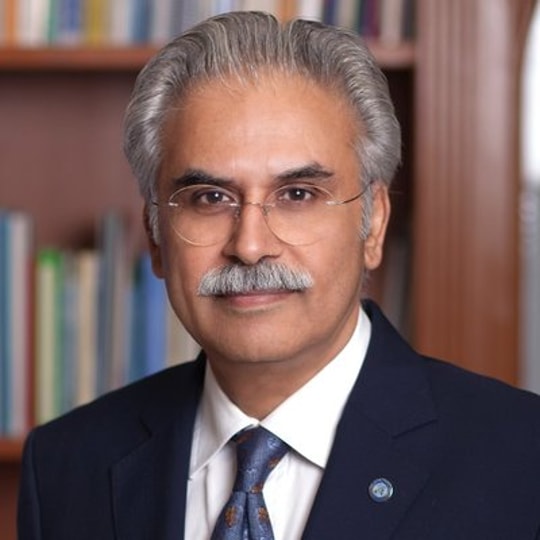
Zafar Mirza, special adviser on health to Prime Minister Imran Khan, represented Pakistan in the video conference organised at Prime Minister Narendra Modi’s suggestion. In his remarks, Mirza referred to Kashmir while calling for emergency aid being accessible to all regions in the member states of the Saarc.
The people cited above, who spoke on condition of anonymity, said the Pakistani representative tried to politicise a humanitarian issue when all Saarc states were making an effort to deal with an emergency situation.
“It is a pity they [Pakistan] have to be churlish on an issue that is important to the region. We have demonstrated the political will to come together,” said a person who declined to be named.
In his concluding remarks during the 90-minute video conference, Mirza said Pakistan hoped Saarc members would “provide access to emergency assistance to all our regions in our countries”.
He added, “In this regard ... it is a matter of concern that Covid-19 has been reported from Indian-occupied Jammu and Kashmir, and in view of the health emergency it is imperative that all lockdown in the disputed territory must be lifted immediately.”
Mirza said opening up communications and movement will help dissemination of information, distribution of medical supplies, and implementation of containment and relief efforts.
The people cited above pointed out that Khan was the only head of government of a Saarc state who didn’t join the conference. They noted that Nepalese Prime Minister KP Sharma Oli, who was discharged from hospital on Saturday after a surgery, had agreed to participate in the event and made significant suggestions.
The Pakistani representative was also the only speaker who didn’t thank the Indian side for taking the initiative to organise the conference to foster regional cooperation — something that didn’t go unnoticed in diplomatic circles.
While proposing the video conference, the Indian side had included all Saarc states, including Pakistan, as the intention was regional collaboration. “I think they [Pakistan] chose to utilise the opportunity to bring a completely unwarranted and out of context reference to Kashmir,” said the person cited above.
Saarc has been dormant since a summit scheduled to be held in Islamabad in November 2016 was called off after an attack on an Indian Army camp at Uri in Kashmir that was blamed on Pakistan-based terrorists.
Several leaders who joined the video conference, including Oli and Bangladeshi Prime Minister Sheikh Hasina, said Saarc could play a greater role in coping with situations such as the coronavirus outbreak through the pooling of resources and expertise.



