...
...
Next Story

Parliamentary panel cautions against excessive centralisation in proposed HECI

The panel reiterated its recommendation to set up a simplified hierarchy of regulatory bodies which will have a final say in implementation of government rules

Published on: Feb 4, 2025, 21:01:30 IST
Advertisement

NEW DELHI: A parliamentary committee on Tuesday reiterated its concern at a plan to set up an overarching Higher Education Commission of India (HECI) as the principal regulator of higher education in India, warning that this would lead to excessive centralisation and inadequate representation of states.
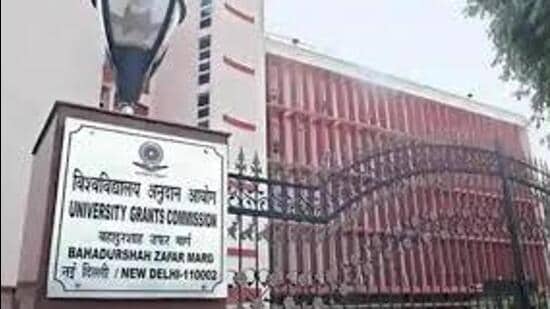
According to the government, once HECI is established, all other regulatory bodies, including UGC and All India Council for Technical Education (AICTE) will be merged with it (FILE PHOTO)

In a report tabled in the Rajya Sabha, the parliamentary standing committee on education, women, children, youth, and sports, led by Congress MP Digvijaya Singh said multiplicity of regulators led to inconsistency in standards and monitoring, making it difficult for institutions to function effectively.

“Moreover, state universities, which educate over 90 per cent of the student population, are caught in between national and state-level regulations. The draft Higher Education Commission of India Bill (HECI) (which seeks to replace UGC as a single regulator) appears to perpetuate many of these same issues by maintaining a Central Government- heavy composition and insufficient state representation,” the committee said in its action-taken report to Parliament.

The government told the committee that a draft HECI Bill had been prepared by the ministry and the matter was being considered by the ministry of education in consultation with stakeholders.

“The proposed HECI Bill will hold significant power, including the ability to grant degree-awarding authority and close institutions failing to meet standards. This removes state control and could lead to the closure of institutions in rural areas that suffer from infrastructure or faculty shortages. It would indirectly fuel privatization, especially in rural areas,” the panel said, reiterating its recommendation for a simplified hierarchy of regulatory bodies.

It also underlined that “any such unified regulatory body must have adequate representation for all states and there should not be excess centralization.”

 
ABOUT THE AUTHOR
Sanjay Maurya

Sanjay Maurya is a Principal Correspondent with Hindustan Times, where he covers education, with a focus on school and higher education, competitive examinations, education policy and governance. Working as part of the National Bureau, he is based in New Delhi and reports on the Ministry of Education and covers various statutory bodies like UGC, AICTE and NCTE and autonomous bodies like CBSE and NCERT. His reporting also tracks the implementation of key government reforms and policies from school education to higher education including in IITs, NITs, IIMs, central and state universities, and their impact on students and educational institutions. His reporting on the irregularities and rushed implementation of CBSE's On-Screen Marking (OSM) system for evaluation of Class 12 board exams 2026, triggered administrative action, leading to the transfer of the board's two senior-most officials and the constitution of a committee to probe alleged irregularities in procurement process of the system. He joined Hindustan Times in December 2024. Prior to that, he had a three-year stint at Careers360, where he reported on school and higher education, entrance examinations, admissions, rankings and various education policies involving universities and professional education bodies. Over the years, Maurya has reported extensively on major developments in India's education sector, including the implementation of the National Education Policy (NEP) 2020, reforms in the National Testing Agency (NTA) following the NEET-UG 2024 controversy, changes in school education, higher education regulation, and the evolution of entrance examinations such as NEET, JEE and CUET. He regularly produces data-driven and explanatory stories based on government documents, parliamentary proceedings, court records and official data. His focus remains on helping readers understand how education policies and institutional decisions affect millions of students, teachers and educational institutions across the country.

Get the latest India News, breaking headlines and real-time updates from across the country. Stay informed about politics, government policies, crime, weather major national developments and Karnataka Bandh LIVE.
SHARE THIS ARTICLE ON
Notifications

Get breaking alerts directly from the newsroom

Notifications are on!You'll be notified when news breaks