
 E-Paper



PoK erupts over a ban, Pak forces fire at protesters, several killed as Asim Munir's Kashmir claims exposed again
The immediate trigger was the banning of the Joint Awami Action Committee (JAAC) on June 6 under anti-terrorism legislation.

 Prefer HTon Google


Pakistani security forces opened fire on protesters in Pakistan-occupied Kashmir (PoK) this week, killing several people and injuring scores more in a crackdown that sources in Kashmir described as among the territory's most violent in recent memory — and one that cuts sharply against Pakistan Army chief Field Marshal Asim Munir's posture as Kashmir's self-appointed champion.
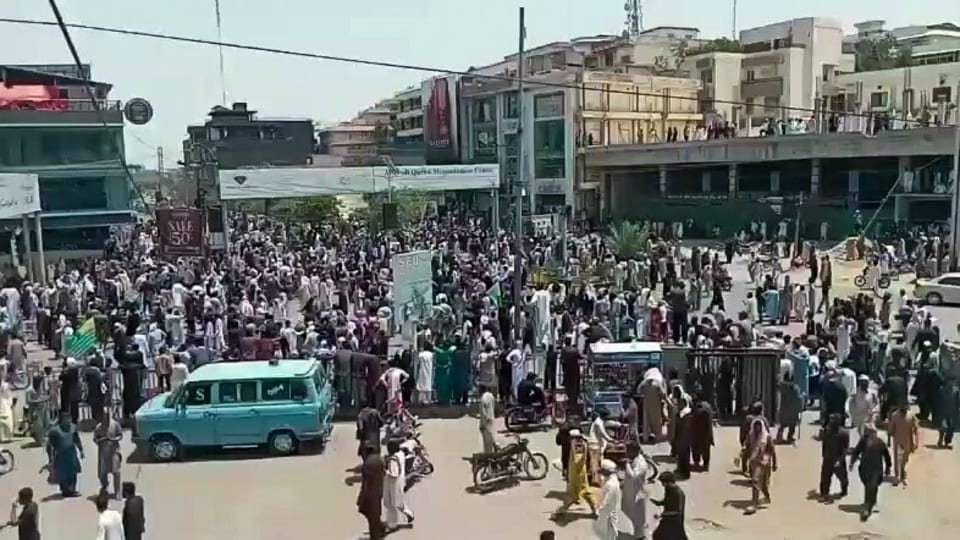
The immediate trigger was the banning of the Joint Awami Action Committee (JAAC) on June 6 under anti-terrorism legislation. This move, sources in Kashmir said, amounted to criminalising a civil rights movement.

A demand charter, then a ban
Founded in September 2023, the JAAC is a coalition of traders, transporters, lawyers and student groups that has become the most credible grassroots platform in PoK.
It had called a region-wide shutdown and a long march for June 9 to press a 38-point charter of demands. Chief among them is the abolition of 12 seats in the PoK assembly reserved for so-called “refugees from Indian Kashmir” — seats that Islamabad has long used to install a captive bloc in the Muzaffarabad assembly, regardless of how PoK's own people vote.
Of the 53 assembly seats in all, those 12 are filled and manipulated from Islamabad, sources in the region said, even though barely any such migrants live in the territory.
Violence unabated
On the night of June 6, hours after the ban, a trader was allegedly shot dead in a confrontation with police, setting off protests that would turn fatal.
The worst violence came on June 8 in Rawalakot when Pakistani Rangers confronted JAAC supporters gathered at a hospital mortuary and attending funerals for those killed earlier.
"The state has begun a massacre of our people in Rawalakot," JAAC central leader Shaukat Nawaz Mir said in a video message, vowing to press ahead despite the ban.
Sources said at least 23 civilians were killed and more than 32 injured in Rawalakot alone by that morning; the JAAC's overall toll across the unrest stands at 27 dead.
Pakistani officials have acknowledged at least 11 killed — seven civilians and four law enforcement personnel. Some outlets have put the figure at “more than 30”. Over 70 people have been officially counted as injured, including 23 policemen. About 30 people were detained overnight on June 8.
The violence spread rapidly, with strikes and shutdowns reported in Muzaffarabad, Mirpur, Bhimber, Kotli, Tata Pani and Plandari.
Authorities suspended mobile data and internet services across PoK, sealed the JAAC's central office, banned public gatherings and advised tourists to leave by June 20.
Assembly elections are scheduled for July 27.
India condemns
India has said, "There are reports of severe police brutality in Pakistan-occupied Kashmir in which several protestors have been killed and many injured. We hope the international community will hold Pakistan accountable for its misdeeds and abuses."
Ministry of external affairs spokesperson Randhir Jaiswal further on Tuesday accused Islamabad of deploying "a pattern of fake news and videos" as “a desperate attempt to cover up its own failings and deflect attention away from its human rights abuses”.
This was not an isolated episode but the third major cycle within two years, following deadly crackdowns in May 2024 — triggered by protests over flour and electricity prices — and in September-October 2025 in Muzaffarabad, which left at least nine dead and more than 100 injured. Each cycle, officials familiar with the matter said, follows the same script — a popular grievance, lethal force, an internet blackout, a broken agreement, and renewed protest.
A deadly pattern, noticed globally
The deeper current has moved beyond bread-and-power demands. The JAAC and allied groups have pressed for genuine autonomy and an end to direct rule by Islamabad and its military.
The scenes have drawn notice abroad. The United Kingdom, Australia and Canada have issued travel advisories citing worsening security, and the United States Embassy in Islamabad alerted citizens to avoid the June 9 protests. The advisories puncture Islamabad's long-held claim of normalcy in the region.

For Asim Munir, who has built his public standing in part on casting Pakistan as the aggrieved party in the Kashmir dispute and used the issue to rally audiences at home and abroad, the events present a blatant contradiction.


