
 E-Paper



RBI cuts interest rate, lowers GDP forecast
RBI cuts policy rate to 6% amid global uncertainties, projecting 6.5% growth for FY26, signaling support for economic stability and lower inflation.


As the world deals with the unprecedented uncertainty triggered by the Trump administration’s reciprocal tariffs, the Reserve Bank of India (RBI) has made it loud and clear that it will support economic growth — it reduced its estimate of growth for the current year marginally to 6.5% — going forward.
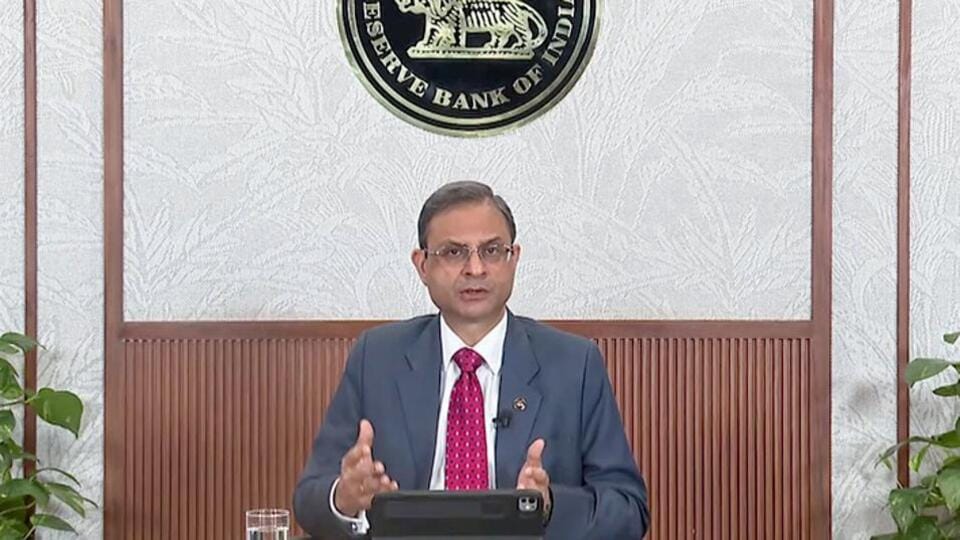
The Monetary Policy Committee (MPC) of RBI made a unanimous second consecutive reduction in its policy rate – the one at which RBI lends money to banks – bringing it down by another 25 basis points ( one basis point is one hundredth of a percentage point) to 6%. What made the latest reduction more emphatic than February’s cut is a change in policy stance from neutral to accommodative. Governor Sanjay Malhotra also made it clear that the policy stance shifting to neutral will almost certainly lead to more rate cuts going forward.
RBI’s action will offer relief, and more importantly, assurance to both households and consumers that they can expect some cushion in their debt servicing costs (both retail and corporate loans will get cheaper; and mortgage costs will reduce) as the overall economic situation remains precarious. The ongoing tariff-hike caused disruption, in addition to its negative impact on growth prospects is also likely to have inflicted a significant wealth shock on many Indian households, which have increased their participation in equity markets in the recent past. Both analysts and the government have been warning that many participants might have been lured by the prospect of making windfall short-term returns at a time when the market was booming.
Analysts, while praising RBI’s clear signaling and predicting almost another guaranteed rate cut in the June meeting have suggested that the central bank could have also perhaps been more conservative in its assessment of growth headwinds to the Indian economy. To be sure, RBI itself has said that a number of “known-unknowns” in the ongoing tariff saga have made projections difficult. Governor Malhotra’s statement listed a few of them such as the impact of relative tariffs, the elasticities of our export and import demand; and the policy measures adopted by the Government including the proposed Bilateral Trade Agreement with the USA. “The global economy is going through a period of exceptional uncertainties. The difficulty to extract signal from a noisy and uncertain environment poses challenges for policy making. Nevertheless, monetary policy can play a vital anchoring role in ensuring that the economy remains on an even keel”, his statement added.
The Indian economy is expected to grow at 6.5% in the fiscal year 2025-26, 20 basis points lower than what RBI believed in February. To be sure, given the 6.5% growth (second advance estimate) for 2024-25, it also means that the Indian economy will not lose growth momentum in what is likely to be among the most turbulent years in the history of capitalism for the global economy. The MPC expects domestic drivers to support economic activity and cushion for the external disruption. Quarterly growth projections for quarters ending June 2025, September 2025, December 2025 and March 2026 are now 6.5%, 6.7%, 6.6% and 6.3% respectively with risks evenly balanced.
The MPC has also brought down its inflation projection for 2025-26 from 4.2% in February to 4% now which means inflation is now perfectly aligned with the bank’s target. Quarterly inflation projections now stand at 3.6%, 3.9%, 3.8% and 4.4% respectively. The Monetary Policy Report, which was released along with the MPC resolution said that growth and inflation in 2026-27 is expected to be 6.7% and 4.3% respectively. The relief on inflation is primarily expected from low food prices and, even as MPC noted that “the fall in crude oil prices augurs well for the inflation outlook”.
“The MPC noted that inflation is currently below the target” and “on the other hand, impeded by a challenging global environment, growth is still on a recovery path”, the resolution said concluding that “In such challenging global economic conditions, the benign inflation and moderate growth outlook demands that the MPC continues to support growth”.
Experts praised the RBI for striking a balance in its latest policy action.
“The US has recently announced a 26% tariff on India. We calculate that India’s GDP growth could take a direct 0.5ppt hit in FY26. The indirect and second-order negative impact could also be meaningful. But heightened volatility in global financial markets suggest that steps to support growth at this juncture should be carefully calibrated and remain focused on preserving macro stability alongside”, Pranjul Bhandari, Chief India Economist at HSBC said in a research note. “ RBI tried to strike a balance, lest expectations of rate easing become excessive. RBI revealed its inflation forecast for FY27 at an above-target 4.3%, and growth too, at a higher 6.7% (compared to FY26). This message, that inflation over time can breach the 4% target, should help keep a check on expectations of extreme rate cuts”, Bhandari added.


