The Supreme Court on Friday ruled that refusal to marry, even if preceded by a relationship or promises of marriage, cannot be construed as abetment to suicide under the penal law of the land.
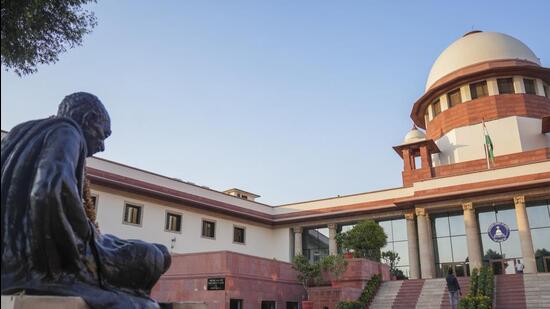
Emphasising the principles of law governing abetment, a bench of justices Pankaj Mithal and Ujjal Bhuyan held that broken relationships and emotional setbacks, while unfortunate, are a part of life and cannot amount to criminal culpability unless accompanied by specific acts of provocation or instigation.
Section 306 of the Indian Penal Code (IPC) criminalised abetment to suicide. Section 108 is the corresponding provision in the Bharatiya Nyay Sanhita, which has replaced the IPC with effect from July 1.
“Broken relationships and heartbreaks are part of everyday life and that breaking-up of the relationship would not constitute any instigation or abetment of suicide inasmuch as in order to constitute ‘Instigation’, it must be shown that the accused had by his acts and omissions or by continued course of conduct created such circumstances that the deceased was left with no other option except to commit suicide,” said the bench, citing a 2024 judgment by the Supreme Court in Prabhu Vs State represented by Inspector of Police case.
The bench highlighted the legal foundation of the offence of abetment, which requires the presence of “instigation” as defined under the IPC. Instigation involves a deliberate act intended to incite or provoke another person to take their own life, said the bench, underlining: “Instigatio’ is to provoke, incite or encourage a person to do an act.”
{{/usCountry}}The bench highlighted the legal foundation of the offence of abetment, which requires the presence of “instigation” as defined under the IPC. Instigation involves a deliberate act intended to incite or provoke another person to take their own life, said the bench, underlining: “Instigatio’ is to provoke, incite or encourage a person to do an act.”
{{/usCountry}}The case revolved around the death of a 21-year-old woman, who consumed poison after her boyfriend refused to marry her. The couple had been in a relationship for eight years. According to the prosecution, the man had initially promised to marry her but later reneged. On August 18, 2007, after the man reiterated his refusal, the woman consumed poison and died.
The man was initially acquitted of all charges, including abetment to suicide, by the trial court. However, the Karnataka high court overturned this decision on appeal in 2011, convicting him under sections 306 (abetment to suicide) and 417 (cheating).
The Supreme Court set aside the high court’s judgment, stating that the evidence failed to establish the essential ingredients of abetment. It pointed out that the woman had carried poison with her from her village, indicating a predetermined intent to end her life, which could not be attributed to any immediate provocation by the accused.
“There is no direct evidence adduced by the prosecution to prove that the accused-appellant has in any way instigated or provoked the deceased to commit suicide. The accused on asking of the deceased had simply refused to marry her which is not a positive act on his part with any intention to abet the crime of suicide,” it held.
Abetment involves a mental process of instigating or intentionally aiding someone to commit suicide, noted the bench, highlighting the necessity of a “positive act” by the accused that directly leads to the act of suicide.
The judgment also drew from previous rulings, including Ramesh Kumar Vs State of Chhattisgarh (2001) and M Mohan Vs State (2011), where the court had held that instigation requires an active role by the accused. Mere words spoken in frustration or acts that cause emotional distress are insufficient to hold someone criminally liable for abetment of suicide, it noted.
If you need support or know someone who does, please reach out to your nearest mental health specialist. Helplines: Aasra: 022 2754 6669; Sneha India Foundation: +914424640050 and Sanjivini: 011-24311918, Roshni Foundation (Secunderabad) Contact Nos: 040-66202001, 040-66202000, ONE LIFE: Contact No: 78930 78930, SEVA: Contact No: 09441778290