
 E-Paper



Renowned Indian space scientist Eknath Vasant Chitnis passes away at 100 in Pune
Born on July 25, 1925, Dr. Chitnis was among the first generation of Indian scientists who laid the foundation for the country’s space exploration efforts

 Prefer HTon Google


Pune: Renowned Indian space scientist Dr. Eknath Vasant Chitnis, one of the key architects of India’s early space programme, passed away at his residence in Pune on Wednesday morning following a heart attack. He was 100 and had been unwell for some time.
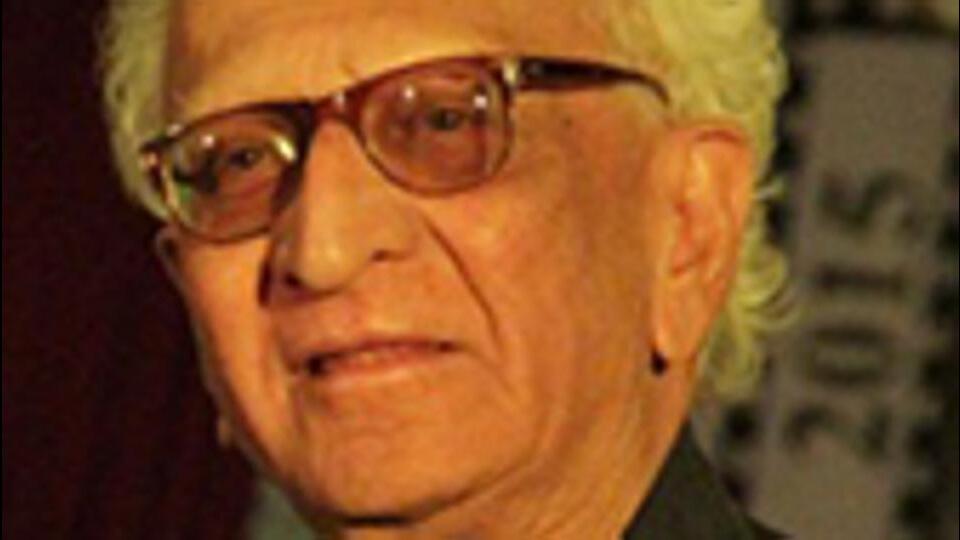
Born on July 25, 1925, Dr. Chitnis was among the first generation of Indian scientists who laid the foundation for the country’s space exploration efforts, working closely with Vikram Sarabhai and playing a crucial role in selecting the site for India’s first rocket launch at Thumba in Kerala. In the early 1960s, he undertook an extensive location survey and convinced Sarabhai of Thumba’s strategic equatorial advantage.
A key figure in the evolution of the Indian National Committee for Space Research (INCOSPAR) into the present-day Indian Space Research Organisation (ISRO), Dr. Chitnis last served as Member Secretary of INCOSPAR. He was instrumental in launching the Indian National Satellite System (INSAT) programme and establishing remote sensing applications and space-based communication projects that brought television and telecommunications to rural India.
From 1981 to 1985, he served as the second director of ISRO’s Space Applications Centre (SAC) in Ahmedabad. In recognition of his contributions to science and nation-building, Dr. Chitnis was awarded the Padma Bhushan, India’s third-highest civilian honour, in 1985.
He is said to have reviewed scientist Dr. A.P.J. Abdul Kalam’s résumé in 1962 and recommended his inclusion in a NASA training programme — a step that changed the course of India’s aerospace journey.
In 1989, following his retirement, Dr. Chitnis moved to Pune, where he continued to inspire students and academics by helping establish the Educational Multimedia Research Centre (EMRC) at Savitribai Phule Pune University (SSPU). He remained active in academia for two decades, working on development communication and media applications for science education.
Earlier this year, on his 100th birthday, the Indian Institute of Science Education and Research (IISER) Pune, along with the National Centre for Science Communicators (NCSC), Mumbai, hosted the Professor E.V. Chitnis Centenary Conference on ‘Pioneering Space, Science, Policy & Innovation’. The event brought together senior ISRO scientists and young researchers across disciplines, highlighting his role in building a pan-Indian scientific ecosystem.
“His centenary was not just a celebration of a life well lived, but of India’s scientific vision,” astrophysicist professor Ajit Kembhavi said. “He had an uncanny knack for talent-spotting and nurturing, and it was touching to see scientists across generations and institutions unite to honour him. That unity reflects the strength of his legacy,” he added.
Dr. Chitnis was also closely associated with the Press Trust of India (PTI) for nearly three decades, serving as its president twice and strengthening science journalism in the country.
His son, Chetan Eknath Chitnis, is a leading molecular biologist and recipient of the Padma Shri in 2023.
“Dr. Chitnis was a visionary who not only looked to the skies but ensured the benefits of space technology reached the ground. His contributions continue to echo through every ISRO launch, satellite transmission and scientific institutions he helped build. He has left a highly illustrious legacy for the youngsters and current scholars of the field to follow in the days to come,” Kembhavi told HT.


