E-Paper



Road to 1.5°C goal ‘steep’, need more cooperation: UN climate chief
UN climate chief warns of 2.7°C warming, highlighting the steep road to limit warming to 1.5°C. Urges international cooperation at Bonn Climate Change Conference.

 Prefer HTon Google


The Bonn Climate Change Conference opened on Monday with a dire warning from the UN climate chief: the world is headed for 2.7°C warming and the road to restrict warming to 1.5°C is extremely steep.
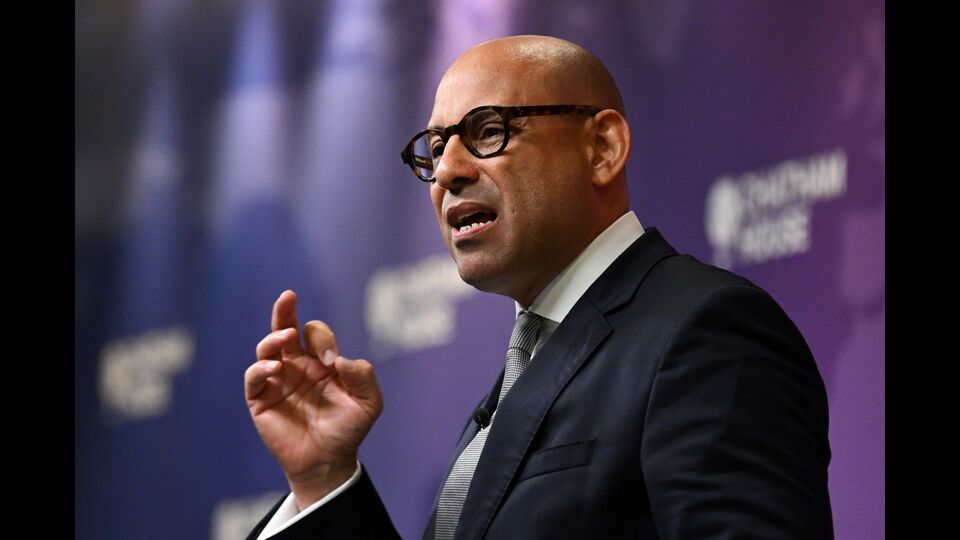
Addressing the opening plenary, United Nations Framework Convention on Climate Change (UNFCCC) chief Simon Stiell stressed the importance of international cooperation, without which the world would be headed “for up to 5°C of global heating”.
“Without UN-convened international cooperation, we would be headed for up to 5°C of global heating, which most of humanity likely couldn’t survive. We are now headed for around 2.7°C. This is still ruinously high, and there’s a long and steep road ahead to get to our shared goal of 1.5°C this century. But we should be energised that we are approaching a halfway point,” said Stiell.
“It’s clear that in the second half of humanity’s climate journey will be even harder, and climate action will need to move at a faster pace. We cannot afford rest-stops or detours at this half-way point in humanity’s climate journey. And we absolutely cannot afford to stumble in the next ten days, or for global climate progress to stall this year and beyond,” he said.
The Bonn talks, between June 3 and 13, are being held at the halfway point to the annual climate summit, the 29th Conference of Parties (COP29) which is being hosted by Azerbaijan this year.
Acknowledging the growing number of extreme weather events, including the current heatwave in India, Nabeel Munir, the chair of the Subsidiary Body for Implementation of UNFCCC, urged that the climate crisis is no longer a distant threat.
“Climate change is no longer a distant threat but a reality affecting each of us. In Papua New Guinea a devastating landslide buried 2,000 people. In Pakistan and India temperatures soared to 50°C; in Panama the entire island is sinking,” he wrote on X.
“Keep these events in mind when reacting to proposals, (and) writing decisions texts,” Munir said.
Calling the conference a critical milestone, COP29 president-designate Mukhtar Babayev said, “Our future rests on us coming together to build the fair and ambitious solutions needed to cut greenhouse gas emissions and build a resilient world. We must use every opportunity in the next two weeks to make progress on a new climate finance goal, Article 6, and the rest of the negotiation agenda. These will be foundation stones of tangible results at COP29... In Bonn, we will lay out the pathways we must follow to reach our goals. It’s time to empower everyone to protect themselves and our planet.”
The Bonn meeting is expected to set the agenda for climate negotiations this year and will open discussions on a new finance goal to replace the existing goal of $100 billion per year. The new finance goal is meant to channel greater funds towards the urgently needed climate action in developing countries.
Discussions on New Collective Quantified Goal on Climate Finance (NCQG) have emerged contentious in the past, with developed and developing nations presenting opposing views.
HT reported on May 6 that at an Ad Hoc Work Programme (AHWP) of the UNFCCC, held in Cartagena, Colombia, from April 23 to 26, the US said that the goal is “voluntary” for those that “choose to pay”, referring to Article 9.3 of the 2015 Paris climate pact that deals with climate finance.
Developing countries opposed this view, and pointed out that the Paris Agreement stipulates wealthy nations shall provide financial resources to assist developing countries to both mitigate and adapt to the impacts of climate crisis.
“First, we must make serious progress on finance — the great enabler of climate action. Here in Bonn, I urge you to move from zero-draft to real options for a new collective quantified goal on climate finance. We cannot afford to reach Baku with too much work still to do. So, please, make every hour here count. We need more climate finance while we negotiate a future goal. Progress on one, enables the other,” Stiell said.
“New grant and forms of concessional finance to developing countries must be coupled with global financial reforms that deliver debt relief and affordable finance, and finding new and innovative sources of finance, outside our process,” he said.
On the country-specific Nationally Determined Contributions (NDCs), Stiell called for a new round of plans that are 1.5°C-compatible.
“This new round of national climate plans — NDCs 3.0 — will be among the most important policy documents produced so far this century. NDCs are not just about averting disaster through reducing emissions. Done well, they can serve as powerful blueprints, to propel each of your economies and societies forward, and drive more resilience, more opportunity, better human health and higher living standards,” he said.
The agenda for the Bonn climate talks was adopted on Monday after it was blocked twice — once by climate activists who protested against the human rights violations in Gaza during the plenary and another time by Russia which said it is compelled to object as some of its experts were not provided the visas needed to attend the meeting.
After a short suspension of the opening plenary, Russia withdrew its objection to the adoption of the agenda, reserving the right to block the adoption of outcomes should the visa matter not be resolved.
“The agendas for the UNFCCC June Climate Meeting were adopted, without the items on developed countries’ urgent action towards net-zero and on means of implementation for alternative policy approaches to results-based payments that were proposed for inclusion by Bolivia,” the International Institute of Sustainable Development, which is tracking the negotiations, wrote on X.
Experts stressed that the talks must take into account demands of developing countries with regards to climate finance.
“For Bonn to be successful, first and foremost, significant progress on the new climate finance goal is necessary. The deliberations at this mid-year mark must make strides towards an ambitious draft negotiating text as we move towards COP 29. All elements proposed in the text must take into account the demands of developing countries that have been vocalised clearly over the last two years, rooted in equity. With just about five months left for the expected outcome, time is of the essence,” said Sehr Raheja, programme officer, climate change at Centre for Science and Environment.
“Additionally, countries are gearing up for a renewal of their national climate commitments in February next year. Discussions this year, including those at Bonn need to feed into these. So, the outcomes of the Global Stocktake must inform the NDC development process through the first annual GST dialogue that is going to commence in Bonn next week,” she added.
Meanwhile, the dire circumstances that the talks are being held in were highlighted in a bulletin of the Third World Network, a non-profit research and advocacy group.
“The climate talks are taking place in what appears to be a rather cold Bonn, with low temperatures unlike the usual summer weather, and with unprecedented and unbearable heatwaves in many parts of the world, which have already claimed lives and is causing much disruption,” it said in a bulletin on Monday.