
 E-Paper



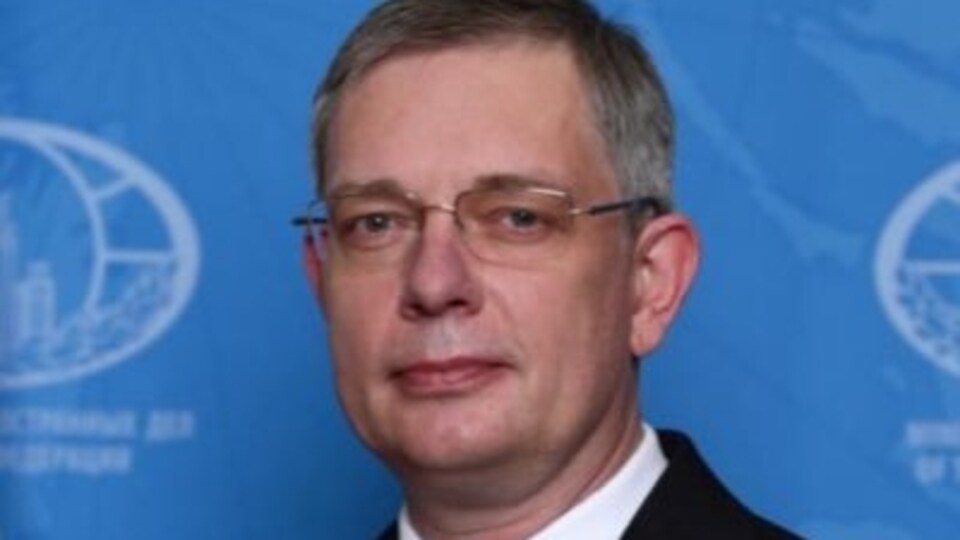
HT interview | ‘Keen to have good ties with India, China without hidden agenda’: Russia ambassador Denis Alipov
Instead of crying over growing Chinese economic footprint in Russia, Indian commentators would do better to encourage Indian expansion, says Denis Alipov.

 Prefer HTon Google


Russia will continue meeting India’s energy needs as long as there is demand, and the two sides are working on ways to make energy supplies sustainable and to address a trade imbalance, Russian ambassador Denis Alipov told Rezaul H Laskar in an interview. Edited excerpts:
How would you assess India-Russia ties, especially during a period of turmoil and geopolitical flux?
In his recent remarks on nine years of the Modi government, (external affairs minister) S Jaishankar emphasised that our historic relations, despite all challenges, remain very steady as they enjoy traditional support in the leadership and public sentiments in both countries. I would add this is especially true in the present environment despite rampant lies about Russia and her objectives.
Read: Russian envoy questions US reliability as India’s defence and strategic partner
Our special and privileged strategic partnership has shown remarkable resilience and keeps going strong to a large extent because India stands its own ground and values instead of choosing camps and rejects the idea of resurrection of division lines that the Western countries advocate for.
The idea of Vasudhaiva Kutumbakam is basically about the same principle that Russia aspires for in Europe, i.e., common and equal security architecture.
Russia has emerged the largest supplier of energy to India. Is oil trade at the current level sustainable?
As long as there is demand, there is supply. Oil supplies helped us reach the record high bilateral trade turnover at $44.4 billion in fiscal 2022-23, covering more than one-third of Indian oil imports and making Russia the largest contributor to Indian energy security.
We are interested in long-term arrangements so that this trend is indeed sustainable. It is a matter of fact that the oil demand for the fastest growing Indian economy is going to increase.
Watch: India & China Turn Saviours For Russia, Purchase 80% Of Russian Oil In May
The basic idea, however, is quite opposite and that is the diversification of trade instead of putting all eggs in one basket.
India-Russia trade has grown tremendously though leaders from both sides have spoken of making it balanced. What is being done in this regard?
The trade imbalance problem is broadly recognised by the two countries. It requires holistic measures and out-of-the-box solutions to facilitate movement of goods and services, especially from India to Russia. Concerted efforts are being made for this purpose to expand business-to-business engagements. Much remains to be done to promote favourable conditions for mutual payments, expanding logistics options and capital markets access.
We are keen to launch the Eurasian Economic Union-India FTA negotiations at the earliest. Dedicated efforts are made to increase the capacity of the International North-South Transport Corridor.
Russian foreign minister Sergey Lavrov has spoken of billions of rupees being accumulated in Indian banks that can’t be used. Is there progress on using the SBFS system and mutually recognising digital payment systems?
It is a work in progress, including the use of alternative financial messaging system of the Bank of Russia. Our financial regulators and banks maintain dialogue on that to ensure bilateral transactions are smooth and seamless. We have been quite successful on this track and this sends an encouraging message for the rest of the world, showing the way to strengthen national financial systems and to establish sustainable alternative cross-border financial relations.
How would you respond to commentators who say Russia is becoming increasingly dependent on China and this can have implications for relations with India?
I have already gone on record by saying Russia has never been dependent on anyone throughout our history. There is absolutely no way for us becoming one at present or in future – it contradicts our national interests. Expanding economic cooperation with China or with any other country for that matter does not have a chance to become a political tool of influence.
Russia remains committed to its basic principles of diplomacy and does not play zero-sum games as well as never makes friends against anyone. We have excellent relations with India and China and are determined to expand mutually beneficial and honest ties with both our partners without hidden agenda as stipulated by the recently updated Russian Foreign Policy Concept.
Moreover, unlike some other countries, we sincerely support normalisation of a constructive dialogue between the two for the sake of the promotion of stability and sustainable development in Eurasia.
Read: Russia's Putin applauds 'dear friend' Xi Jinping on his 70th birthday
And so I suggest that instead of crying over the growing Chinese economic footprint in Russia, Indian commentators would do better to encourage greater Indian expansion in the Russian market, as I believe India does not plan to reduce its largely imaginary dependency on Russia only to become dependent on someone else, best practices and standards included.
Will President Vladimir Putin attend the G20 Summit in India and can you give an update on the annual India-Russia Summit?
There is no shortage of communication between President Putin and Prime Minister Modi. The personal chemistry between them is very strong. We were among the first who established the practice of annual bilateral summits, and we are decisively committed to maintaining it. The leaders met in person last year in Uzbekistan and regularly speak over the phone.
As far as the G20 Summit is concerned, it will be one of the most important events in the global diplomatic calendar this year. We are comprehensively involved in preparations to support India-led inclusive and development-oriented agenda. Announcement of the Russian participation in the Summit will follow in due course.
Prime Minister Modi has met the Russian and Ukrainian presidents and sought a return to dialogue and diplomacy while pledging support for all efforts to end the fighting. Does Russia see India playing any sort of mediatory role in this crisis?
We highly value India’s holistic understanding of the Ukrainian crisis and its genesis. It advocates a peaceful solution to be achieved through dialogue and diplomacy that we appreciate. Such a position reflects New Delhi’s status as a responsible global power.
Russia never rejected any mediatory proposals from those who is sincerely interested in establishing peace.
However, it is not us who should be encouraged to peace in the first place. The ultimate goal officially declared by the West to inflict a strategic defeat on Russia in this hybrid war against us leaves no prospects for any conversation.
The West keeps pumping the Kiev regime with weapons used to target Russian civilian infrastructure and citizens, raising the level of escalation fraught with disastrous consequences. Unless Washington and its satellites realise the danger and futility of their confrontation policy, any meaningful mediatory efforts will be senseless, as are such unrealistic initiatives as the so-called 10-point peace formula by Volodymyr Zelensky.



