
The US has said the Russian S-400 air and missile defence system is a “focus area” for significant transactions that could attract indirect sanctions against nations that enter into a military purchase with Moscow.
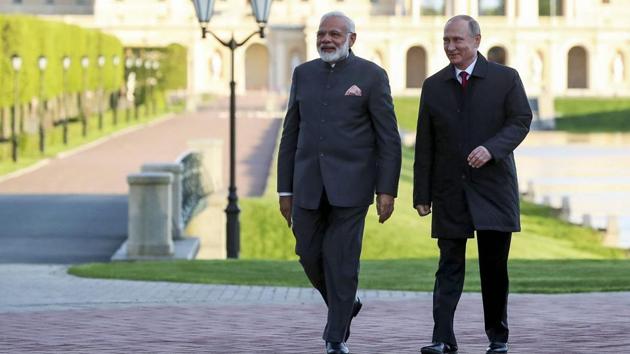
India and Russia are likely to sign a missile deal, estimated at more than $5 billion, during Russian President Vladmir Putin’s visit for annual summit talks with Prime Minister Narendra Modi beginning on Thursday in New Delhi, a Kremlin aide said.
Suggested For You
The US sanctions are part of law – Countering America’s Adversaries Through Sanction Act – that seeks to punish Russia for interference in the 2016 US presidential election, its role in the Syrian conflict, and the annexation of Crimea. US’s stance could put a spanner in India’s reported plans to buy five S-400s during Russian President Vladimir Putin’s visit to Delhi that begins today.
“The administration has indicated that a focus area for the implementation of CAATSA Section 231 is new or qualitative upgrades in capability – including the S-400,” a US state department spokesperson said.
“We urge all of our allies and partners to forgo transactions with Russia that would trigger sanctions under CAATSA.”
{{/usCountry}}“We urge all of our allies and partners to forgo transactions with Russia that would trigger sanctions under CAATSA.”
{{/usCountry}}The US president can grant waivers if a deal does not threaten the security of US or its allies and there is evidence the buyer has been cutting defence imports and dependence on Russia. India fulfils these conditions and officials have sounded optimistic about getting a waiver.
But, the spokesperson added: “The waiver is narrow, intended to wean countries off of Russian equipment, and allow for things such as spare parts for previously-purchased equipment.”
A waiver will also need to be cleared by the US Congress.
Last month, the United States imposed sanctions on China’s military for its purchase of combat fighters as well as the S-400 missile system it bought from Russia this year.
The United States is also concerned about NATO ally Turkey’s decision to buy the Russian missile system, seeing it as incompatible with the alliance systems.
Defence minister Nirmala Sitharaman told reporters India was closing in on the deal to buy the air defence system from Russia, with which it has long-standing military ties.
“Negotiation on S-400 air defence systems has been on for a long while and it is at a stage where it can be finalised,” Sitharaman said last week. “We have a big legacy of buying defence equipment from Russia.”
More than 80 percent of India’s military equipment was of Soviet origin during the days of the Cold War, but since its breakup New Delhi has diversified its weaponry.
The United States is one of its top arms suppliers, closing $15 billion worth of deals in just the last decade.
US firms Lockheed Martin and Boeing lead the race to sell the Indian military hundreds of aircraft to replace its ageing Russian MiG planes.
(With inputs from Reuters)
Explore More
ABOUT THE AUTHOR
Follow the latest breaking news, major developments and agenda-setting stories from India and around the world with the newsdesk at Hindustan Times. Operating round the clock, the desk brings together experienced editors, reporters and correspondents to deliver fast, accurate and contextual reporting across subjects that influence public policy, governance, business, society and international affairs. The HT News Desk covers politics, elections, government policies, the economy, business and markets, science and technology, the environment, law and order, infrastructure, education, climate issues and geopolitics, while closely tracking developments across states, institutions and global capitals. The team also leads coverage of major breaking news events, policy announcements, court proceedings, natural disasters, public emergencies and significant international developments. Reports published by the newsdesk are based on information gathered from reporters on the ground, official statements, government agencies, court records, regulatory filings, recognised institutions and other authoritative sources. Stories undergo editorial scrutiny and verification processes to ensure accuracy, fairness and relevance, and are updated as events evolve and additional information becomes available. Whether covering a key political decision in New Delhi, an economic policy shift affecting millions, a landmark court ruling or a major global event, the HT News Desk aims to provide readers with reliable, fact-based journalism that delivers not only the latest developments but also the context and analysis needed to understand their wider implications.