The Supreme Court on Friday declined to entertain a petition seeking directives for the central and state governments to take steps to eradicate the widespread menace of superstition, sorcery, and similar practices. It acknowledged the seriousness of the issue but said that it was “not judicially manageable” and that courts are not the answer to all societal evils.
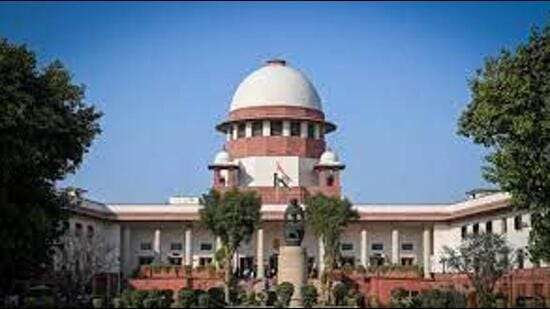
Chief Justice of India Dhananjaya Y Chandrachud, leading the bench, remarked: “The answer is education, the spread of literacy...the more educated you become, the presumption is that more rational you become. How can a court directing for developing scientific temper help?”
The bench, also comprising justices JB Pardiwala and Manoj Misra, noted that it is the responsibility of civil society and the democratic arms of the government to address such issues. It emphasised that courts have limitations and cannot entertain every issue, however serious it may be.
“Writs can’t be answer to all the evils in society. It is also for civil society and the democratic arms of the government to take steps. You also don’t become a social reformer by only moving the courts. There are several other ways to bring about changes. Courts have their own limitations, and we can’t entertain everything that we think are serious issues,” said the court.
The bench underscored the role of the legislature in addressing such social problems. “This is an issue that has to be singularly decided by parliament,” the bench said. It stressed that if a law is deemed necessary on the subject, it is for Parliament to frame it.
{{/usCountry}}The bench underscored the role of the legislature in addressing such social problems. “This is an issue that has to be singularly decided by parliament,” the bench said. It stressed that if a law is deemed necessary on the subject, it is for Parliament to frame it.
{{/usCountry}}In his plea, petitioner advocate Ashwini Kumar Upadhyay argued that unscientific practices are not only harmful to individuals but also exploit the community at large, often preying on the most vulnerable. Upadhyay argued that a strict anti-superstition and sorcery law is urgently needed to prevent fake seers and charlatans from exploiting innocent people. The petition invoked Article 51A of the Constitution, which enshrines the fundamental duties of citizens, including the duty to develop a scientific temper, humanism, and the spirit of inquiry and reform.
The plea, filed through advocate Ashwani Kumar Dubey, asserted that the government’s failure to curb such practices infringes upon the fundamental rights guaranteed under Articles 14, 21, and 25 of the Constitution, which respectively cover the right to equality, the right to life and personal liberty, and the right to freedom of religion.
It also contended that the government should consider constituting an expert committee to explore the feasibility of criminalising superstition and sorcery by incorporating specific provisions in the Bharatiya Nyaya Sanhita and the Bharatiya Nagarik Suraksha Sanhita.
Upadhyay argued that while legislation is necessary, it is insufficient on its own to eradicate deeply rooted irrational beliefs. “A stringent anti-superstition and sorcery law is urgently needed to deal with the problem of irrational views prevalent in society. However, all of them cannot be eradicated by the force of law only. For this, a mental change is necessary,” the petition said.
Refraining from delving into the merits of the petition, the bench pointed out that the solution to superstition lies beyond the judiciary’s purview. It concluded that education, societal reform, and appropriate legislative action are the keys to tackling this issue, leaving it to Parliament to decide if a law is necessary to address these concerns.